
Last updated September 20, 2026
Full 25-point door and opener safety check with every visit - springs, cables, rollers, tracks, and your LiftMaster or Chamberlain opener included
You get a price before we start. It does not change when the truck arrives.
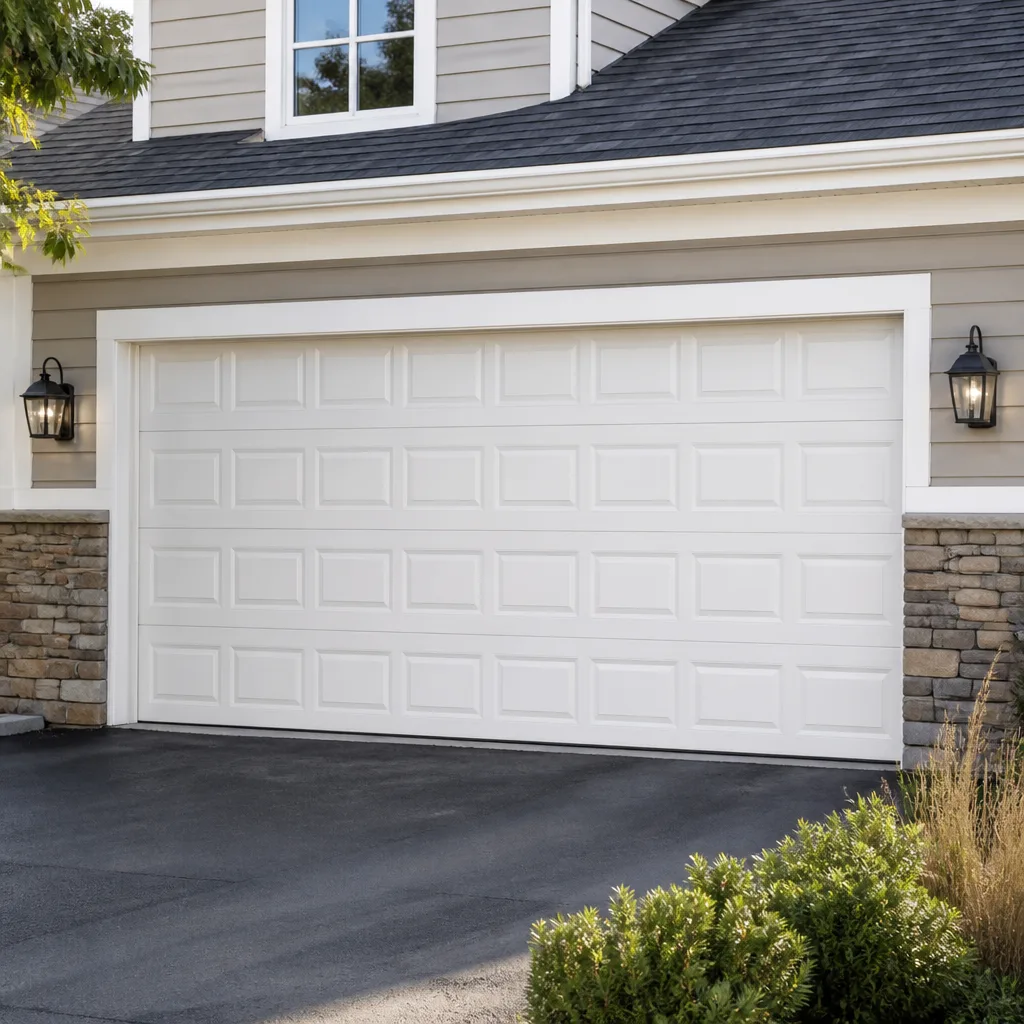
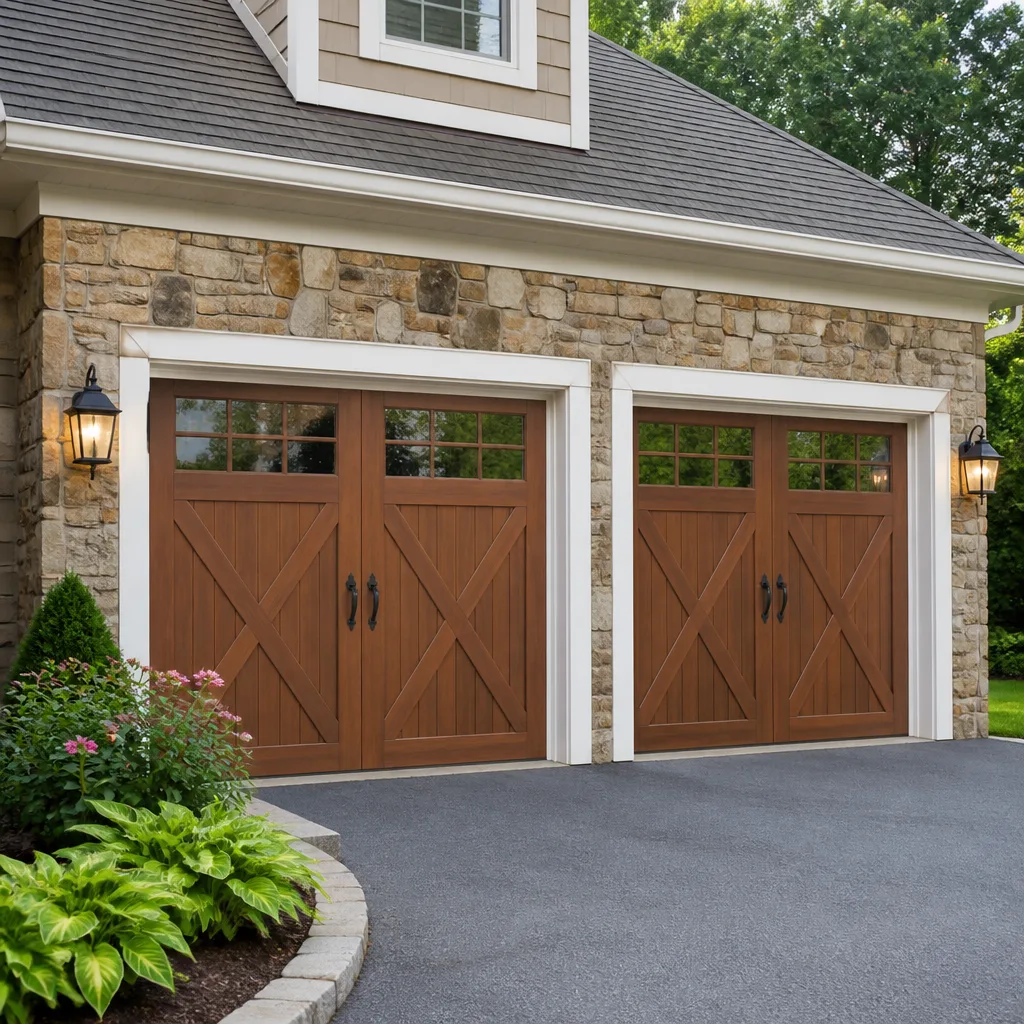
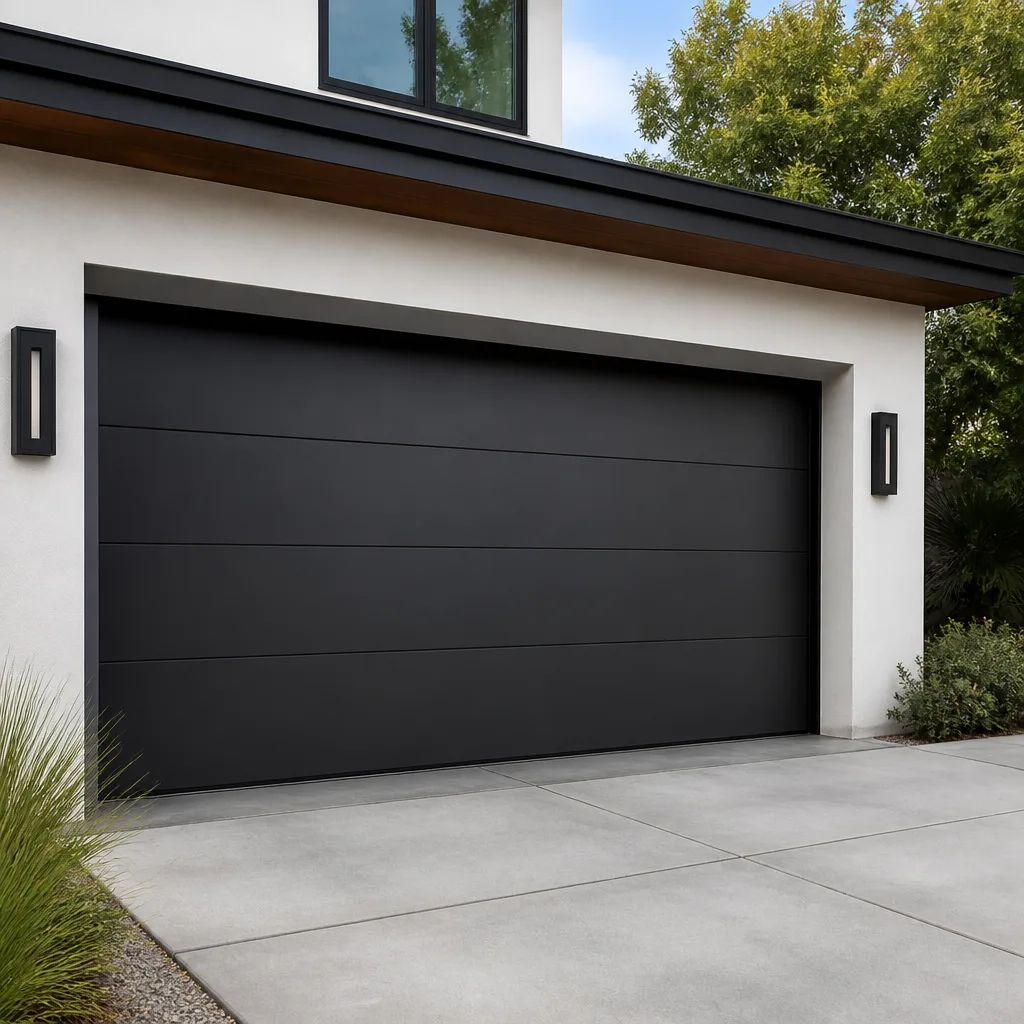
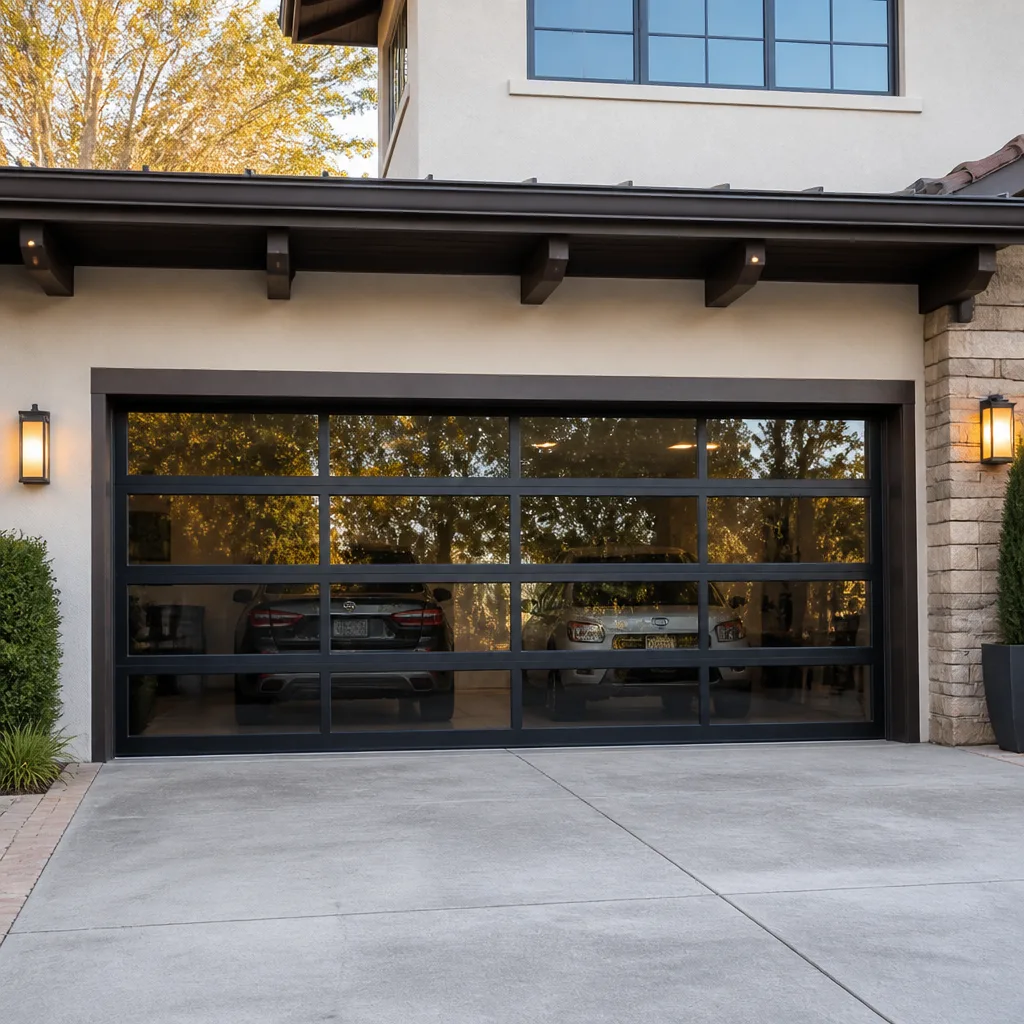
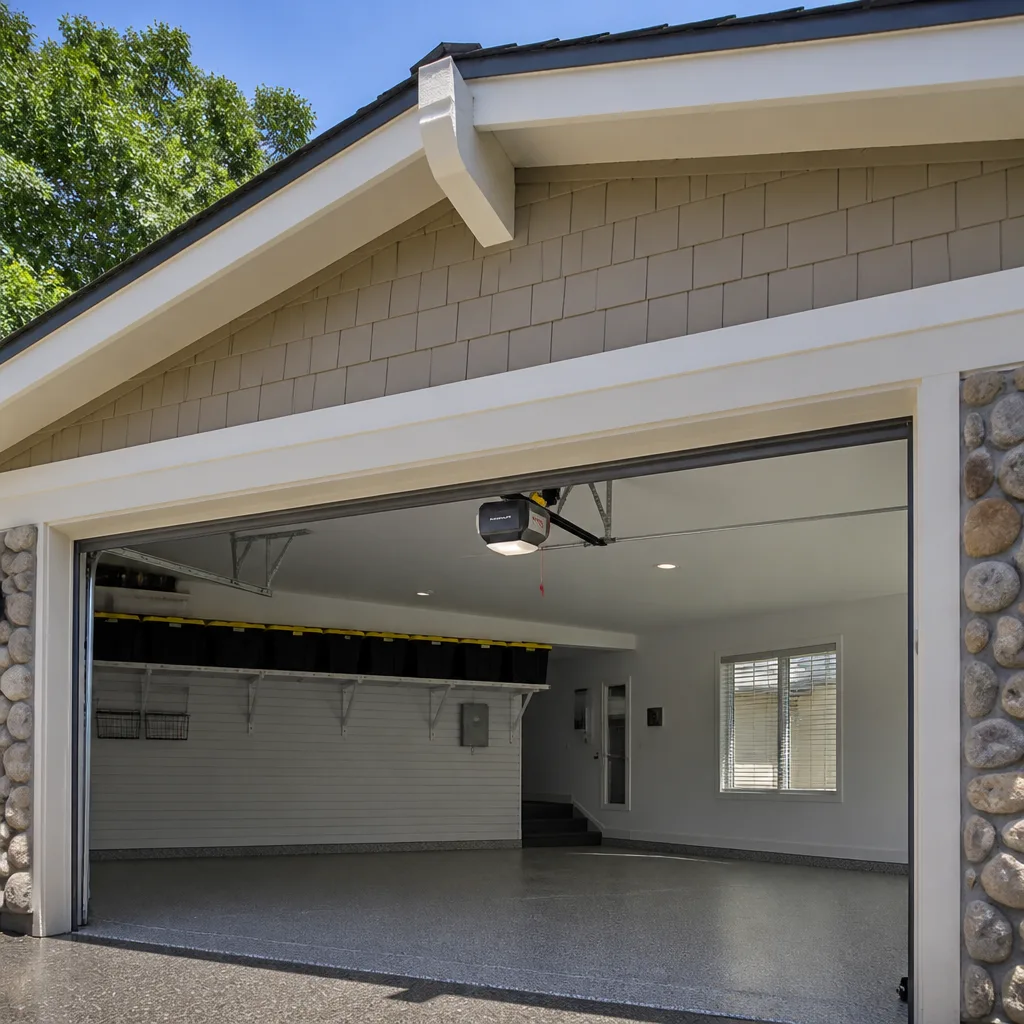
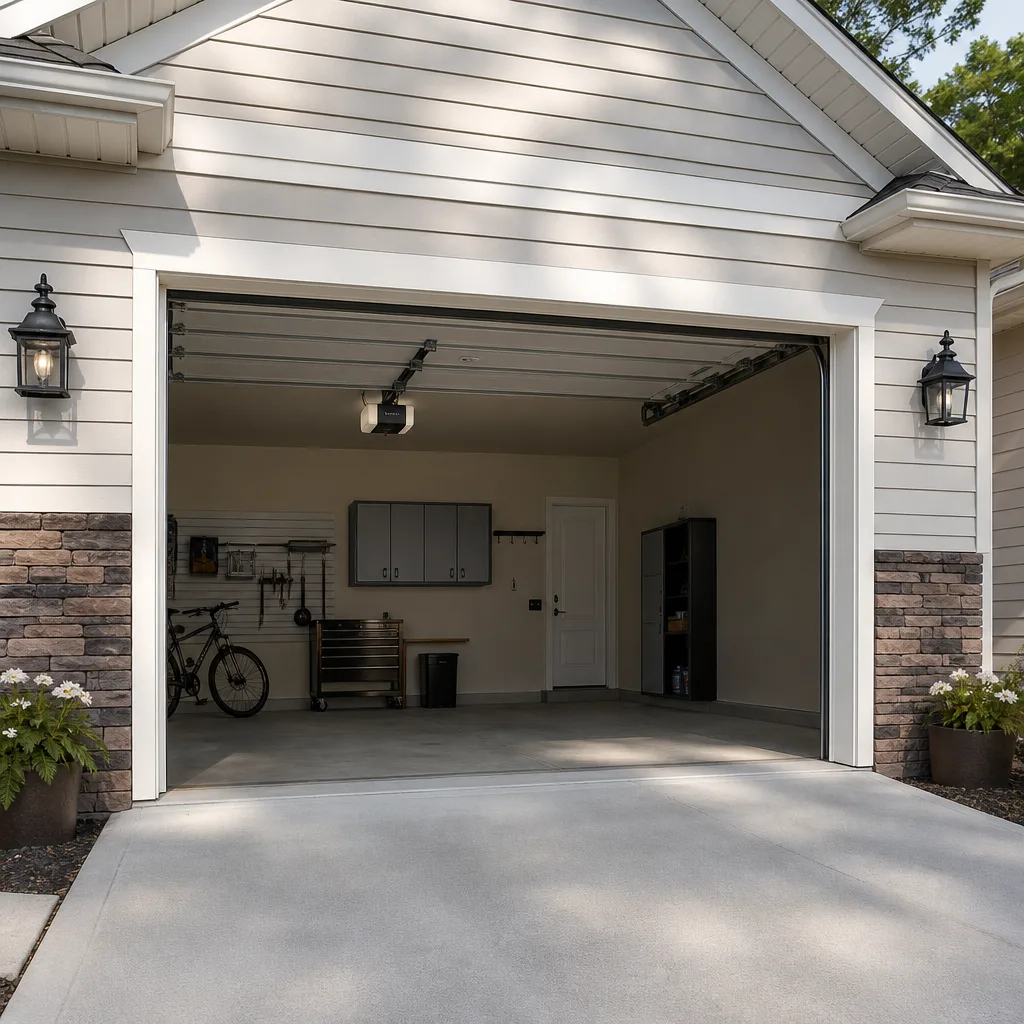
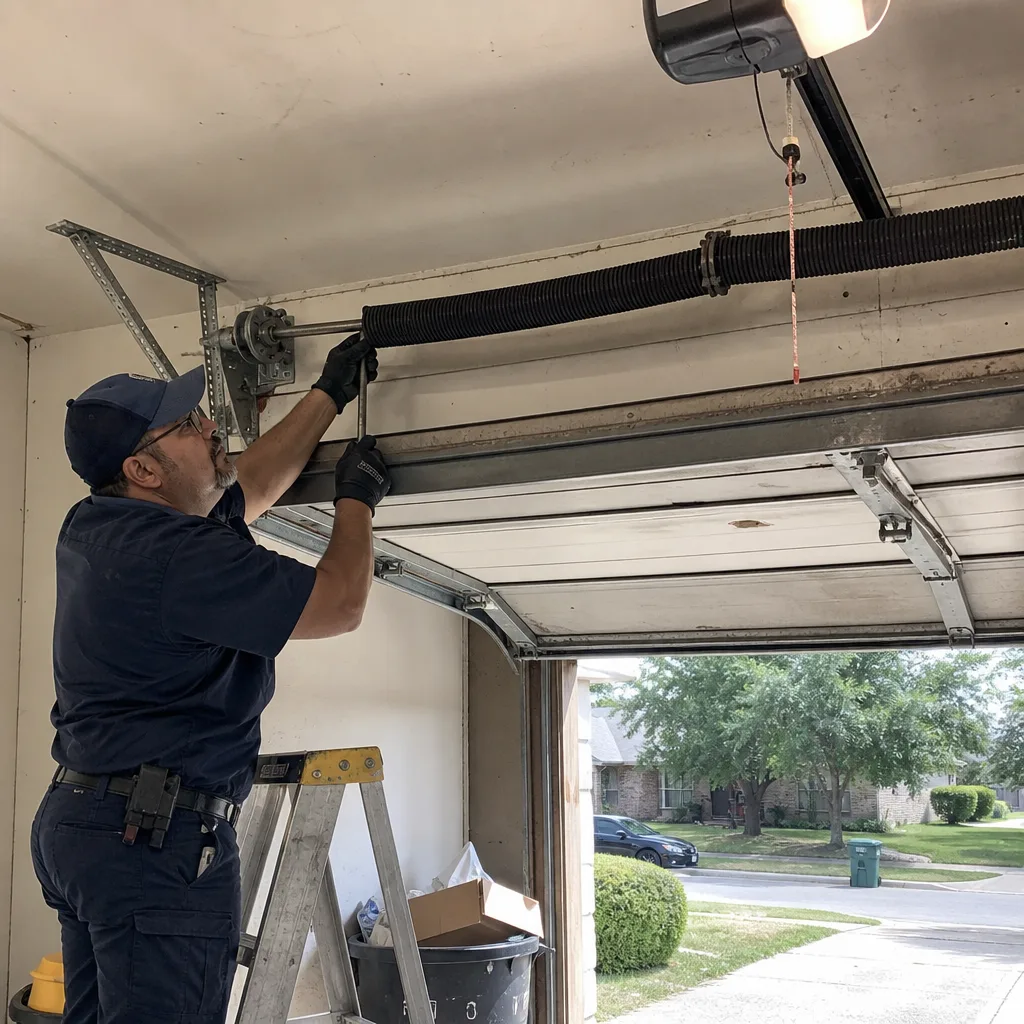 Before
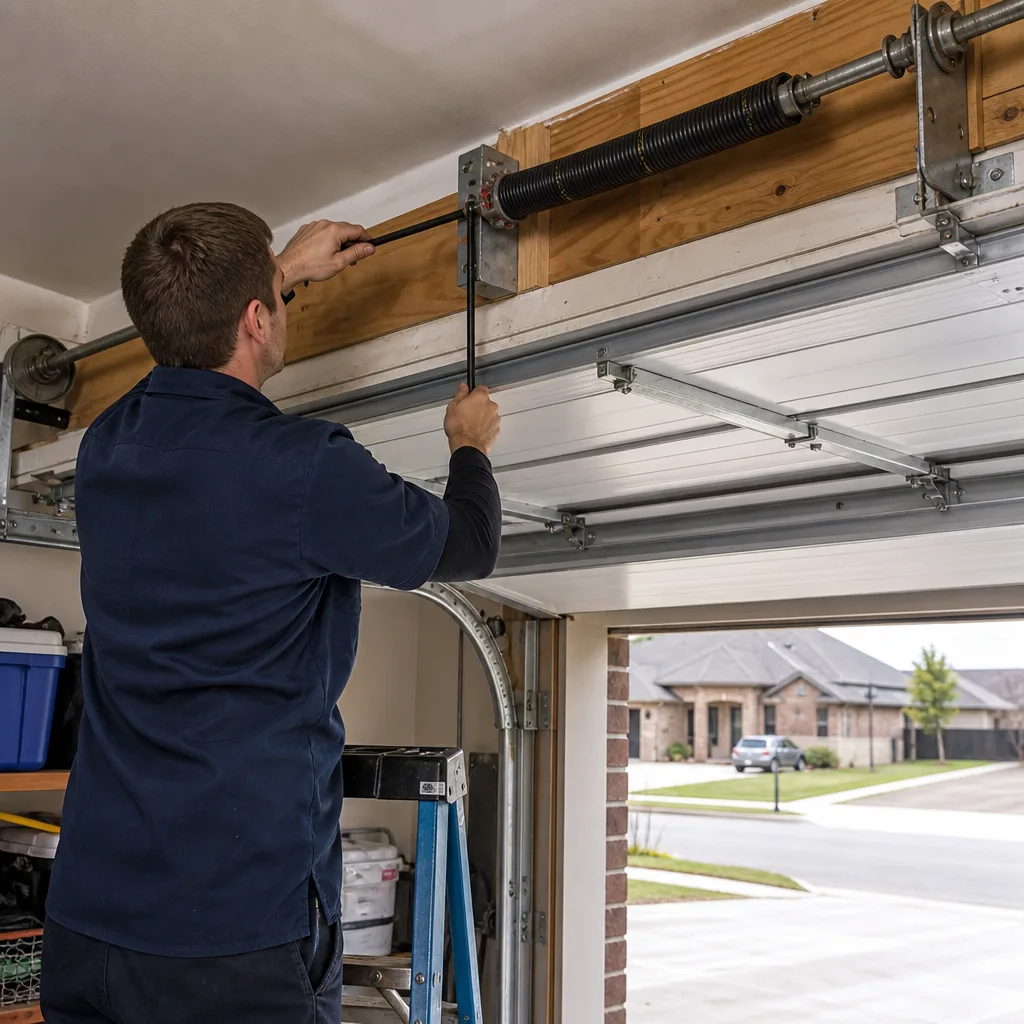 After
After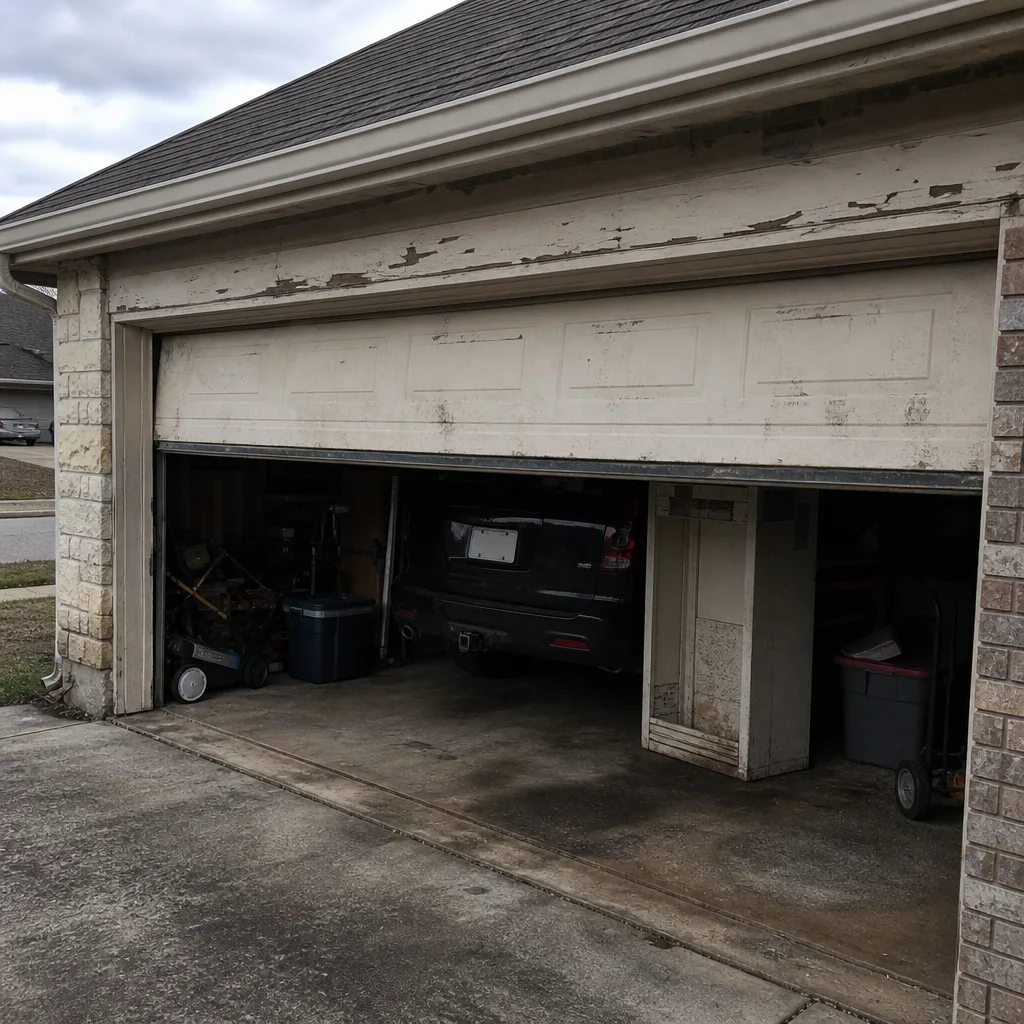 Before
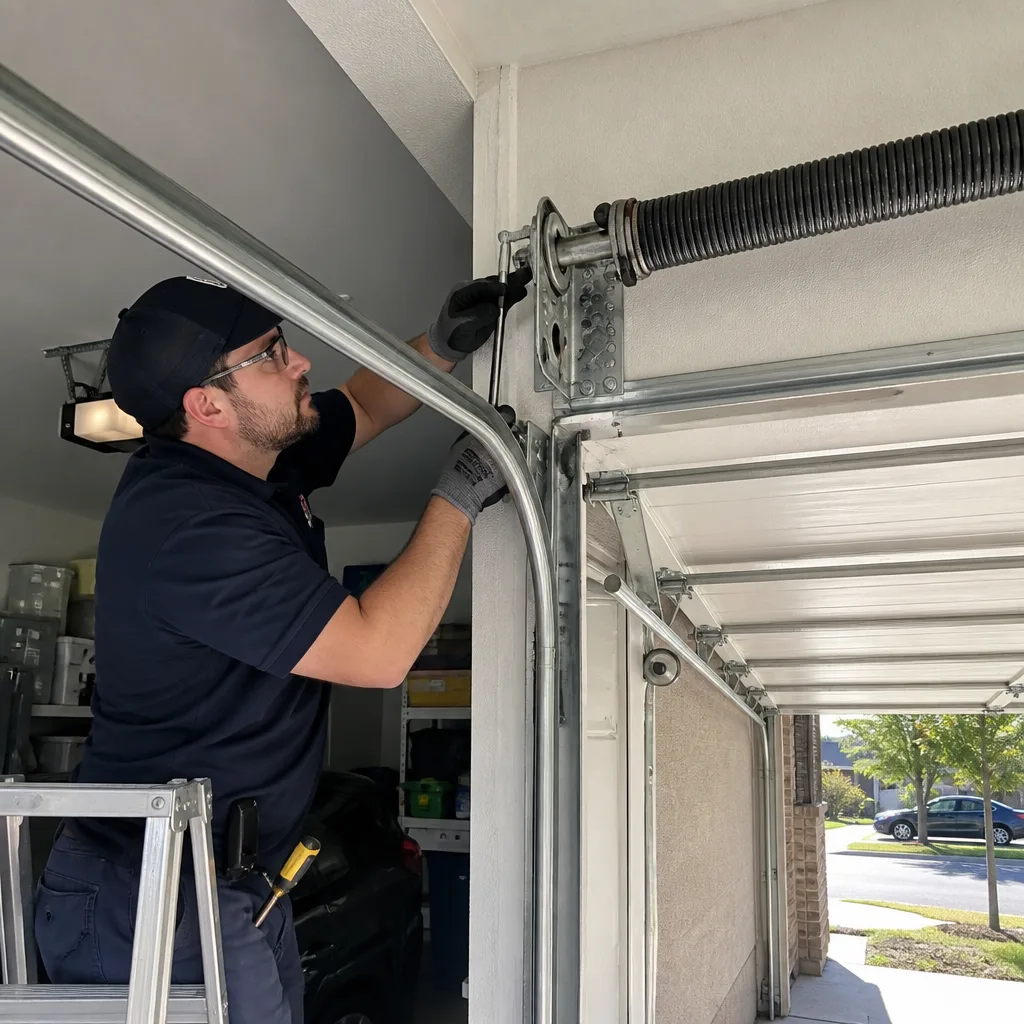 After
After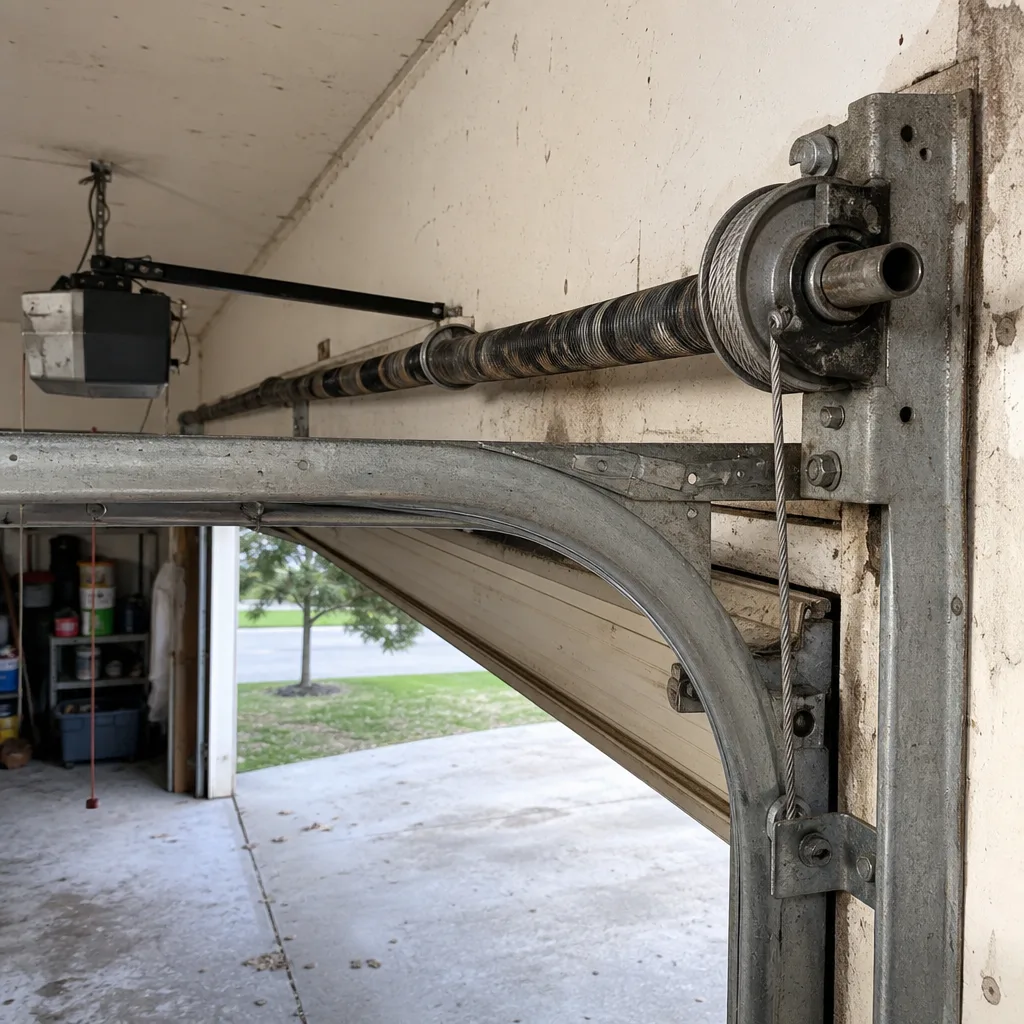 Before
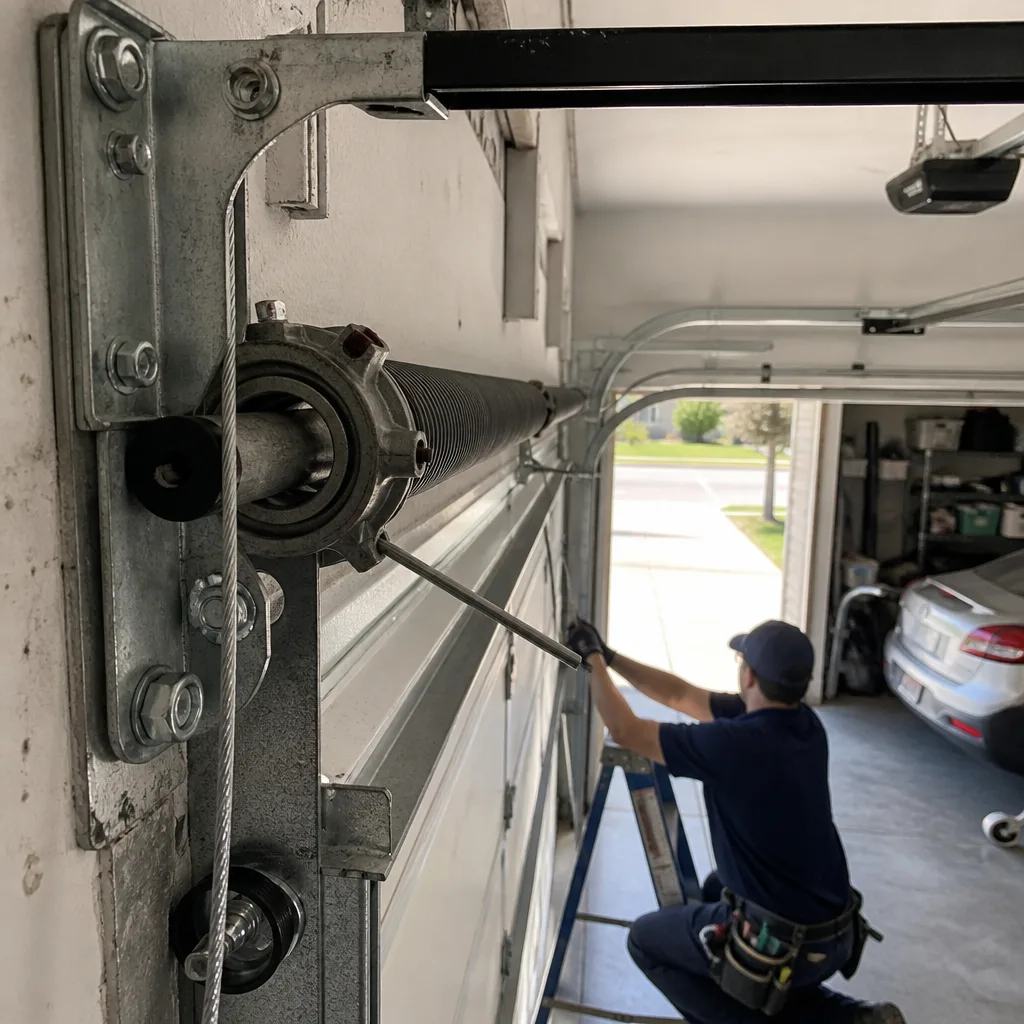 After
AfterHow to Hire a Garage Door Contractor in Denton: A Step-by-Step Guide
Texas does not license garage door contractors as a separate trade category. There is no Texas Department of Licensing and Regulation exam for torsion spring replacement, no state-issued credential that says a company knows how to balance a 150-pound door without injuring someone, and no registry you can check before you let a stranger work on the largest moving object in your home. That means the burden of verification falls entirely on you, the homeowner in Denton. This guide walks you through the hiring process as a documentation sequence-what to ask for in writing, what to check before the crew arrives, and which red flags in a quote signal that you should walk away-and supplements our complete guide to garage door in Denton. By the end, you will know how to hire a garage door contractor in Denton with the same scrutiny you would apply to a roofer or an electrician.
Quick Answer
To hire a garage door contractor in Denton, request a written itemized quote with part numbers and labor broken out, verify general liability insurance naming your property, check complaint history through the Texas Attorney General’s consumer protection database and the BBB, and get every promise in writing before work begins. Then compare two contractors on identical scope, not on price alone. A reputable Denton garage door company will hand you this documentation without hesitation; a contractor who resists it is telling you something useful.
Table of Contents
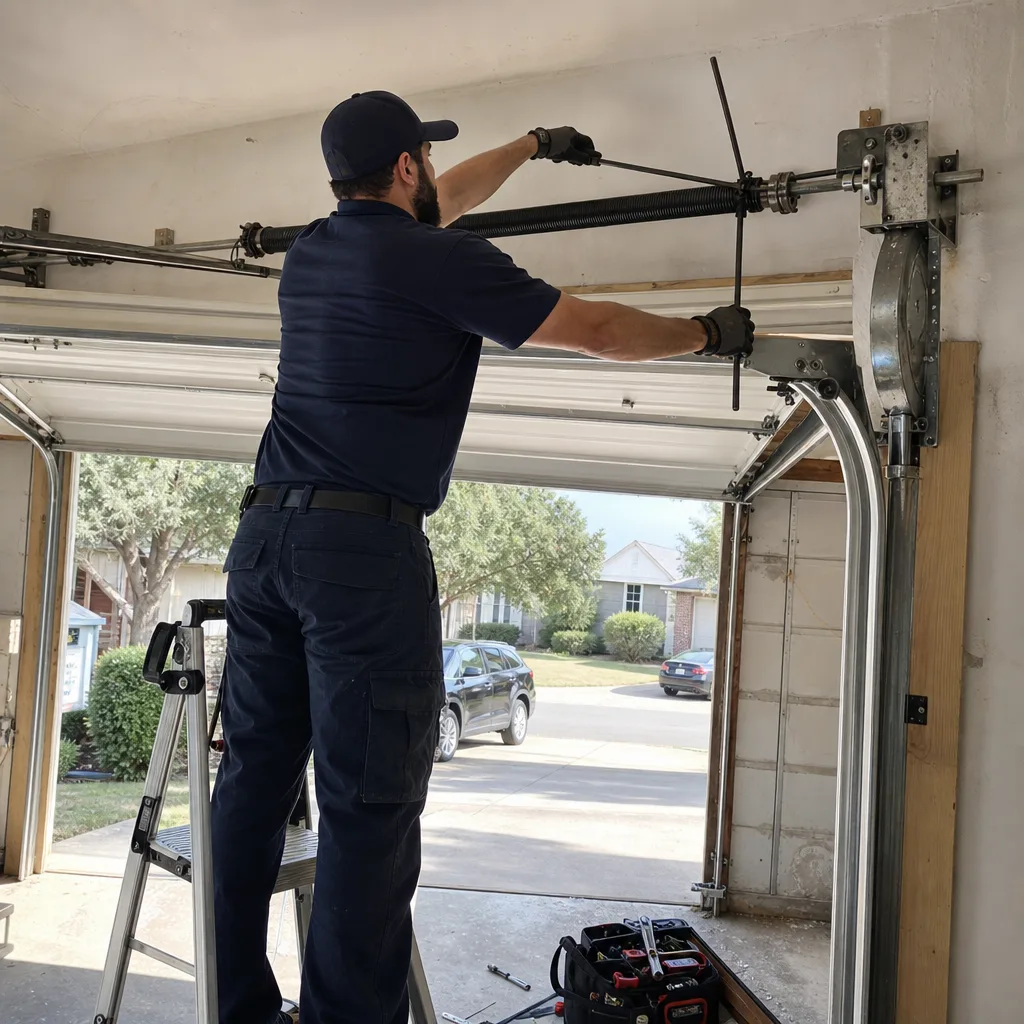
- Why the Texas Licensing Gap Matters
- The Exact Documents to Request Before Work Begins
- How to Verify a Denton Contractor’s Complaint History
- Contract Clauses That Protect You From Post-Job Price Additions
- Red Flags That Appear in Quotes, Not in Conversation
- How to Structure a Two-Contractor Comparison
- Common Mistakes to Avoid
- When to Call a Professional
- Frequently Asked Questions
- The Bottom Line
BeforeAfterWhy the Texas Licensing Gap Matters in Denton
When you hire an electrician in Texas, you can look up their license through TDLR. Same with plumbers and HVAC technicians. Garage door contractors are different. Anyone with a truck, a ladder, and a set of winding bars can print business cards that say “garage door specialist” and start taking jobs in Denton tomorrow. No state exam. No mandatory continuing education. No board that can revoke a credential, because no credential exists to revoke. This single fact changes the hiring math. In a regulated trade, the license is a floor: it filters out the worst operators before they knock on your door. In garage door work, there is no floor. Your screening process has to create one.
This is not theoretical. We have followed behind contractors in Denton neighborhoods from Robson Ranch to Southridge who installed springs with the wrong wire diameter, mounted openers without reinforcing the operator bracket, and left homeowners with a door that worked for three weeks and then failed. None of those contractors broke a state licensing rule, because there is not one to break. What they did break was the homeowner’s trust, and the repair bill that followed was never recoverable because no enforcement body existed to hear the complaint. When you hire a garage door repair in Denton company, you are the licensing authority. That means your verification process needs teeth.
What should that verification look like? You want proof that the company carries general liability insurance, that they are willing to put their scope and price in writing before they touch your door, and that they have a documented history of standing behind their work. Ask for the insurance certificate with your address listed as the certificate holder. A company that is insured will email it to you in five minutes. A company that hesitates is telling you what their van was really worth.
The Exact Documents to Request Before Work Begins
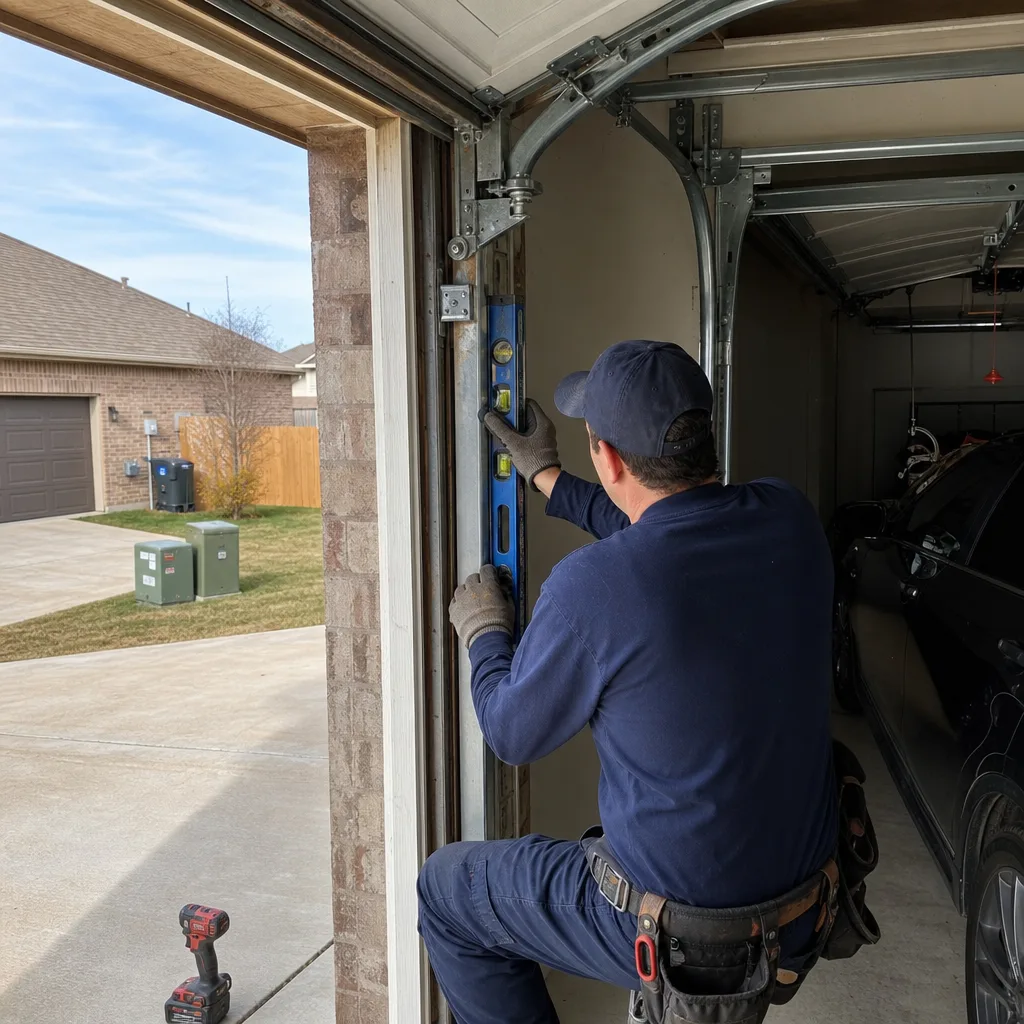
Most homeowners treat hiring as a conversation-three questions on the phone, a handshake at the door, and an invoice after the fact-rather than following a DIY vs professional garage door decision guide. That approach is how billing disputes start. The fix is to treat hiring as a paperwork sequence. Before any technician touches your garage door in Denton, you should have four documents in your hand, reviewed, with your questions answered. If a contractor cannot produce all four, you do not have a contractor. You have a person with a truck and a hope.
- A written itemized quote with part numbers. Not a verbal estimate. Not a number scrawled on a business card. A document that lists every part being replaced, the manufacturer part number for each, the labor hours or flat labor charge, and the total price you will pay. “Garage door spring replacement: $285” is not itemized. “Torsion spring, 0.250-inch wire, 24-inch length, part #TS-250-24, quantity 2, labor included: $285” is itemized. The second version lets you compare, verify, and hold someone accountable. The first version lets the contractor substitute a cheaper part and keep the difference.
- Proof of general liability insurance naming your address. Request a certificate of liability insurance that lists your property address as the certificate holder. This document proves the policy exists and that the insurer will notify you if the policy lapses before your job date. In Denton, where storms and flooding can delay work for weeks, this notice matters. A contractor who cannot produce a certificate is uninsured or underinsured. Either way, if a technician drops a door panel through your windshield, you are on your own.
- Written warranty terms. Not “we warranty our work.” Written terms: what is covered, for how long, and what voids the warranty. Does the warranty cover parts only, or labor too? Does it transfer if you sell the house? Is there a prorated schedule? We have seen Denton homeowners assume a spring replacement was covered when it failed at month four, only to learn that the “one-year warranty” they were promised on the phone excluded the spring itself. If the warranty is not on paper, it is not a warranty.
- Manufacturer authorization for claimed warranty work. If a contractor tells you they can perform warranty work on a garage door installation in Denton for a LiftMaster, Chamberlain, or Craftsman opener, ask for proof of manufacturer authorization. Manufacturers restrict who can perform warranty service, and an unauthorized technician who opens the unit can void the remaining warranty. “We work on all brands” does not mean “we are authorized by all brands.” The distinction matters when a failed logic board is involved.
A contractor who provides all four documents without pushback is not just organized. They are signaling that their process is built to survive scrutiny. That is the contractor you want working on a door that weighs hundreds of pounds and sits directly above your car and, depending on the layout, your children.
How to Verify a Denton Contractor’s Complaint History
Star ratings are the easiest way to evaluate a contractor and the easiest to fake. A company can buy reviews, pressure customers to leave five stars before the job is even cold, or bury negative feedback by flooding the page with positive submissions. What star ratings cannot hide is a formal complaint filed with a government agency or a dispute that went through the Better Business Bureau. If you want to know how a contractor behaves when things go wrong, you look at the complaint record, not the average score.
Texas Attorney General Consumer Protection Database
The Texas Attorney General’s office maintains a searchable consumer protection database of complaints filed against businesses operating in the state, including Denton garage door companies. The search is free and takes five minutes. Enter the business name exactly as it appears on their invoice or website, and review what comes back. A pattern of complaints about billing practices, failure to complete work, or refusal to honor warranty obligations tells you more than fifty glowing reviews ever will. A clean complaint history is not proof of excellence, but an active pattern is proof of a problem the reviews are hiding. Most Denton homeowners never run this check. That is precisely why you should.
BBB Complaint and Resolution Record
The Better Business Bureau is not a government agency, but its complaint database is useful for one reason: it records how a company responds when a customer escalates. Look for the complaint count, the resolution rate, and the nature of the complaints. Did the company respond to every complaint, or did some go unanswered? Were complaints resolved with a refund or repair, or did the customer walk away unsatisfied? You are looking for how they behave when something goes wrong, not whether something has ever gone wrong. Every contractor who has done volume work has a dissatisfied customer somewhere. The question is what happened next. A company with 18,000 completed jobs and three resolved complaints is a stronger candidate than a company with 200 jobs and hidden reviews.
Contract Clauses That Protect You From Post-Job Price Additions
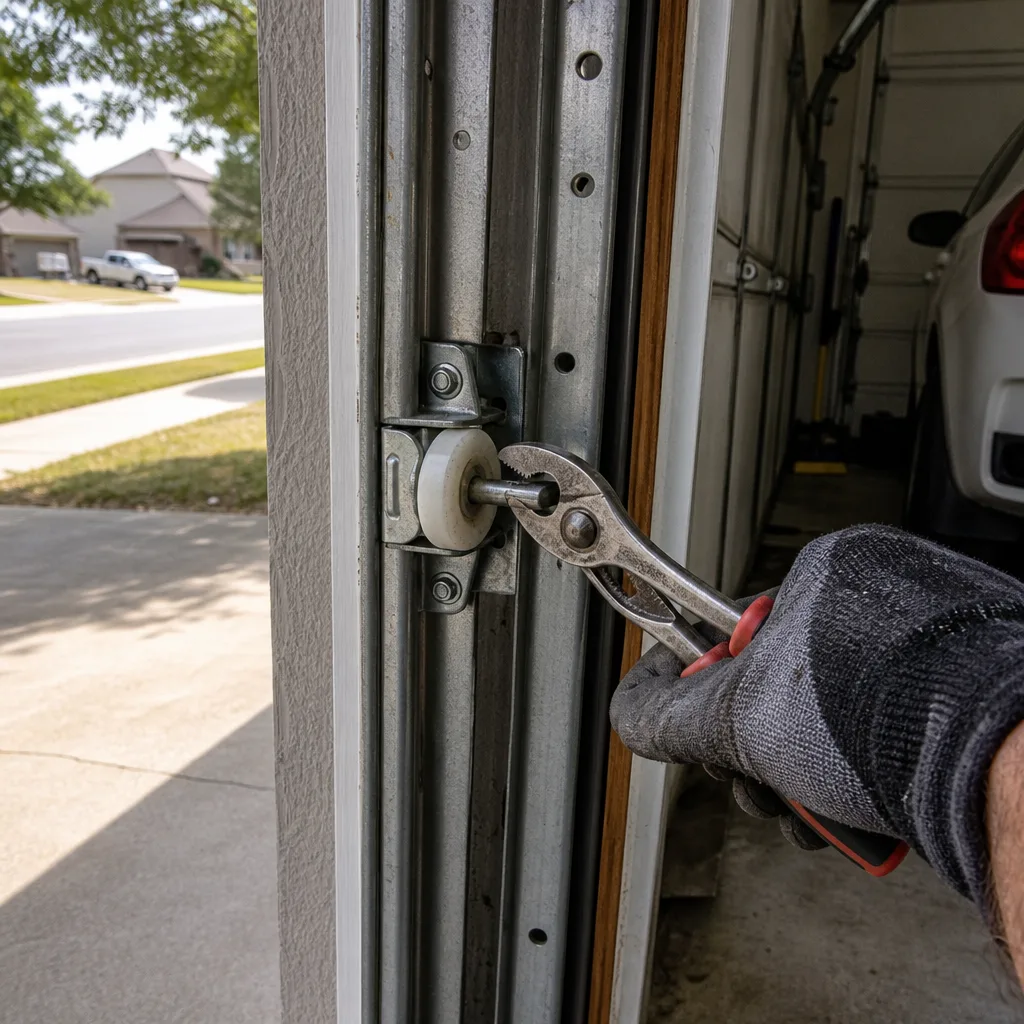
The most common garage door billing dispute in Denton is not the initial quote. It is the invoice that arrives after the door is installed and working, with line items that were not in the original agreement. “Additional parts were required.” “The install took longer than estimated.” “The opener needed a new rail, which is outside the original scope.” Homeowners pay these because they do not know they have the right to push back, and because the contract language effectively gave the contractor permission. Understanding three contract clauses changes that calculation entirely.
“Additional Parts May Be Required”
This clause, when left undefined, is a blank check. It allows the contractor to add chargeable parts at their discretion, and you have already agreed to the addition by signing the contract. The fix is to define the trigger: additional parts may only be added if they are discovered during the work, photographed and shown to you, and approved by you in writing before installation continues. If a contractor will not accept that limiting language, ask yourself what kind of work they expect to run into that they cannot describe in advance. A door that needs a new torsion spring rarely needs a new roller assembly too; a door that does would show it on inspection, as covered in our Seasonal Garage Door Care for Denton: Year-Round Homeowner’s Guide. The scope should reflect what the technician can see before starting.
“Labor Not Included”
We have seen proposals in Denton where the parts total looks reasonable and the words “labor will be calculated on completion” sit at the bottom in small type. That arrangement transfers all the risk to you. Without a defined labor number, the contractor has no incentive to work efficiently, and you have no way to evaluate the quote against a competitor’s. Demand that labor be listed as either a flat rate or an hourly rate with a maximum. A contractor who cannot tell you what the labor will cost before they start is telling you they do not know how long the job takes, which means they have not done enough of these jobs to estimate accurately, or they know exactly and want room to negotiate after the fact. Neither is acceptable.
“Emergency Fee” Without a Defined Trigger
An emergency fee is legitimate when it is defined: a dispatch after hours, on a holiday, or on short notice where a technician is pulled from another call. It is not legitimate when it appears as a line item with no trigger explained. If the invoice says “Emergency fee: $95” and you never requested emergency service, you are being charged for the contractor’s scheduling problem. The contract should state exactly what constitutes an emergency and what the fee covers. No defined trigger, no fee. That is a reasonable position and a defensible one if the dispute ever escalates.
Red Flags That Appear in Quotes, Not in Conversation
Contractors are good at talking. Most can sound confident, knowledgeable, and trustworthy on the phone or at your door. What they cannot hide is a poorly written quote. The document reveals what the conversation conceals. Here are four red flags we tell Denton homeowners to look for, and they appear in the paperwork, not in the sales pitch.
- Labor as a single line item with no breakdown. If the quote says “Labor: $350” without specifying what the labor covers, you cannot compare it to another contractor’s quote. Is that $350 for one technician for two hours, or two technicians for four? Is travel included, or billed separately? A single labor line is a signal that the contractor either does not know how to scope the work or does not want you to see how the number was built. Both are disqualifying.
- Parts listed without part numbers. “Torsion spring” is not a part. It is a category of parts, and within that category there are dozens of variations that differ in wire diameter, coil length, and cycle life. A quote that says “torsion spring: $240” could mean a 10,000-cycle spring or a 30,000-cycle spring, and the price difference between those is material. If the part number is missing, you cannot verify what you are buying, and you cannot hold the contractor to a specific product. Request the part number on every line item. A Raynor or Genie door has specific hardware requirements, and the quote should reflect that specificity.
- An “emergency fee” without a defined trigger. Covered in the section above, but it bears repeating because it is the single fastest way a contractor can inflate a quote. If the fee appears and you did not request emergency service, ask what emergency the fee is responding to. The answer will tell you everything.
- Parts and labor that are implausibly separated. A quote for $89 in parts and $400 in labor on a two-hour spring replacement is not a pricing strategy; it is an attempt to make the parts look cheap while burying the profit in an inflated labor number. It defeats your ability to compare on either line. You want each line to be defensible on its own. If the labor number is more than double what a two-hour job should command in the Denton market, something is being hidden in it.
The common thread is this: a legitimate quote can survive scrutiny. You can ask about every line item, challenge every number, and the contractor can explain exactly how the price was built and stand behind it. A quote that collapses under questions is not a negotiation starting point. It is a warning.
How to Structure a Two-Contractor Comparison
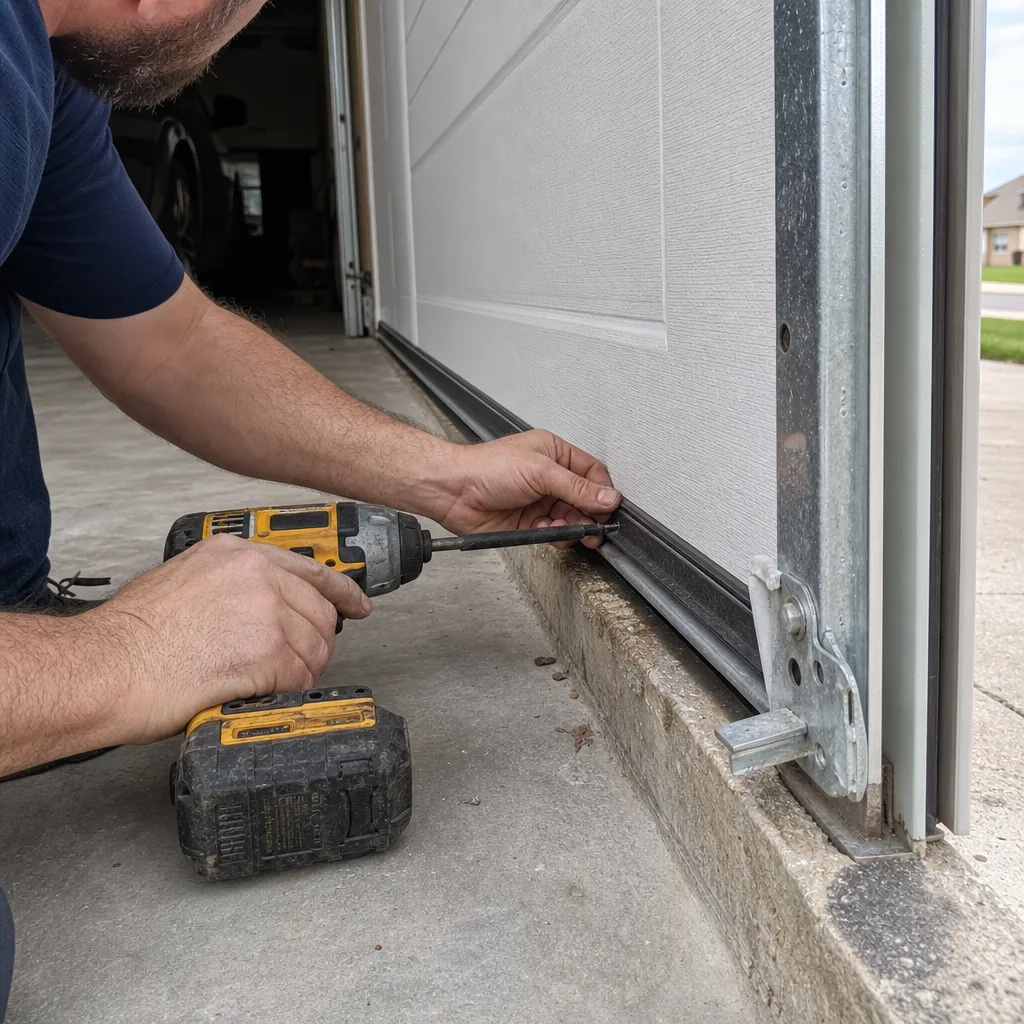
Most homeowners compare contractors the way they compare restaurants: they look at the total and pick the one they liked better on the phone. That comparison is meaningless in garage door work because the two proposals are almost never for the same job. One contractor quotes a 20,000-cycle spring; the other quotes a 30,000-cycle spring and adds a center bearing plate. One includes haul-away of the old door; the other does not. One quotes an opener with a battery backup; the other quotes the base model. Comparing the totals is comparing two different projects. Here is how to make the comparison apples to apples.
- Get both quotes in writing, itemized, with part numbers. If one contractor will not itemize, they are not participating in the comparison. That is fine. Cross them off the list and replace them. The comparison only works when both documents are built the same way.
- Build a scope matrix before you call either contractor. Write down exactly what you want: the door size, the material (steel, wood, composite), the insulation R-value if relevant, the openers you want considered, and whether you want haul-away included. Hand the same list to both contractors. When they quote, check each proposal against your matrix. Anything that appears in one but not the other gets flagged and reconciled.
- Reconcile the differences item by item. Contractor A quotes a Clopay door with a 27 R-value; Contractor B quotes a generic steel door. That is not a price difference. That is a product difference. Call each contractor and ask them to explain the variance. You are not looking for the cheaper total. You are looking for the contractor who can explain why they specified what they specified.
- Compare the warranty language, not just the warranty length. A ten-year warranty that excludes hardware, requires annual paid maintenance, and is voided by a DIY adjustment is worth less than a three-year warranty that covers parts and labor with no maintenance requirement. Read what the warranty actually covers, and compare that document side by side with the price.
- Weigh the documentation commitments. Does one contractor commit to providing a photo record of the work? A written scope before starting? A flat price that does not move after the door is open? Those commitments have value, and they should factor into your decision. The cheapest quote that cannot commit to documenting the work is often the most expensive option once the invoice arrives.
This is more work than comparing totals. It is also the difference between hiring a contractor and hiring hope. The contractor who survives this process is one who does documented work at a defined price, which means they are capable of doing the job properly and proving it afterward. That is the contractor you want for a garage door opener repair or installation in Denton, and it is the contractor you want for a full door replacement too.
Common Mistakes to Avoid
- Accepting a verbal quote. In Texas, a verbal quote is not binding in any practical sense. If the price changes after the work begins and you have nothing in writing, you have no basis to dispute the invoice. Request a written quote before the technician unloads the first tool.
- Skipping the insurance certificate. Homeowners assume that because a company has a website and a van with a logo, they must be insured. That assumption is expensive. An uninsured technician who damages your property or gets injured on your property creates a liability situation that your homeowners policy may not fully cover. Verify the policy exists before the work starts.
- Comparing quotes that do not describe the same scope. Two numbers with no itemization cannot be compared. You are not comparing contractors; you are comparing their willingness to write less on a piece of paper. Demand itemization and build your comparison on the details.
- Not checking complaint history. The Texas Attorney General database and the BBB are free to search and take ten minutes. Skipping this step is choosing to be uninformed about information that is readily available. Do not make that choice.
- Prioritizing speed over documentation. A contractor who can be at your door in 30 minutes and a contractor who provides a written scope before arriving are often different companies. The fast one is responding to an emergency pricing opportunity. The documented one is running a real business. When your door is hanging off the track at 2 a.m., speed matters. When you are hiring for a planned replacement, documentation matters more.
- Signing a contract with “additional parts may be required” language left undefined. That clause, as written, is a price escalation mechanism disguised as a standard term. Define the trigger, get photo evidence requirements in writing, and require that any additional parts be approved by you before installation continues.
- Assuming warranty means what you think it means. “Lifetime warranty” on a spring means the spring’s expected cycle life, not your lifetime. “One-year warranty” on labor may exclude adjustments, which are the most common post-installation service call. Read the terms and ask what is excluded before you sign.
When to Call a Professional
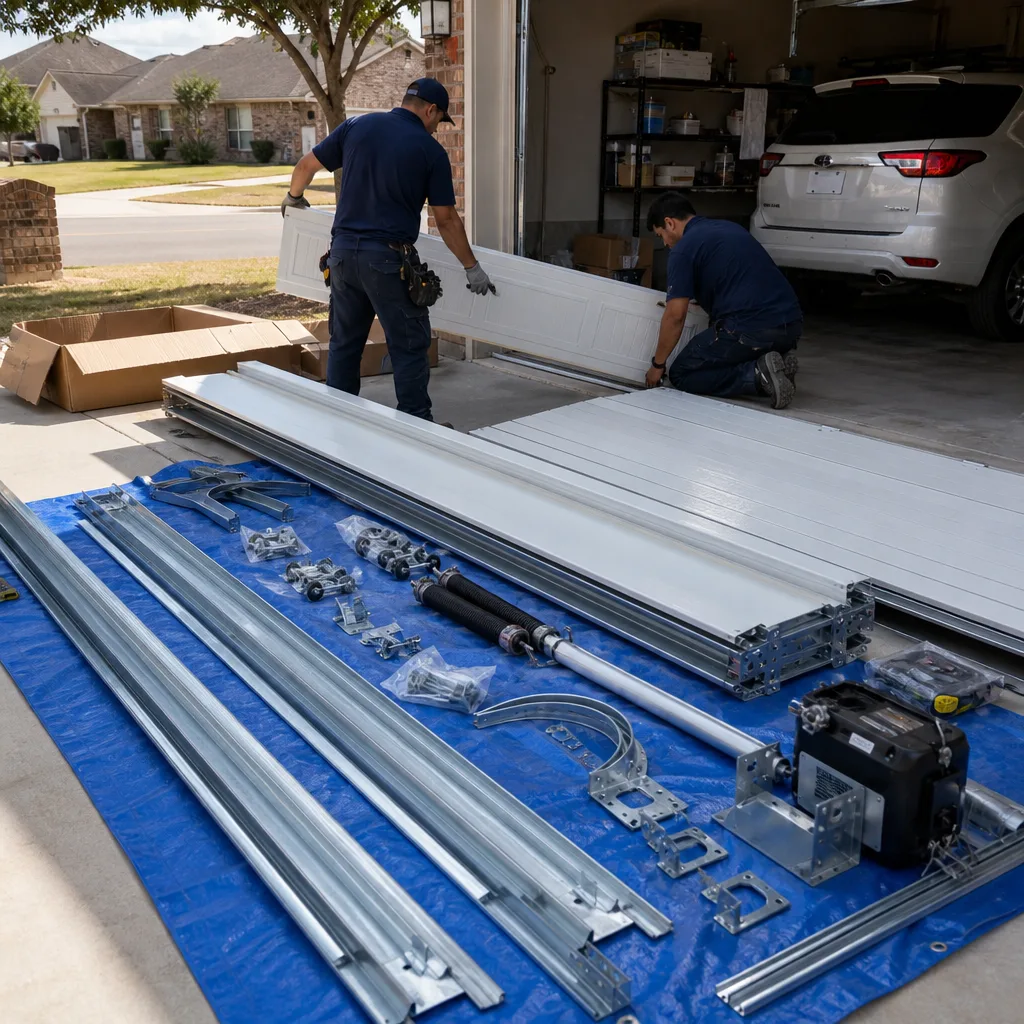
Some garage door problems are safe to evaluate on your own. A door that is off-balance, a remote that needs reprogramming, or a roller that is visibly worn are all reasonable things to notice without calling anyone. But the moment the work involves a torsion spring under tension, a cable that attaches to that spring, or anything connected to the spring system, you are dealing with a component that stores enough energy to cause serious injury if mishandled. Torsion springs are wound under high tension, and the winding and unwinding process requires proper winding bars and technique. If a cable has snapped, a spring has broken, or the door is uneven because one side of the spring system has failed, do not attempt to fix it yourself. Servo Garage Doors Denton home offers free estimates in Denton. Call (940) 398-6880 and ask for a written quote before any work begins.
Frequently Asked Questions
A reputable contractor provides a written itemized quote with part numbers, a certificate of liability insurance naming your address, written warranty terms, and a willingness to answer questions about every line item on the proposal. Check their complaint history through the Texas Attorney General’s consumer protection database and the BBB, and look for a documented system, not just a sales pitch. Every claim they make should be verifiable in writing.
No. Texas does not currently license garage door contractors as a separate trade classification through TDLR or any other state agency, so there is no state garage door license to verify. This is why insurance verification, written quotes, and complaint history checks matter so much in Denton. You are filling a regulatory gap with your own due diligence.
Denton garage door repair pricing varies by the part and the scope. A single spring replacement typically runs from $180 to $400 depending on the spring’s cycle rating and the door’s weight; an opener logic board replacement can run $180 to $350; a full roller replacement on a double door often falls between $150 and $300. Request a written itemized quote for your specific situation, and never accept a verbal range as a firm price. Call (940) 398-6880 for an exact written quote, which is free and itemized.
Many Denton garage door companies can dispatch a technician same day for an emergency such as a broken spring or a door stuck open, and same-day emergency service is available 24/7 including holidays. For planned replacement or installation work, same-day service is not the norm because the door or opener must be ordered and the installation scheduled. Call (940) 398-6880 to find out if same-day dispatch is available for your situation.
An installation quote should itemize the door by brand and model, list the insulation R-value, specify the opener included (and whether battery backup is part of the package), state the labor as a flat or capped rate, and note whether haul-away of the old door is included. Missing any of those elements means you cannot compare the quote against another contractor’s proposal accurately. Request the details in writing before signing anything.
Yes, reputable companies in Denton typically offer free estimates, but you should confirm what “free” includes. A free estimate should mean a written quote with an itemized scope delivered after an on-site inspection, not a verbal price given over the phone. Servo Garage Doors Denton provides free written estimates with no obligation. Call (940) 398-6880 to schedule one.
The Bottom Line
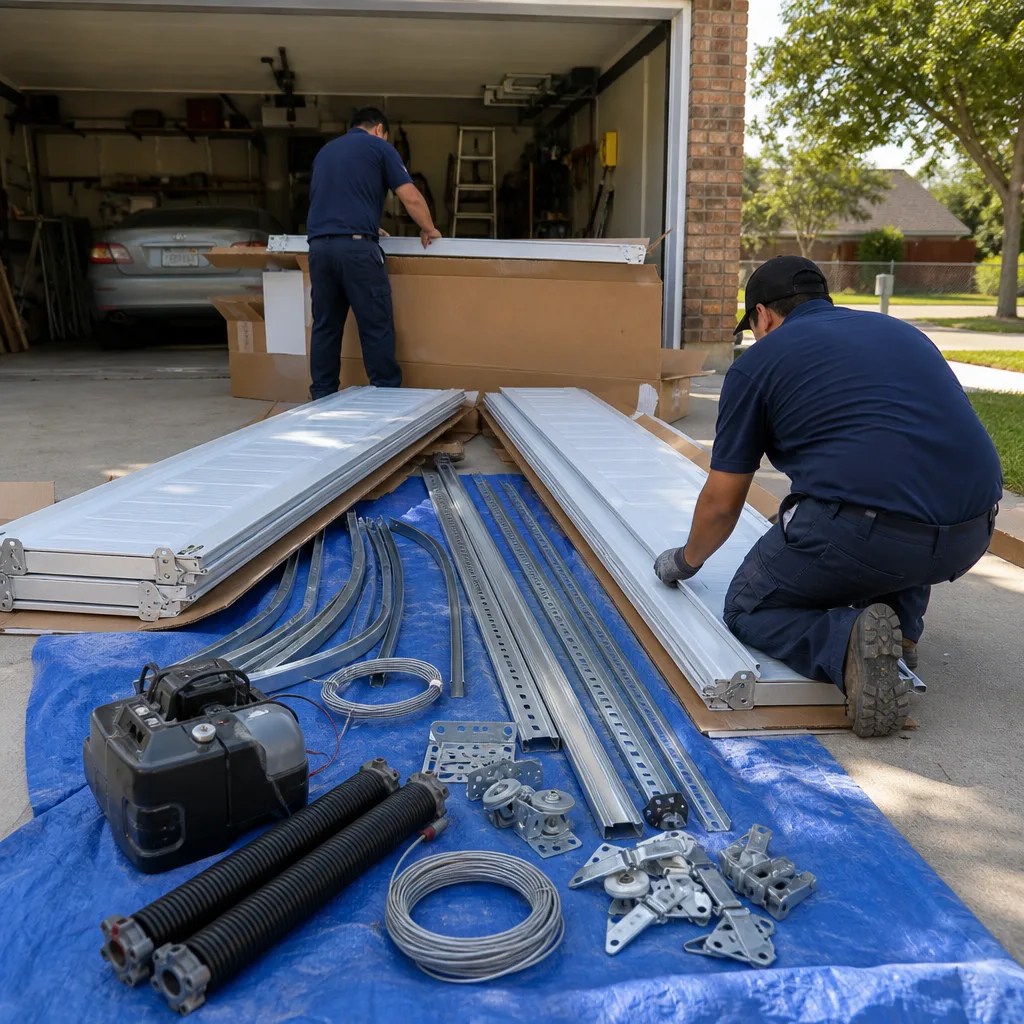
Hiring a garage door contractor in Denton is a documentation exercise, not a conversation, and one of many topics covered in our more guides & resources. Without a state license requirement, your only protection is the paperwork you demand before work begins: a written itemized quote, an insurance certificate, warranty terms, and a complaint history that has been checked. The contractor who provides all of that without hesitation is rare and exactly the one you want. The contractor who hesitates is giving you a reason to keep looking. Mark the quotes down, compare the details, and hold every promise to the page. If it is not written down, it did not happen, and when a spring snaps or a door falls, what happened is all that matters.
Written by Marcus Deller, Owner at Servo Garage Doors Denton, serving Denton since 2015.
Ready to hire with confidence? Call Servo Garage Doors Denton at (940) 398-6880 for a free written estimate with itemized pricing and a documented photo record on every visit. We serve Denton and the surrounding area with flat, written pricing before any work starts, per Clause 1 of The Haven Standard.