
Last updated September 20, 2026
Full 25-point door and opener safety check with every visit - springs, cables, rollers, tracks, and your LiftMaster or Chamberlain opener included
You get a price before we start. It does not change when the truck arrives.
 Before
 After
After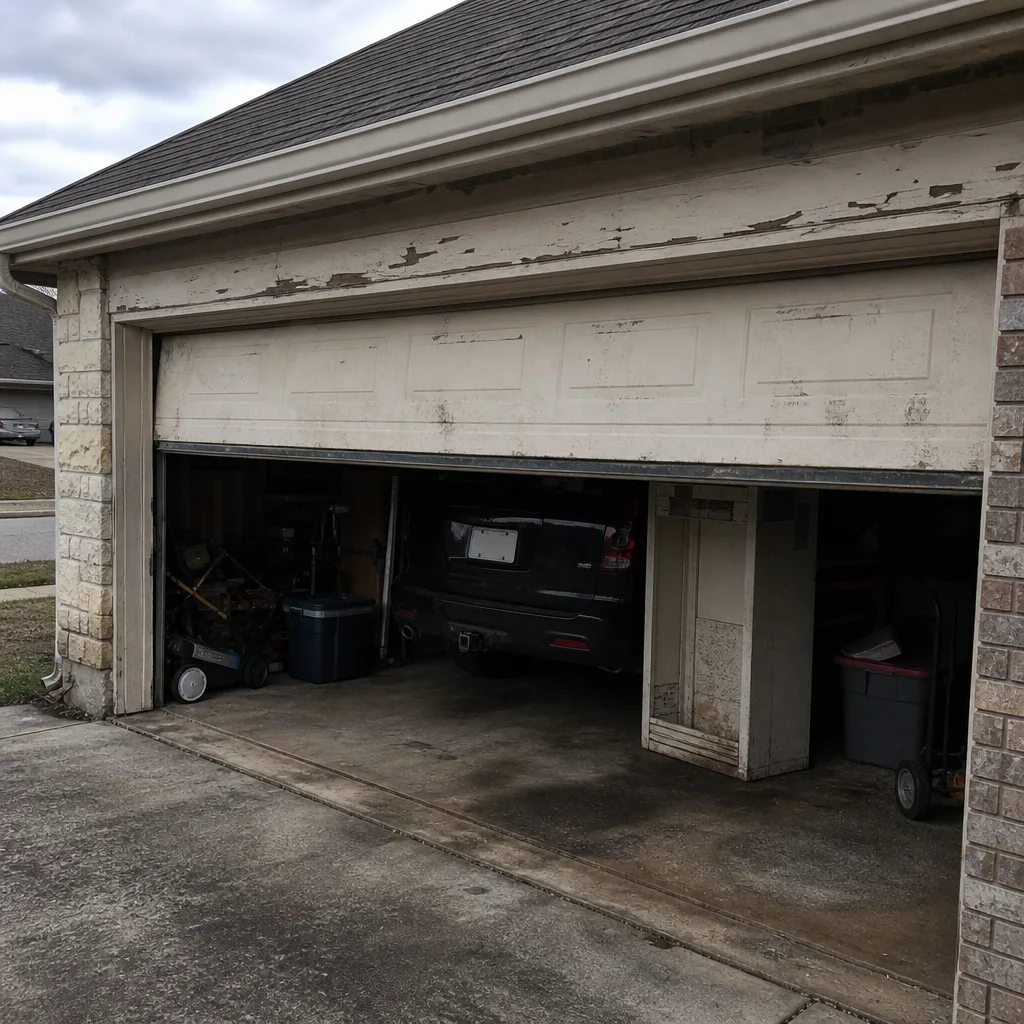 Before
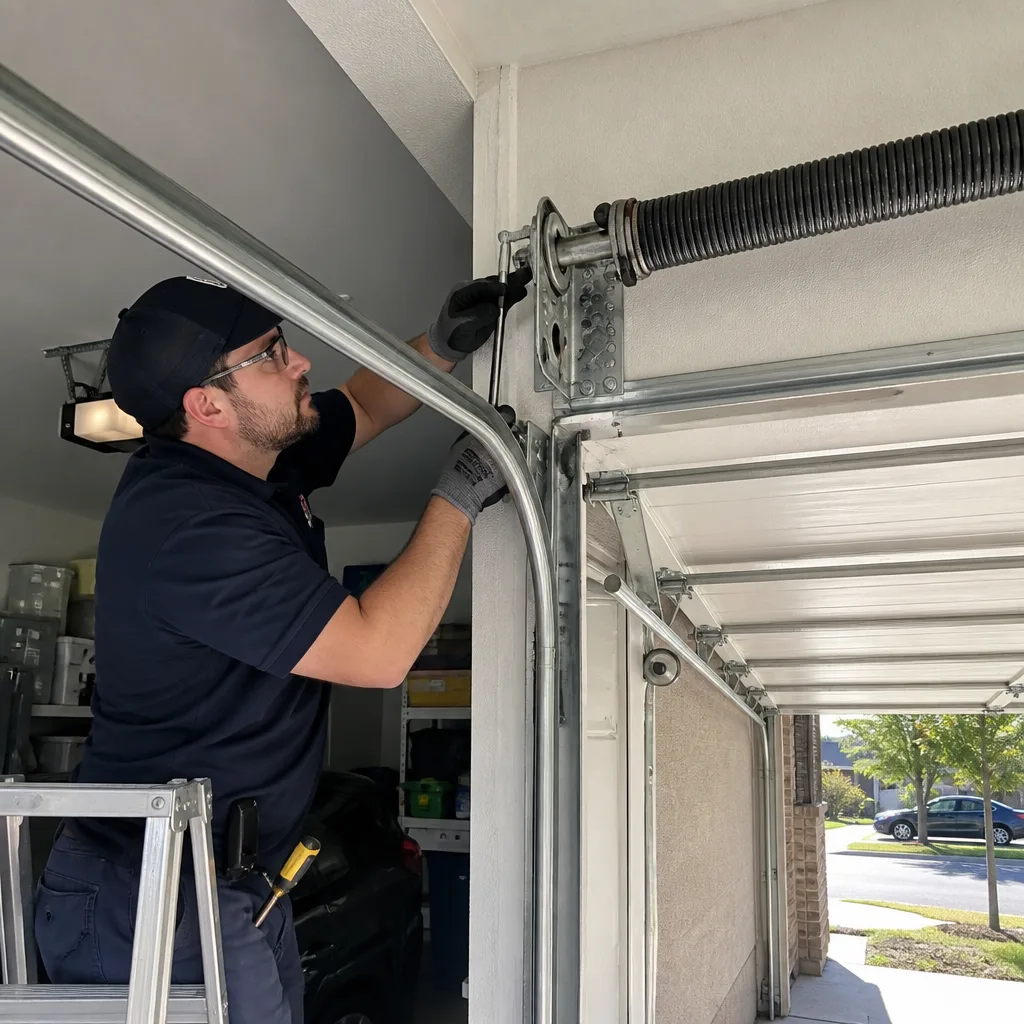 After
After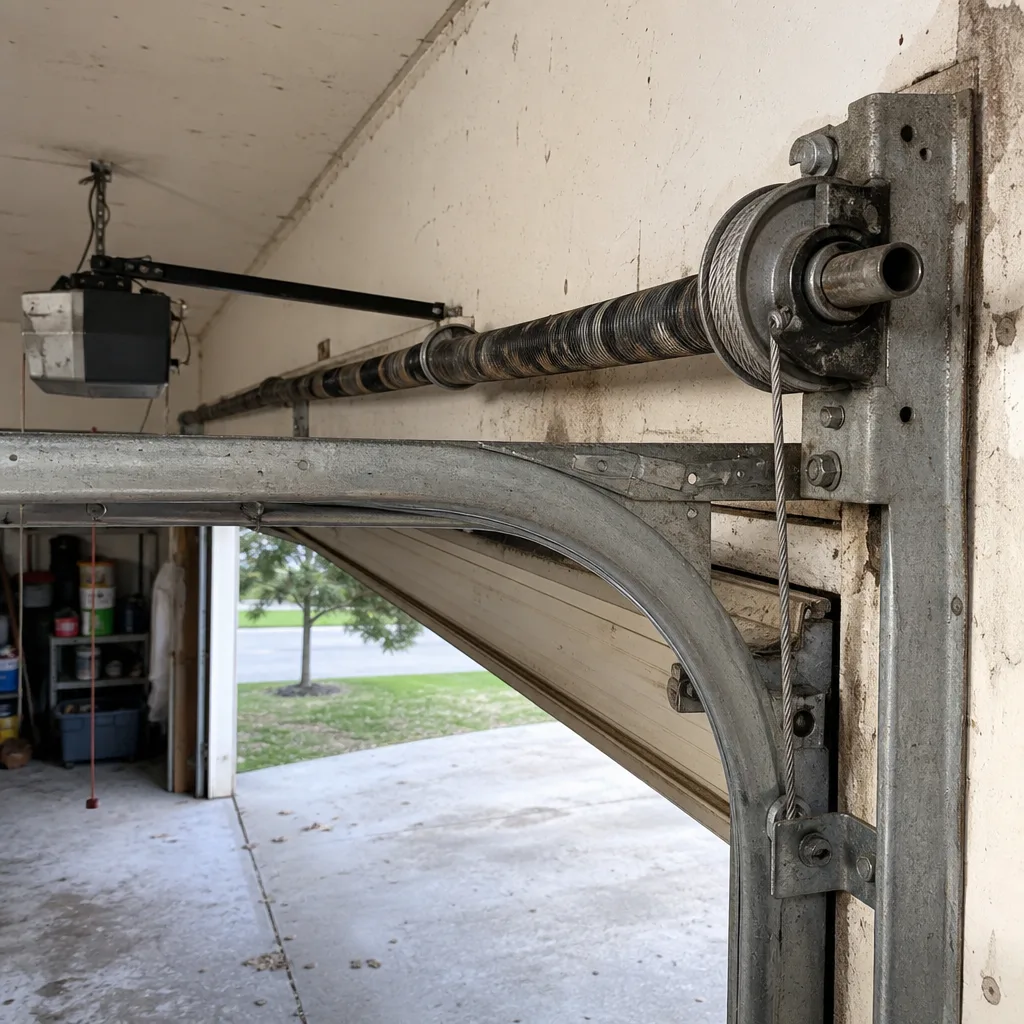 Before
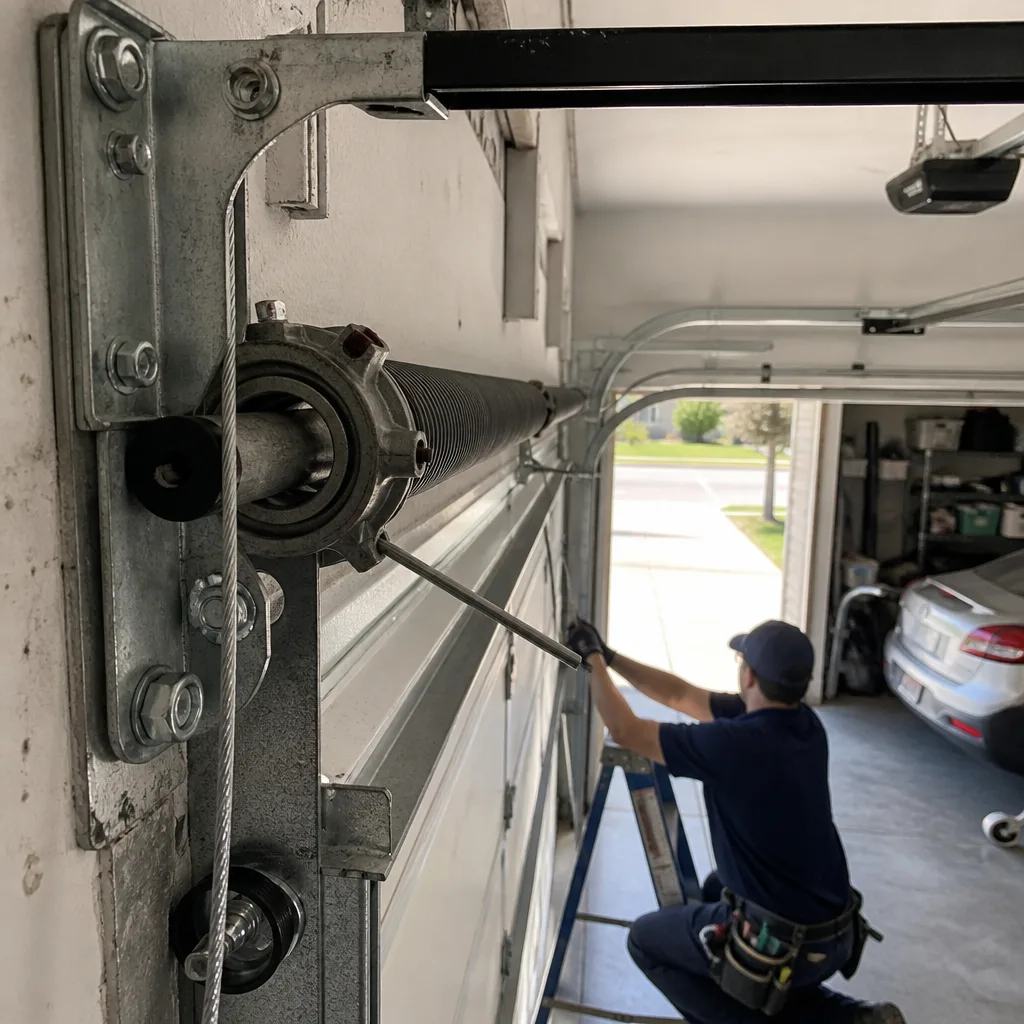 After
AfterGarage Door Cost Breakdown: The Denton Homeowner’s Reference for 2026
Here’s a number most national cost guides won’t tell you: in the Denton market right now, a single torsion spring replacement can legitimately cost anywhere from $180 to $485 depending on whether the contractor charges installer cost or retail markup for the exact same spring. That spread isn’t fraud. It’s procurement. And once you understand where markup accumulates, a confusing quote becomes a set of checkable line items. This guide uses 2025-2026 invoice data from Denton-area jobs to show you what parts actually cost, what labor is worth in this market, and how to read a written quote so you’re comparing documentation, not trusting a sales pitch.
Quick Answer
Garage door repair in Denton, TX typically costs between $125 and $400 for most component-level work in 2026, while full door replacement runs $1,100 to $4,200 installed depending on size, insulation, and material. Labor accounts for 60-70% of most repair invoices because Denton’s skilled-trade market is tight and most jobs require two visits: diagnosis and repair. The single most effective way to control cost is to get a written quote that lists part numbers and scope before any work starts, so you can verify what you’re actually paying for-our Garage Door Repair Maintenance Checklist for Denton Homeowners covers what to ask for.
Table of Contents
- Component-Level Cost Ranges for Denton in 2026
- The Three Pricing Models Denton Contractors Use
- How to Read a Written Quote Like a Cost Benchmark
- What Urgency Actually Costs in Denton
- Repair vs. Panel Replacement vs. Full Door: The Breakeven Math
- Garage Door Opener Costs: What’s Reasonable in 2026
- Why Denton Prices Differ From National Averages
- Common Mistakes to Avoid
- When to Call a Professional
- Frequently Asked Questions
BeforeAfterComponent-Level Cost Ranges for Denton in 2026
Most garage door failures come down to one or two parts, not the whole system. Knowing what each component costs, installed, in this specific market, gives you a benchmark that national averages never will. The ranges below reflect what we’ve seen on Denton invoices across 2025 and early 2026, including parts sourced from the same distributors every local contractor uses: North Texas supplier pricing, not national list price.
Torsion Springs
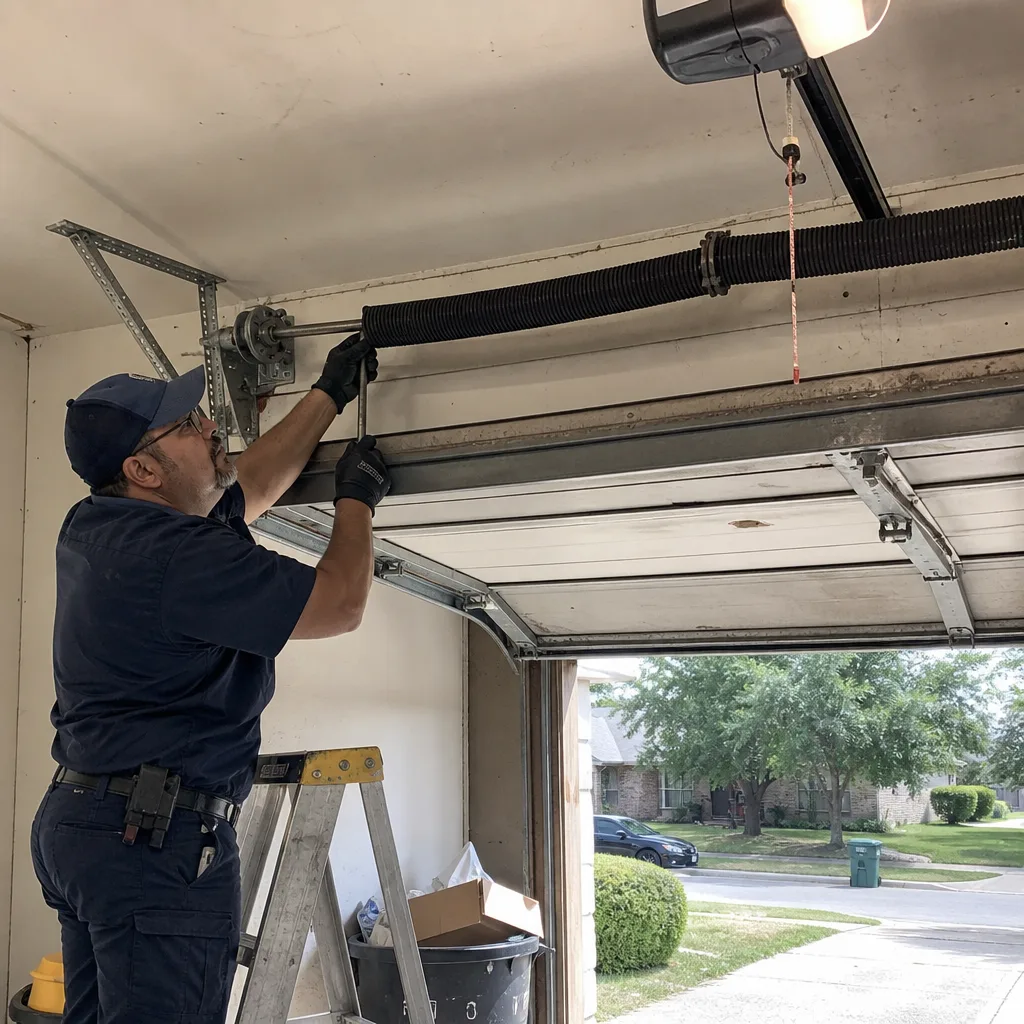
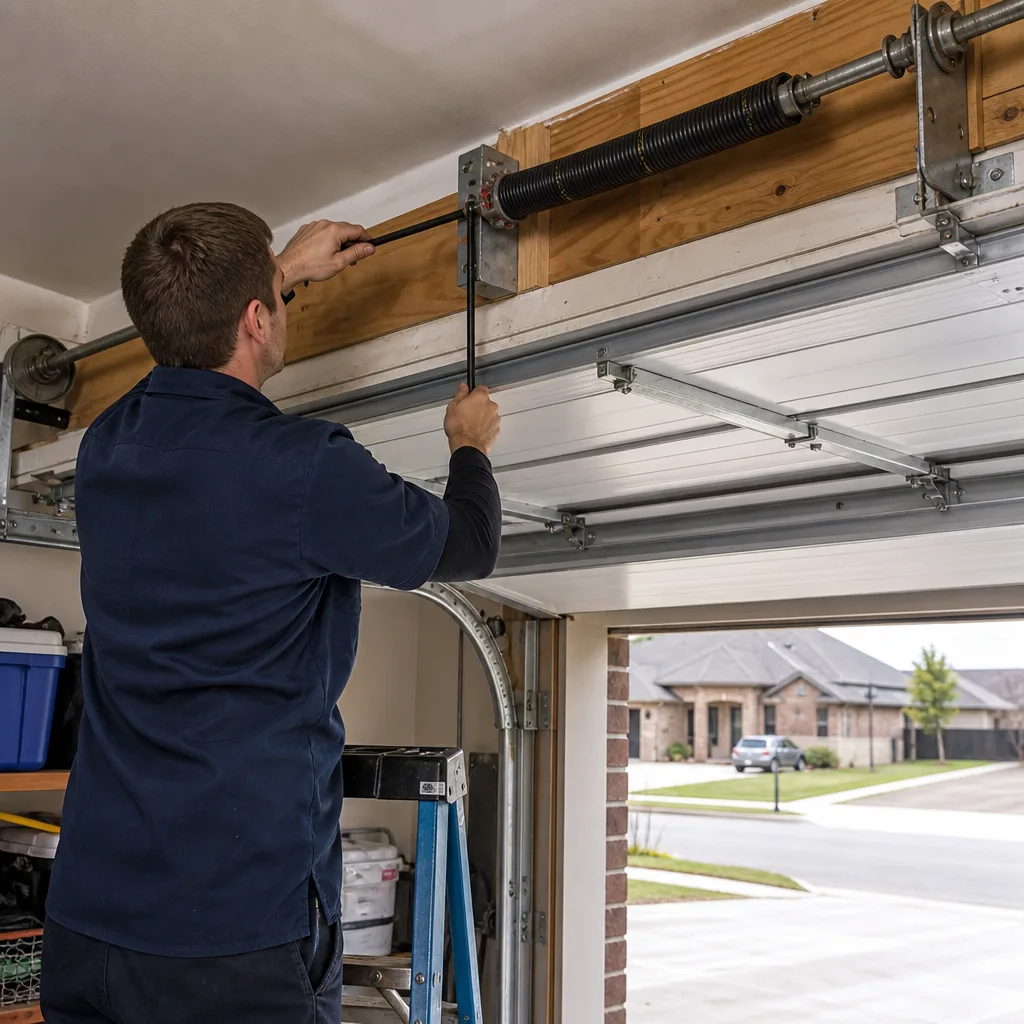
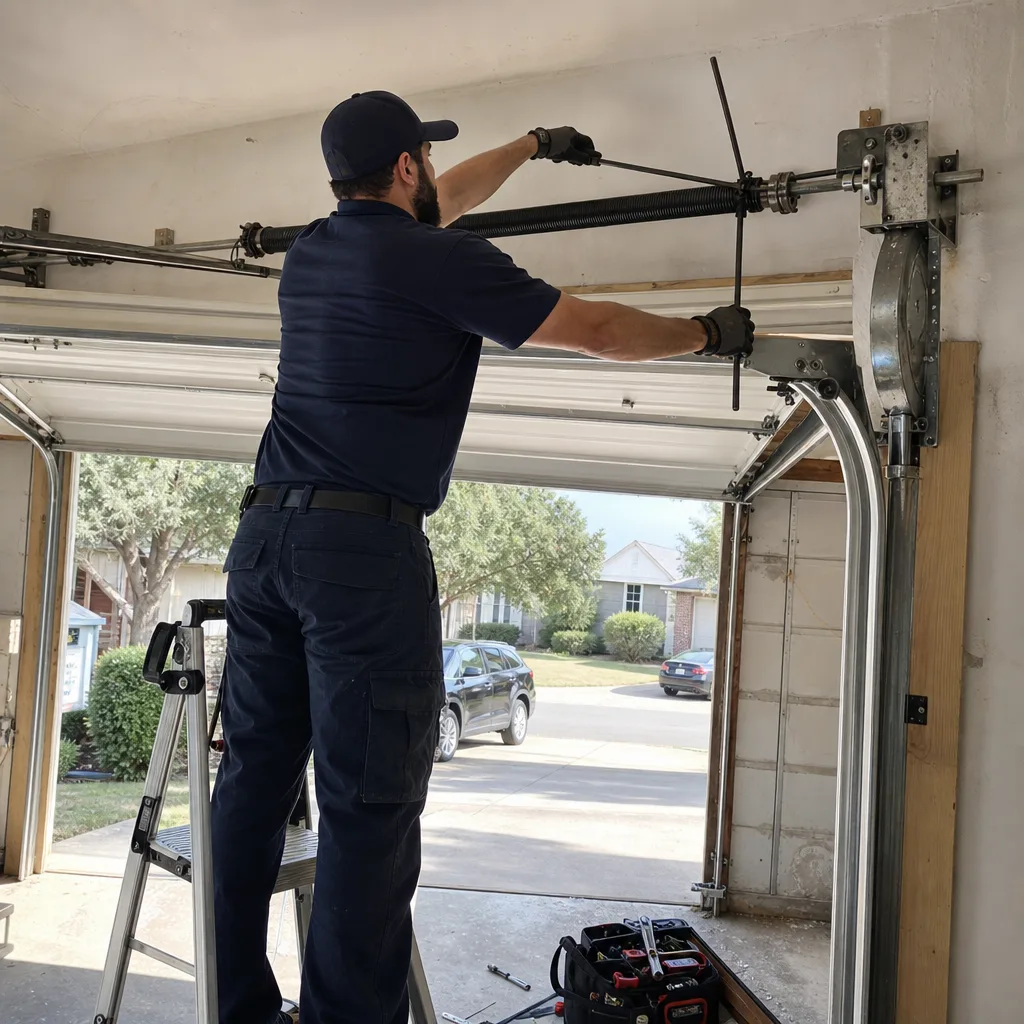
A pair of torsion springs (the coiled steel above the closed door that do the actual lifting) typically runs $180 to $385 installed in Denton. The spread comes down to wire diameter and cycle rating: a 10,000-cycle spring pair costs less than a 25,000-cycle pair because the steel is lighter-gauge. In neighborhoods like Southridge and Idiot’s Hill where homes date to the 1970s and 1980s, we see more single-spring sets that were common then, and converting those to a dual-spring system adds about $60 in labor and hardware. The spring itself usually runs $30 to $80 wholesale depending on gauge, which means the labor to wind and set it, plus the service call, is where your money goes. This is the one component where the danger is real: torsion springs hold enough torque to break a wrist or worse, and they should only be handled by a technician with the right winding bars and experience.
Extension Springs and Cables
Older Denton homes, especially in areas off Bell Avenue and around Texas Woman’s University with mid-century construction, often have extension springs on the horizontal tracks. Those run $140 to $265 installed for a pair including safety cables (required by Texas code to run through the spring core and prevent a snapped spring from becoming a projectile). Lift cables that fray and snap account for a disproportionate share of emergency calls in Denton’s wetter spring months when humidity accelerates corrosion on galvanized cable ends. A cable replacement runs $95 to $175 installed, and we recommend replacing both sides even if only one failed, because the unworn cable has seen identical cycle counts and it will be the next to fail.
Rollers and Hinges
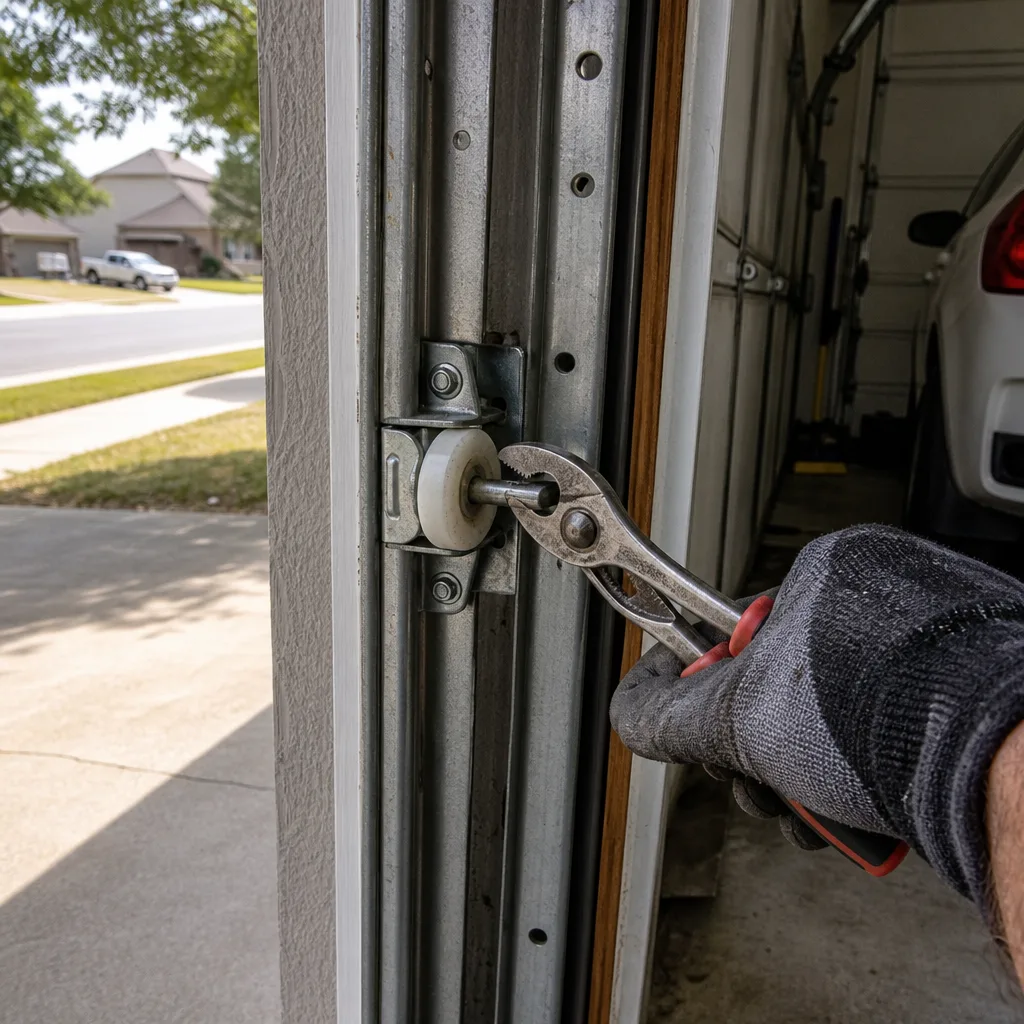
Roller replacement, all 10 to 12 wheels on a standard two-car door, costs $90 to $160 installed. Steel rollers with sealed ball bearings outlast nylon rollers by roughly two-to-one in Denton’s climate because the North Texas heat degrades nylon bushings faster. Hinges run $15 to $40 each installed depending on whether they’re the standard gauge or the heavier-gauge versions on insulated doors. These are the parts where we see honest bills and inflated ones both spanning a narrow range, because the material cost is low and the variation is almost all labor. A reasonable labor-to-parts ratio here is about 60/40, meaning if your quote is $150 for rollers, roughly $60 is parts and $90 is labor.
Panels
A single panel replacement on an Amarr or Wayne Dalton steel door runs $250 to $550 installed in Denton, and that range deserves explaining. The panel itself costs $90 to $220 depending on brand, insulation, and whether it’s a top section (which includes the strut that stiffens the door across its width) or a bottom section (which carries the weatherstripping and the cable attachments). The rest is labor and the reality that matching a panel’s paint and wear is never perfect. We tell homeowners honestly: a replaced panel on a 12-year-old door will be visible. It will be structurally sound, but you’ll see it. That’s not a workmanship failure. It’s physics. The sun in Denton fades everything eventually.
Full Door Systems
A complete door replacement, which we’ll cover in the breakeven section below, runs $1,100 to $4,200 installed for the door itself, not including opener. The low end is a basic non-insulated single-car door. The high end is a two-car insulated steel door with a decorative window insert. Materials account for about 55% of this invoice, which is why procurement matters so much: contractors buying through distribution at wholesale pass that along, while contractors buying at big-box retail and marking up to cover margin will land 25-30% higher for the same SKU.
For a broader look at what repairs cost in the aggregate across all these components, our Garage Door Repair in Denton guide breaks down the most common failure patterns by season.
The Three Pricing Models Denton Contractors Use
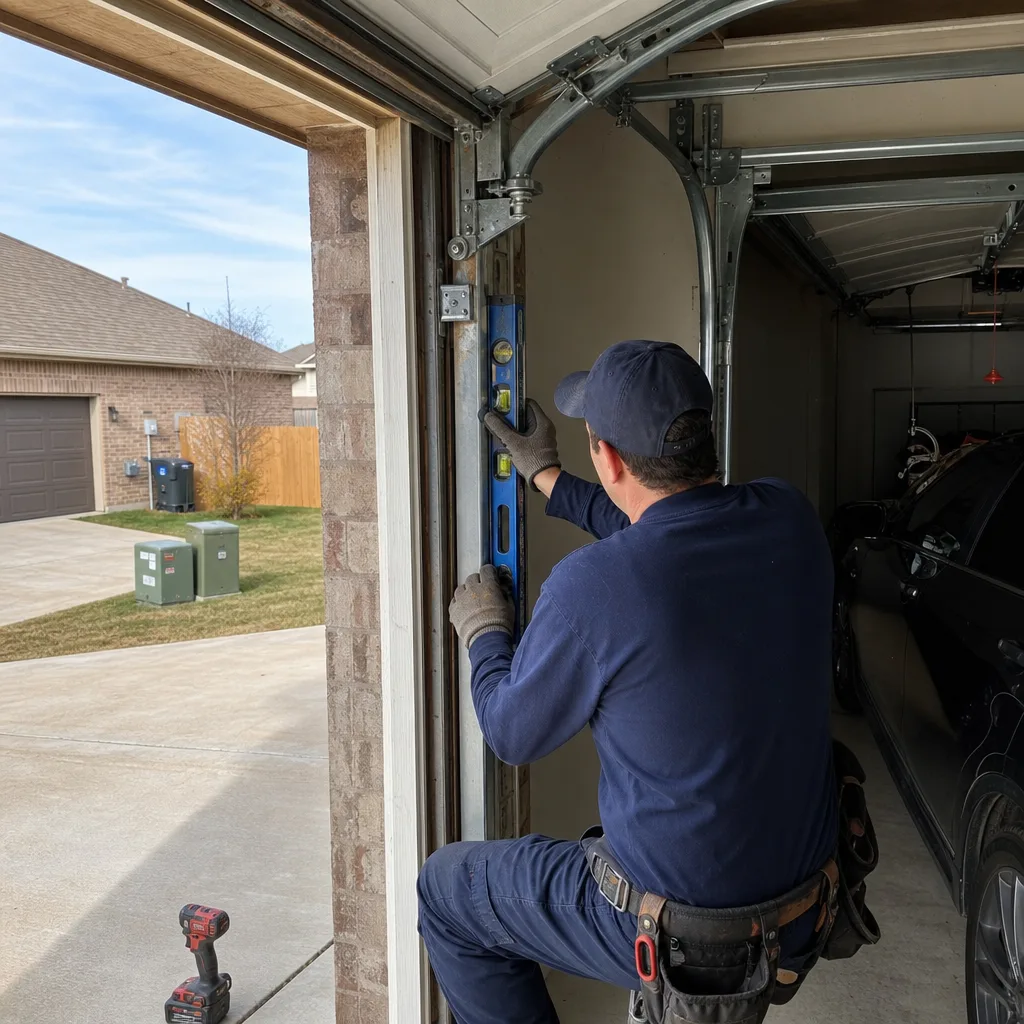
Before you compare two quotes, understand the model behind each one. The pricing model determines your financial risk, not just the number on the page. Here are the three models operating in the Denton market in 2026, and what each means for the homeowner on the hook for the bill.
- Flat-Rate (Quoted and Locked). The contractor quotes a fixed price before any work starts, and that number doesn’t change unless you approve a written change order. Your risk is zero if a part turns out to be more expensive than the contractor assumed. The tradeoff is that the price includes a small buffer for that possibility. Worth it for most homeowners.
- Time-and-Materials. You pay for actual hours worked plus actual part cost plus a stated markup. The quote is an estimate, not a commitment. Your risk is the meter running if the job exposes a hidden problem. The advantage is that if everything goes smoothly, you might pay slightly less than flat-rate. This model is common among smaller one-truck operations in Denton and is fine as long as the hourly rate and markup are on the page. If they’re not, you’re signing a blank check.
- Quoted-and-Locked with Documentation. This is the model we work under, and it’s a variant of flat-rate worth calling out separately because of what it includes. The written price is Clause 1 of The Haven Standard: a flat, written price and written scope delivered before any work begins, no exceptions. The documentation piece, Clause 4, is the founding rule of this company: the technician photographs the failed component before quoting a replacement, and you receive that photo record when the job is done. That’s the model where the quote isn’t just a number, it’s evidence.
How to Read a Written Quote Like a Cost Benchmark
A written quote is either a benchmark you can verify or a list of adjectives that mean nothing. Here’s how to tell the difference, and what to do once you have a good one in hand.
Step 1: Check for Part Numbers
A legitimate garage door quote in 2026 lists manufacturer part numbers, not descriptions like “spring” or “opener unit.” A torsion spring should show a wire diameter (like 0.225 or 0.250), an inside diameter, and a wind direction. An opener should show a model number like LiftMaster 87504 or Chamberlain B4613T. If the quote doesn’t have part numbers, the contractor either doesn’t know what they’re installing or doesn’t want you checking prices. Either is disqualifying.
Step 2: Look Up Distributor Pricing
Part numbers let you look up what the part actually costs. Commercial supplier sites publish wholesale pricing that’s visible to the public for most mainstream parts. A Chamberlain belt-drive opener that lists for $289 retail costs about $210 to $240 at trade price. A pair of 0.250-inch torsion springs runs $45 to $70 at distributor cost. If your quote prices the part at 2.5x distributor cost or more, you’ve found where the markup lives. Some markup is legitimate, every business has overhead, but you should know what you’re paying for the part and what you’re paying for the labor as separate things.
Step 3: Calculate the Labor-to-Parts Ratio
Most garage door repairs in Denton should land between 55% and 70% labor as a share of the invoice. Here’s why that matters: if a $400 bill is $320 labor and $80 parts, and the job took two hours including drive time, that’s $160 an hour for a licensed, insured technician with a stocked truck. That’s in line with the market for skilled trade work in North Texas in 2026. If the ratio is inverted, $320 parts and $80 labor, the contractor is either buying parts at retail and passing the markup to you, or adding margin to the parts line. Ask for the part price at distributor cost as a line item. Contractors who document their pricing won’t flinch at that question. Contractors who built their model on parts markup will.
What Urgency Actually Costs in Denton
Here’s a quantified reality that most cost guides won’t publish: urgency pricing in the Denton market adds 25% to 45% over scheduled service. That’s a structural fact of how labor gets allocated, not a commentary on whether it’s fair. Here’s the breakdown.
Scheduled Maintenance Visits: Your Cost Baseline
A scheduled visit, meaning we put you on the calendar for a Tuesday morning slot, prices labor at the standard shop rate. No one’s schedule gets rearranged. The technician dispatches from the shop at 8:30, handles your job, handles the next one, and goes home at a normal hour. If the part is in stock on the truck (which covers 85% of common repairs), you pay the baseline. This is where the quotes in the component section above come from.
Next-Business-Day Service: The 10-15% Premium
Call on Wednesday evening, get on the calendar for Thursday, and you’ll typically pay 10-15% over the same job scheduled three days out. The labor rate is the same, but whoever handles your call is stopping what they’re doing, rescheduling something, or adding a stop to an already-full route. Someone absorbs that cost. In most denton shops it’s shared between the customer paying the premium and the company accepting a thinner margin on the rescheduled job.
Same-Day and Emergency Service: The 25-45% Reality
A garage door stuck open at 9pm, with a car inside and a neighborhood that’s seen property theft, is not a scheduled visit. Same-day and emergency work in Denton typically prices at 1.25x to 1.45x the scheduled rate for the same repair. That’s the honest number. The premium isn’t greedy, it’s the cost of holding a technician on call, dispatching outside normal hours, and paying for that responsiveness when it’s needed. Our own emergency rate structure works this way, and we quote the emergency premium as a line item before dispatching, because Clause 1 applies to every job including a 2am spring failure: written price, written scope, before any work starts.
Here’s what the numbers look like on a typical torsion spring replacement in Denton:
- Scheduled visit: $180 - $385
- Next business day: $200 - $425
- Same day or after-hours: $235 - $525
The lesson isn’t to avoid calling when you need help. A door that won’t close is a security problem and needs to be dealt with. The lesson is to know that the number on the phone will be different from the number on a scheduled quote, and to understand why.
Repair vs. Panel Replacement vs. Full Door: The Breakeven Math
At some point, patching a door stops being cheaper than replacing it. Here’s how to run that calculation with real Denton pricing.
The Formula
A full door replacement in Denton costs $1,100 to $4,200 installed. A panel replacement costs $250 to $550. A repair costs $125 to $400. The breakeven question is: over the next five years, does the cumulative cost of repairing your current door exceed the cost of replacing it with a door that won’t need those repairs?
Door Age as the Primary Variable
Garage doors in Denton’s climate have a realistic service life of 15 to 22 years for steel, less for wood, more for insulated steel with fiberglass overlay. The Texas sun bleaches and brittles weatherstripping fast. The humidity in late spring and early fall accelerates rust on hardware, especially galvanized cable ends and bracket fasteners. If your door is under 8 years old, a panel replacement almost always makes financial sense: you’re restoring a door with 10+ years of life left, and the chalky patina difference will even out over two or three seasons. If your door is 12 to 15 years old, the math starts to shift. You might pay $550 to replace a panel on a door that needs rollers, brackets, and spring work within the next few years. That’s when a full replacement at $1,800 to $2,400 for a mid-grade two-car insulated door starts looking like the rational play.
Insulation and Energy as a Denton-Specific Factor
Denton summers run hot, and a non-insulated steel door in direct afternoon sun turns your garage into a convection oven. Replacing an old uninsulated door with a polyurethane-core insulated door (R-value 12 to 18) changes your garage temperature enough that the room above it, if you have one, stops gaining heat through the ceiling. That’s not an energy-efficiency brochure talking point; it’s measurable on any August afternoon in Denton’s subdivisions. If your current door is uninsulated, the energy case for replacement gets stronger every summer it survives.
If replacement is the direction you’re heading, our Garage Door Installation in Denton guide walks through material choices, insulation values, and what to expect from the install process itself.
Garage Door Opener Costs: What’s Reasonable in 2026
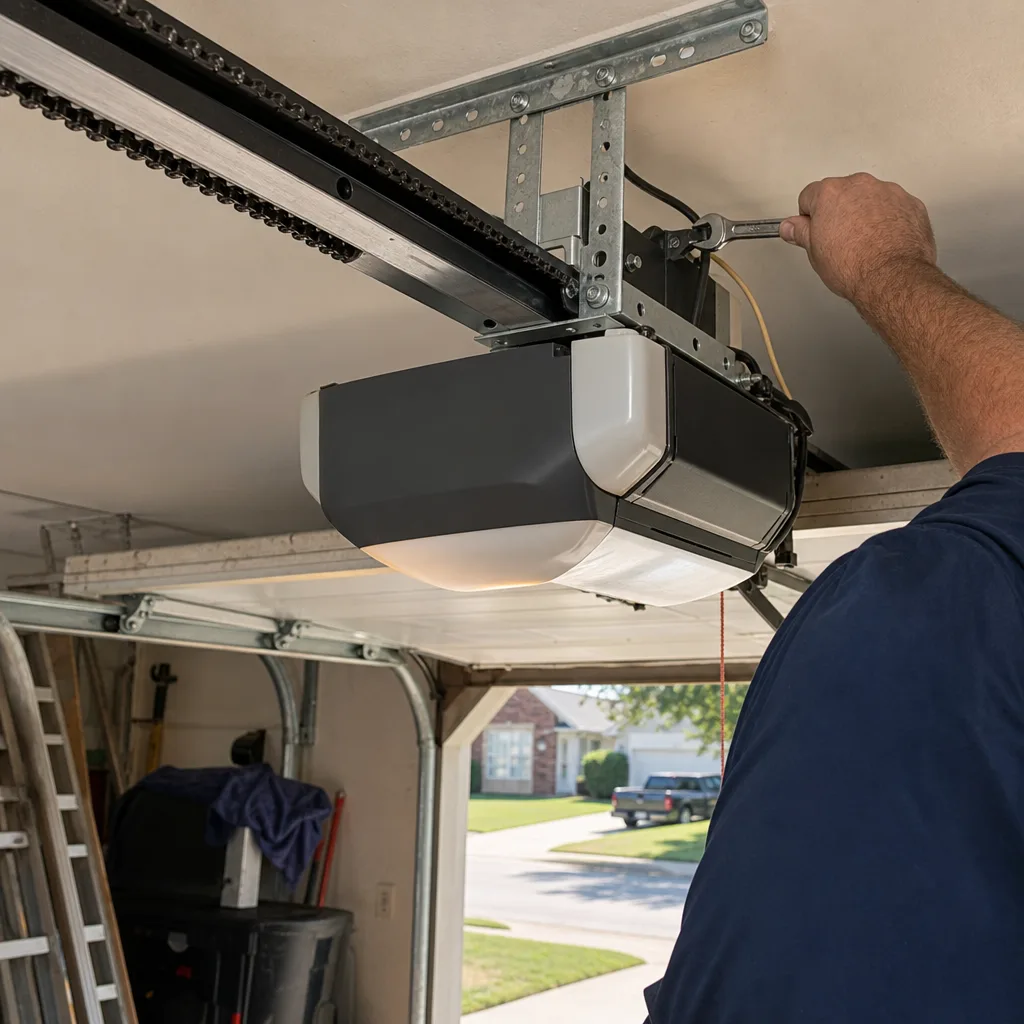
Opener pricing is where we see the widest spread between honest and inflated quotes in the Denton market, because the hardware cost is easy to look up and the markup is therefore the entire game.
Opener Hardware Ranges
Chain-drive openers, the budget standard, run $160 to $220 at retail for units like the Chamberlain B4603T and LiftMaster 81600. Belt-drive openers, quieter and smoother, run $230 to $320 for units like the Chamberlain B4613T and LiftMaster 85870. Belt-drive openers with battery backup, which matter in Denton because North Texas thunderstorms knock out power and a garage door without backup means a car trapped inside, run $320 to $430. The labor to install any of these is typically 1.5 to 2 hours including removing the old unit, reusing or replacing the rail, setting travel limits, and testing the safety sensors.
An installed opener should land at $350 to $650 for belt-drive, $500 to $780 with battery backup, in normal scheduled service. Same-day installation applies the urgency multiplier from the section above.
The Safety Sensor Note
Every opener install in Denton must include functional safety sensors at the door base, wired to reverse the door if anything breaks the beam. This is federal law (UL 325, enforced since 1993) and Texas code references it. A contractor offering to install an opener without sensors isn’t saving you money; they’re creating a liability that will surface at resale inspection. We see this occasionally with handyman-special installs, and it’s one of the reasons a homeowner might call us for opener repair on a unit that’s only a year old.
For more detail on opener-specific failure patterns and repair options, see our Garage Door Opener Repair & Installation in Denton page.
Why Denton Prices Differ From National Averages
National cost guides publish numbers averaged across every market in the country. Here’s what makes Denton different, and why you should trust local invoice data over a national “average cost of garage door repair” figure.
The Labor Market
Denton sits inside the fastest-growing metroplex in the country. Skilled trade labor here is expensive because it’s scarce, and it’s scarce because residential construction is constant. A garage door technician in Denton earning $28 to $38 an hour plus benefits costs the company $55 to $75 an hour fully loaded with insurance, truck, fuel, and the licensing compliance that Texas requires. National guides that price labor at $45 to $60 an hour are pricing in unlicensed handyman rates for rural markets, not what a licensed, insured technician costs in Denton in 2026.
The Steel and Freight Factor
Most residential garage door hardware, springs especially, is manufactured in Ohio, Michigan, and Indiana. Freight from the Midwest to North Texas adds to every pound of steel on a truck, and that cost has tracked fuel prices upward consistently for three years. A pair of torsion springs costs $3 to $7 more to land in Denton than it does in Chicago. That’s small per unit, but it compounds across a door with twenty-plus steel components.
Installer-Sourced vs. Retail Parts
This is the distinction from the opening: contractors buying through distribution channels pay 20-40% less than the same part costs at a big-box retail shelf. The difference is not the part. It’s the supply chain. A 0.250-inch torsion spring that costs $19.95 at retail costs $12 to $14 through a North Texas distributor buying in volume. Homeowners never see this spread because distributor pricing isn’t publicly advertised, but it’s the single largest variable in quote variation for the same job in the same week.
Key Takeaways
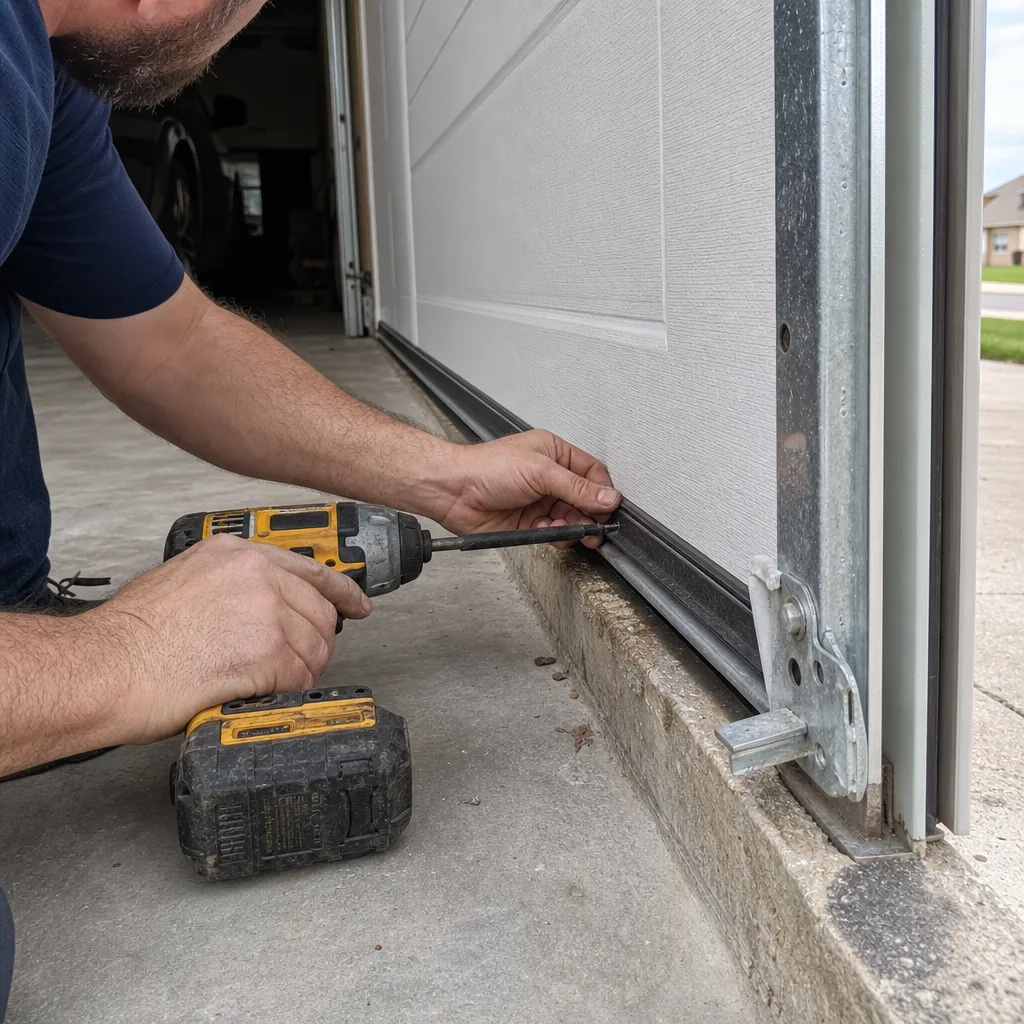
- Garage door repair in Denton runs $125 to $400 for most component work; full replacement runs $1,100 to $4,200.
- Labor accounts for 55-70% of a healthy quote. Inverted ratios signal parts markup.
- Same-day and emergency service carries a 25-45% premium over scheduled work. This is normal, not gouging.
- Part numbers on a written quote are non-negotiable. They’re how you verify pricing.
- The breakeven point for repair vs. replace sits somewhere between door age 10 and 15 years, adjusted for insulation value and cumulative repair history.
Common Mistakes to Avoid
- Accepting a verbal quote. In Texas, a verbal estimate is legally a suggestion. If it’s not written, it didn’t happen. Every legitimate Denton contractor can put the number on paper before starting. If they won’t, walk.
- Paying before the job is done. The standard arrangement in this market is payment on completion. Deposits for door replacement, 10-20%, are normal because the door is ordered custom. A deposit for a spring replacement is not.
- Replacing one spring on a two-spring door. The surviving spring has seen identical cycles. It will fail within months, and you’ll pay a second service call for the job you should have done once.
- Ignoring the photo record. If a contractor can’t show you the failed part before quoting the replacement, you’re being asked to trust a narrative. Clause 4 exists specifically because Marcus Deller, the owner of Servo Garage Doors Denton, built this company on the rule that the customer sees the failed part before anyone quotes a replacement. Documented evidence of work performed should be the default, not an upsell.
- Skipping the safety sensor check on opener installs. A $500 opener installed without functional sensors will cost you at resale inspection and could hurt someone. This isn’t a corner to cut.
- Comparing quotes without comparing part numbers. A $300 spring replacement using contractor-grade 10,000-cycle springs is not the same value as a $385 replacement using 25,000-cycle springs. The second is cheaper per cycle, and if you plan to own the house for five years, the cheaper quote is the worse deal.
- Assuming a newer door means fewer repairs. Denton’s housing stock includes thousands of homes built between 2015 and 2025, many with builder-grade doors installed at the lowest bid. We see 5-year-old doors needing spring and cable work as often as 20-year-old doors. Build quality matters more than age.
When to Call a Professional
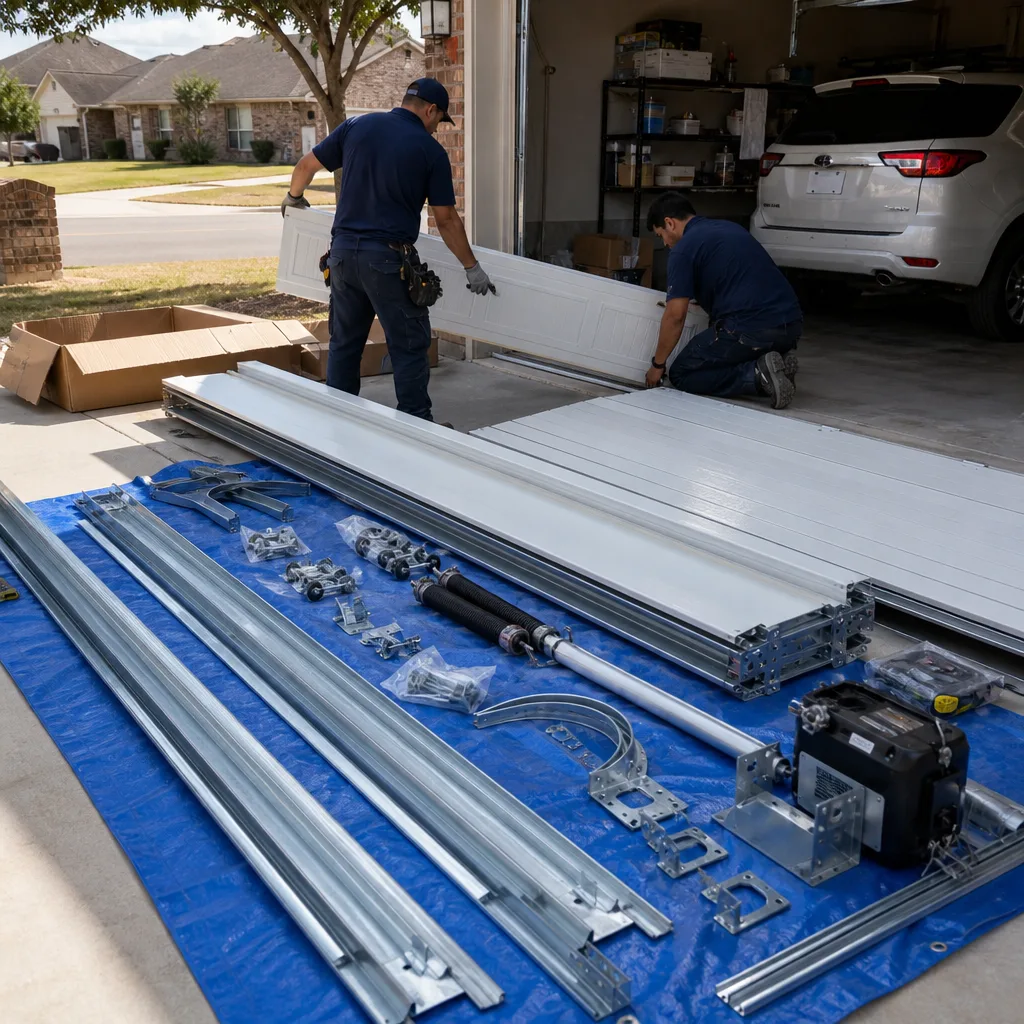
Some garage door work is genuinely DIY territory: lubricating rollers with white lithium grease, tightening loose hinge bolts, cleaning the photo-eye lenses. Everything else belongs to a licensed technician. Torsion springs are dangerous in a way that’s hard to overstate: the stored energy in a wound spring can break bone or worse if it releases incorrectly. Cables under tension can sever fingers. If your spring has snapped, your cable is frayed, your door is off its track, or your opener’s logic board is dead, call someone who carries the right parts and the right insurance. Servo Garage Doors Denton offers free estimates in Denton, and we’ll put the price in writing before any work starts. Call (940) 398-6880. We answer 24/7, including holidays, with a real person, because emergency garage door calls don’t follow business hours.
Frequently Asked Questions
Most component-level repairs in Denton cost between $125 and $400 in 2026, with torsion spring replacement running $180 to $385 and cable replacement running $95 to $175. Labor is 55-70% of a typical invoice because Denton’s skilled-trade rates are higher than national averages. Call (940) 398-6880 for an exact written quote, our estimates are free and the price is documented before any work starts.
A new garage door installed in Denton costs $1,100 to $4,200 depending on size, insulation, and material. The low end is a basic single-car steel door without insulation; the high end is a two-car insulated steel door with windows. Most mid-range two-car insulated doors land between $1,800 and $2,600. The quoted price includes the door, tracks, hardware, installation, and haul-away of the old door.
The variance usually comes down to parts procurement: contractor-sourced parts cost 20-40% less than the same part at retail, and that spread gets passed through or absorbed depending on the business model. Quotes also vary by spring cycle rating, warranty length, and whether the price is flat-rate or time-and-materials. Ask for part numbers and compare the quoted part cost against distributor pricing.
Same-day service is available, and it carries a 25-45% premium over scheduled work because we’re rearranging the schedule or dispatching after-hours. For a door stuck open and a car trapped inside, that premium is usually money well spent. Call (940) 398-6880 and we’ll give you the written price before dispatching, including the urgency line item, so there are no surprises.
Not if the quote was written with part numbers and scope. We quote a flat, written price under Clause 1 of The Haven Standard before any work begins, and if the technician finds something additional that wasn’t quoted, that becomes a separate written approval, not an automatic add-on. You approve every dollar before it’s spent.
Yes. Our service trucks stock torsion springs in the most common Denton gauges and diameters, extension springs, cables, rollers, hinges, and the mainstream opener models, including LiftMaster, Chamberlain, Genie, Craftsman, and Raynor. That means about 85% of repairs are completed on the first visit, with no second service call or additional trip charge for a part we had to order.
It depends on door age and what’s failing. Under 8 years old, repair almost always wins. Past 12 years, especially if the door is uninsulated and facing Denton’s summer heat, replacement starts making financial sense because you’re trading a series of future repairs for a door with a 15-to-22-year service life. Get a written quote for both options and compare the five-year cost.
The Bottom Line
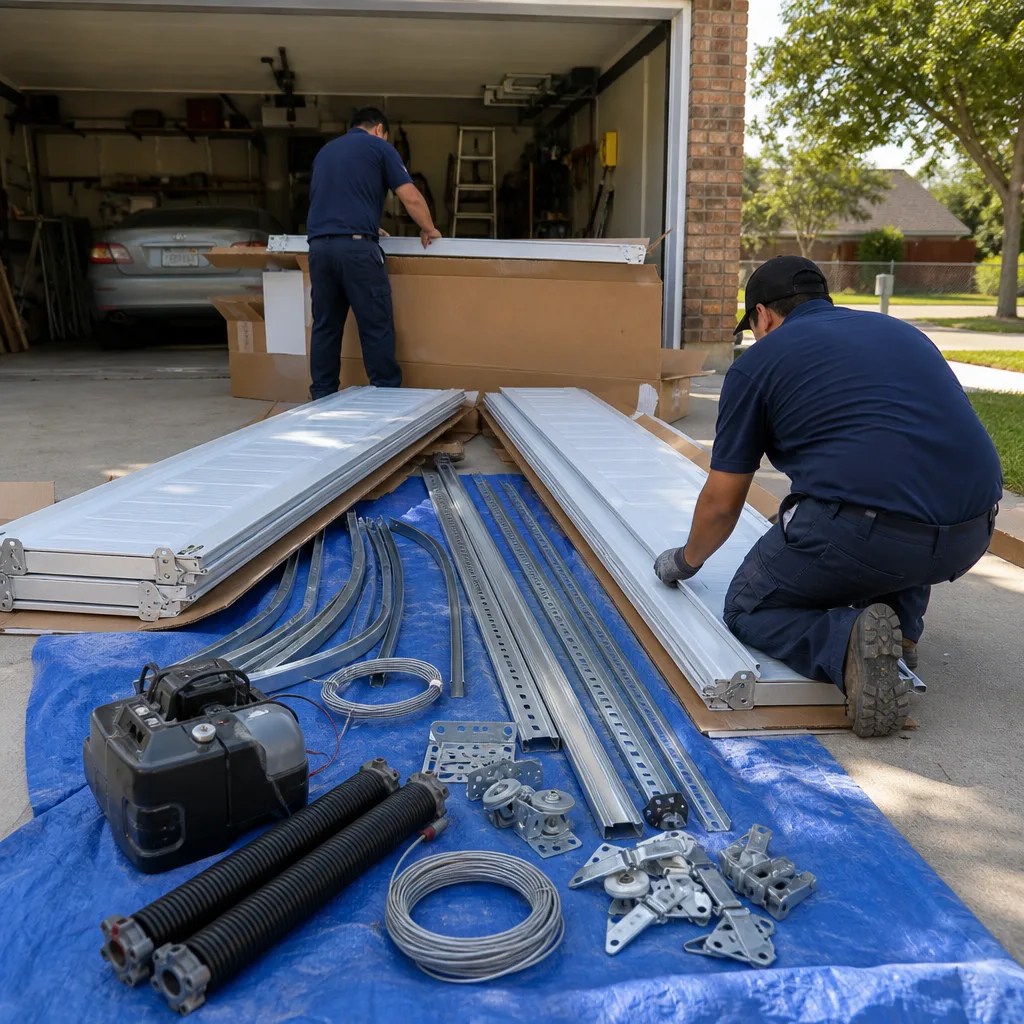
Garage door pricing in Denton is knowable. You can look up part numbers, calculate labor ratios, and understand the urgency premium before you ever pick up the phone. What you shouldn’t have to do is trust a verbal promise from a stranger. Get the written quote. Ask for part numbers. Check the math. And if a contractor won’t show you the failed part before quoting the replacement, ask yourself what they’re protecting. For help spotting trouble early, see Garage Door Warning Signs: A Denton Homeowner’s Reference Guide. Everything about this trade is documentable, from the part prices to the labor to the photo record of what was actually done. The number on the page is either evidence or theater. You now know how to tell the difference.
For a complete overview of our services, start at the Servo Garage Doors Denton home page or explore our repair and installation guides linked above.
Written by Marcus Deller, Owner at Servo Garage Doors Denton, serving Denton since 2015. Browse more guides & resources from our team.