
Last updated September 20, 2026
Full 25-point door and opener safety check with every visit - springs, cables, rollers, tracks, and your LiftMaster or Chamberlain opener included
You get a price before we start. It does not change when the truck arrives.
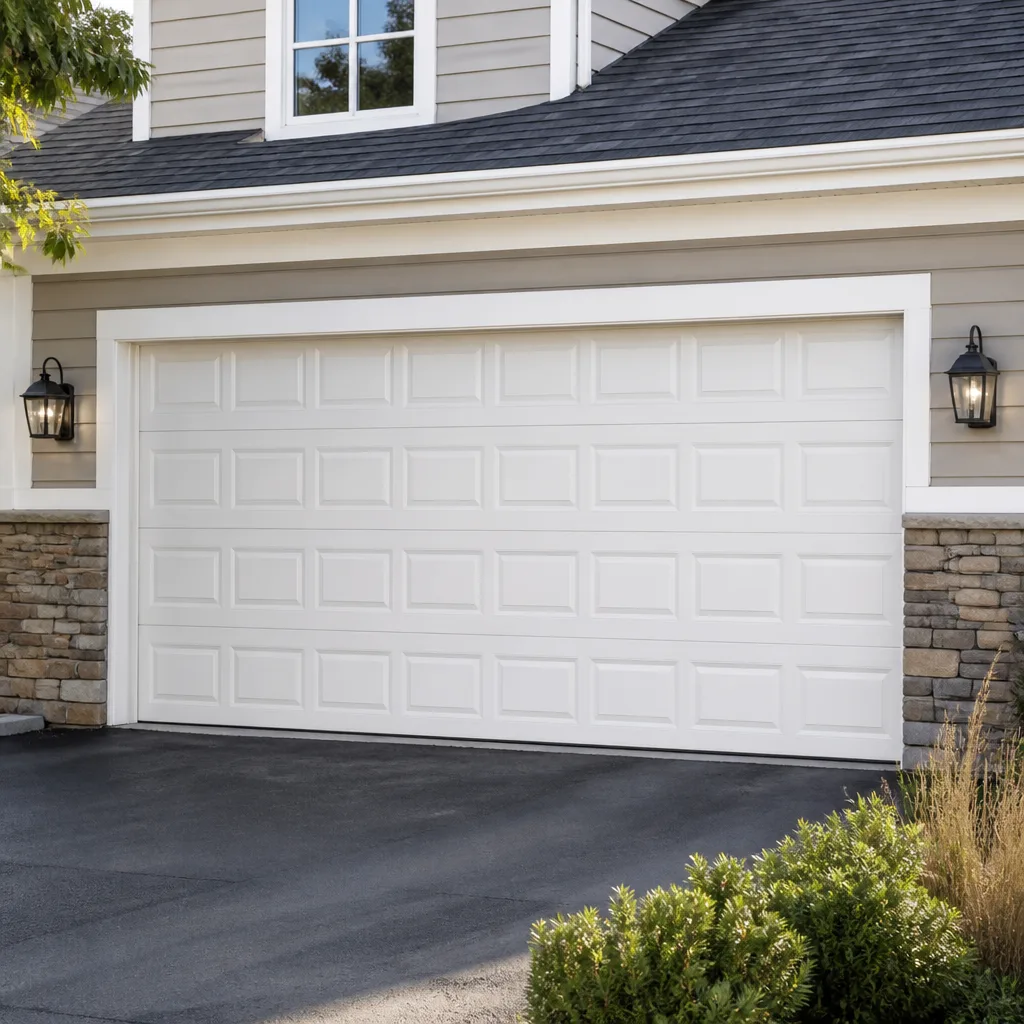
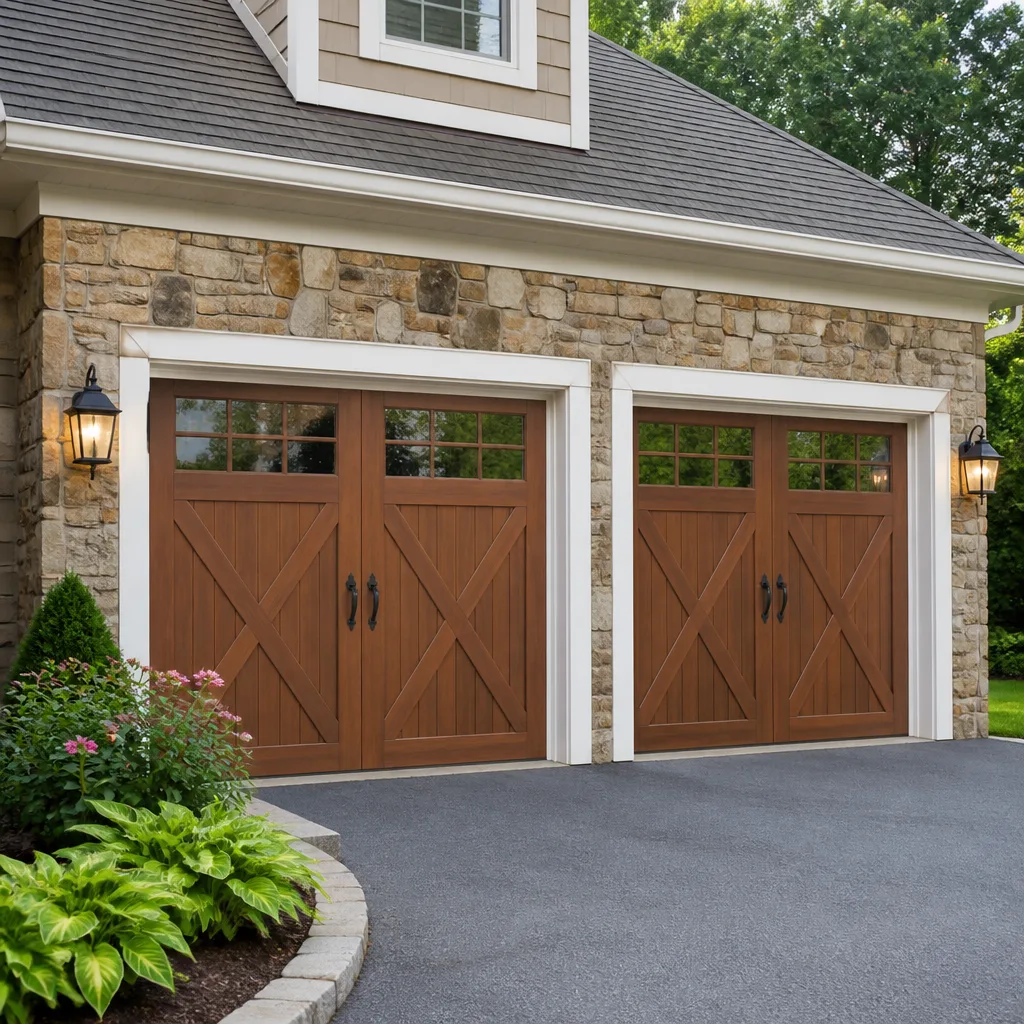
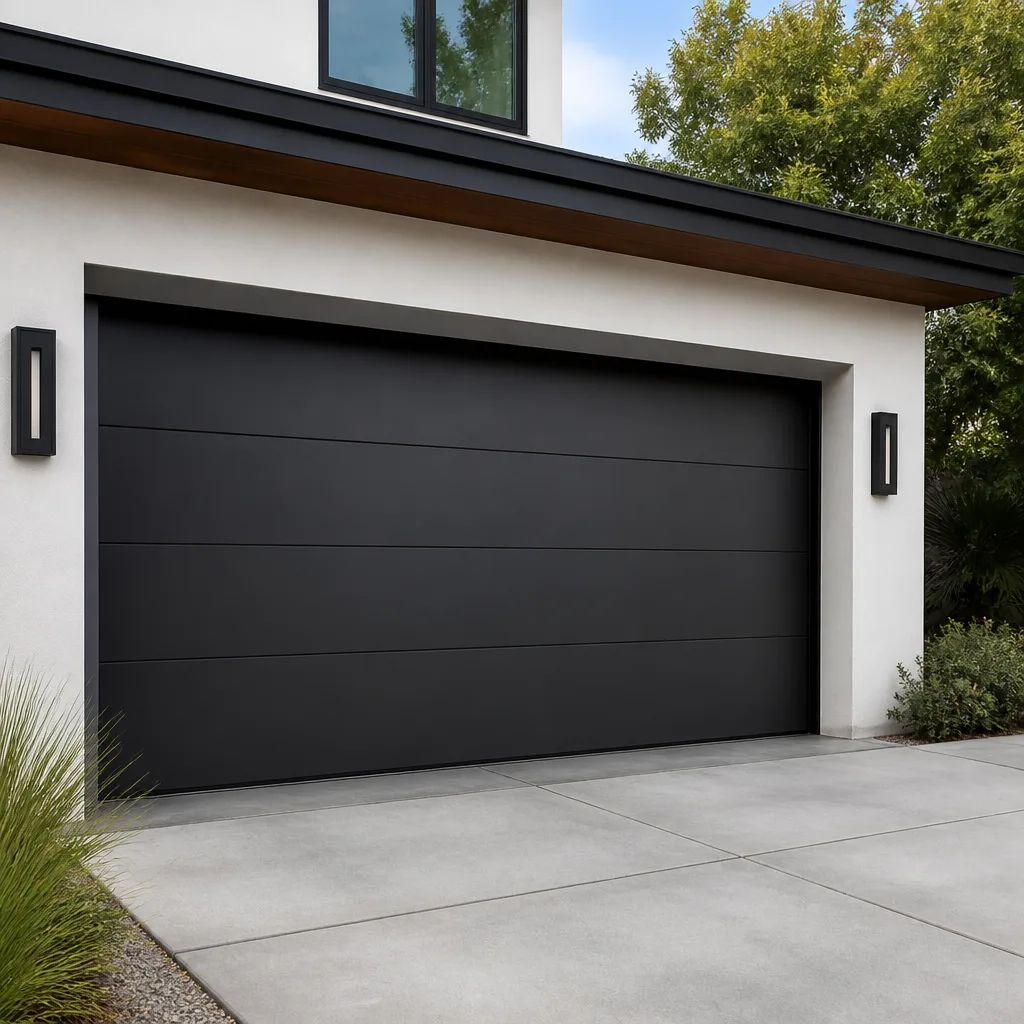
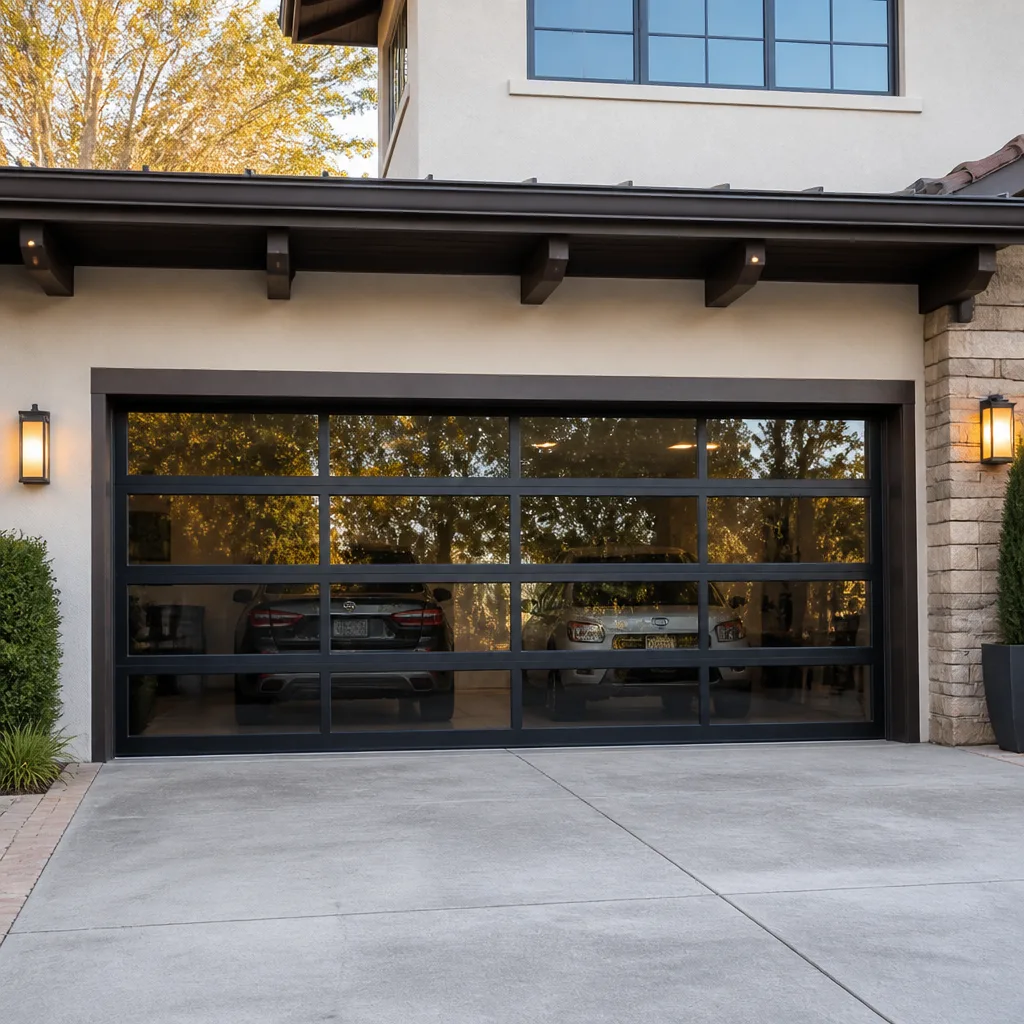
 Before
 After
After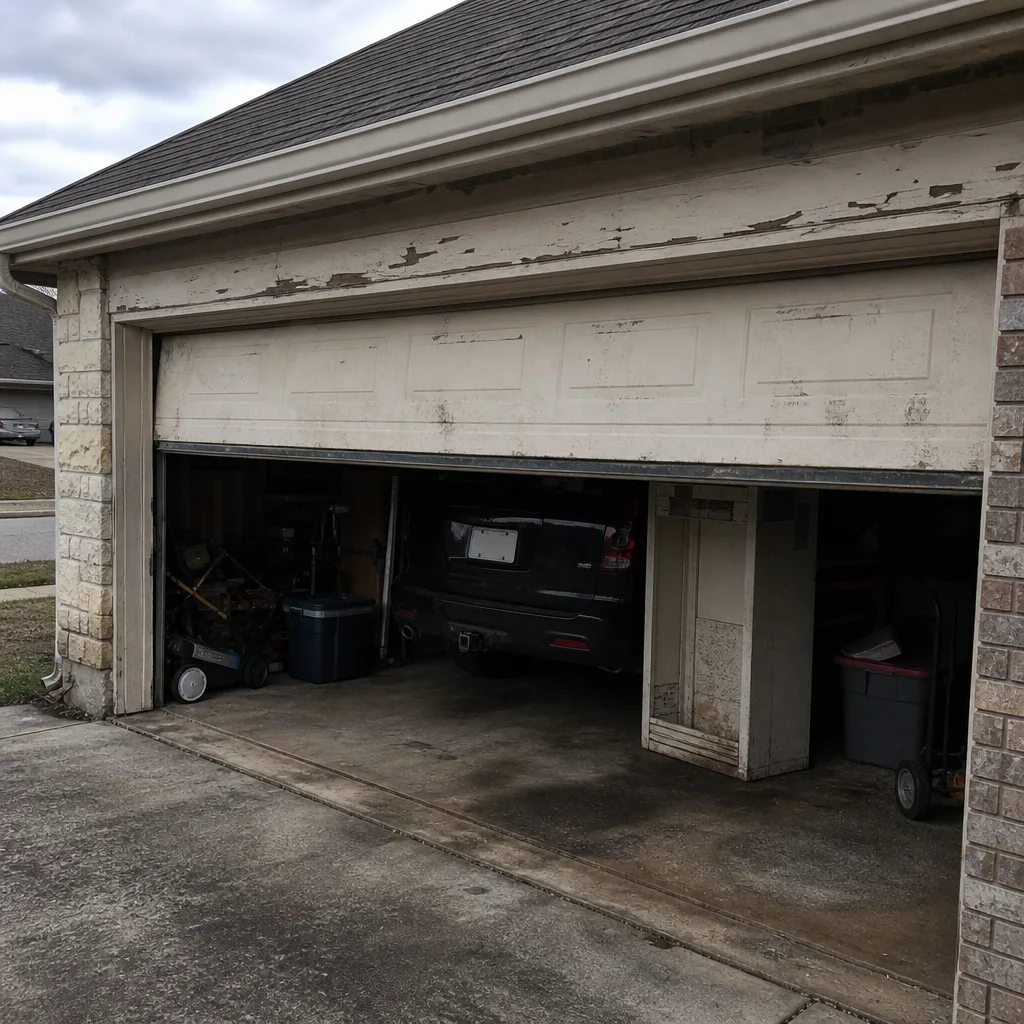 Before
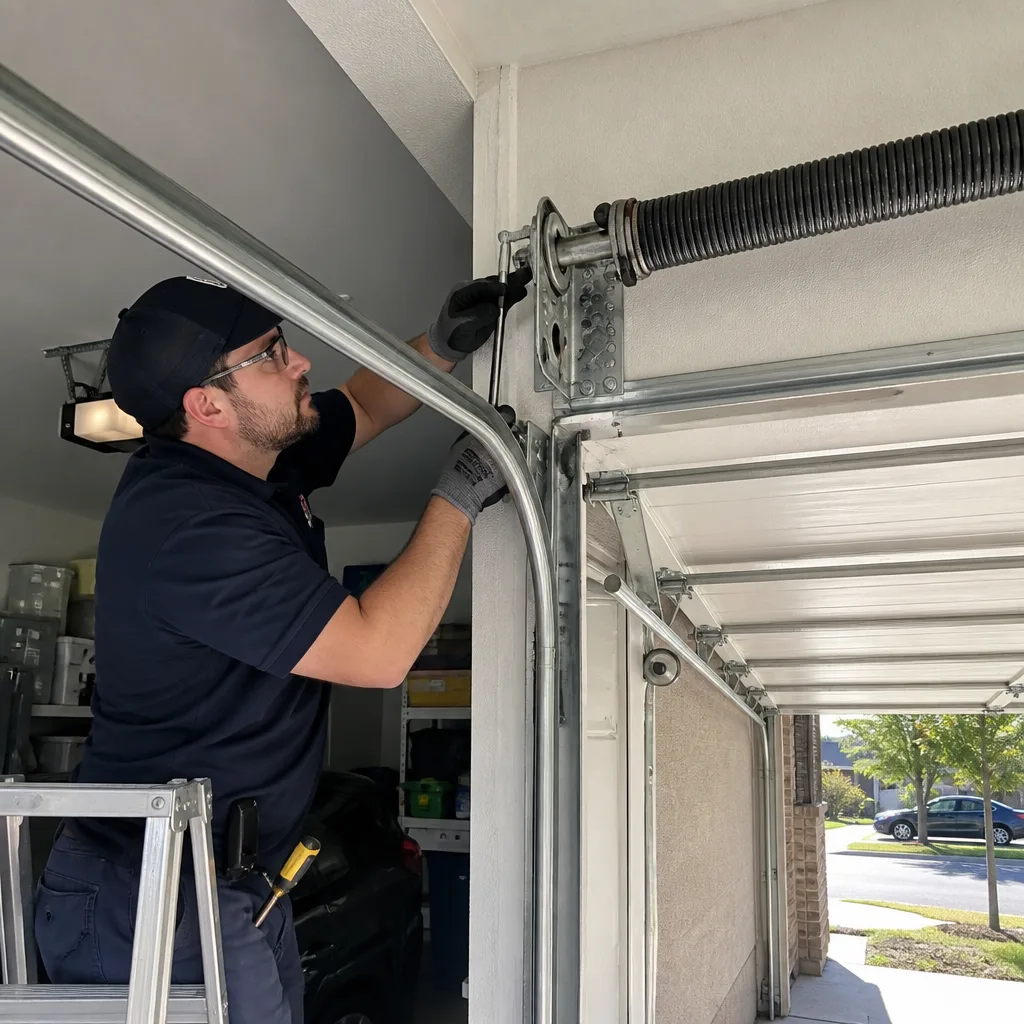 After
After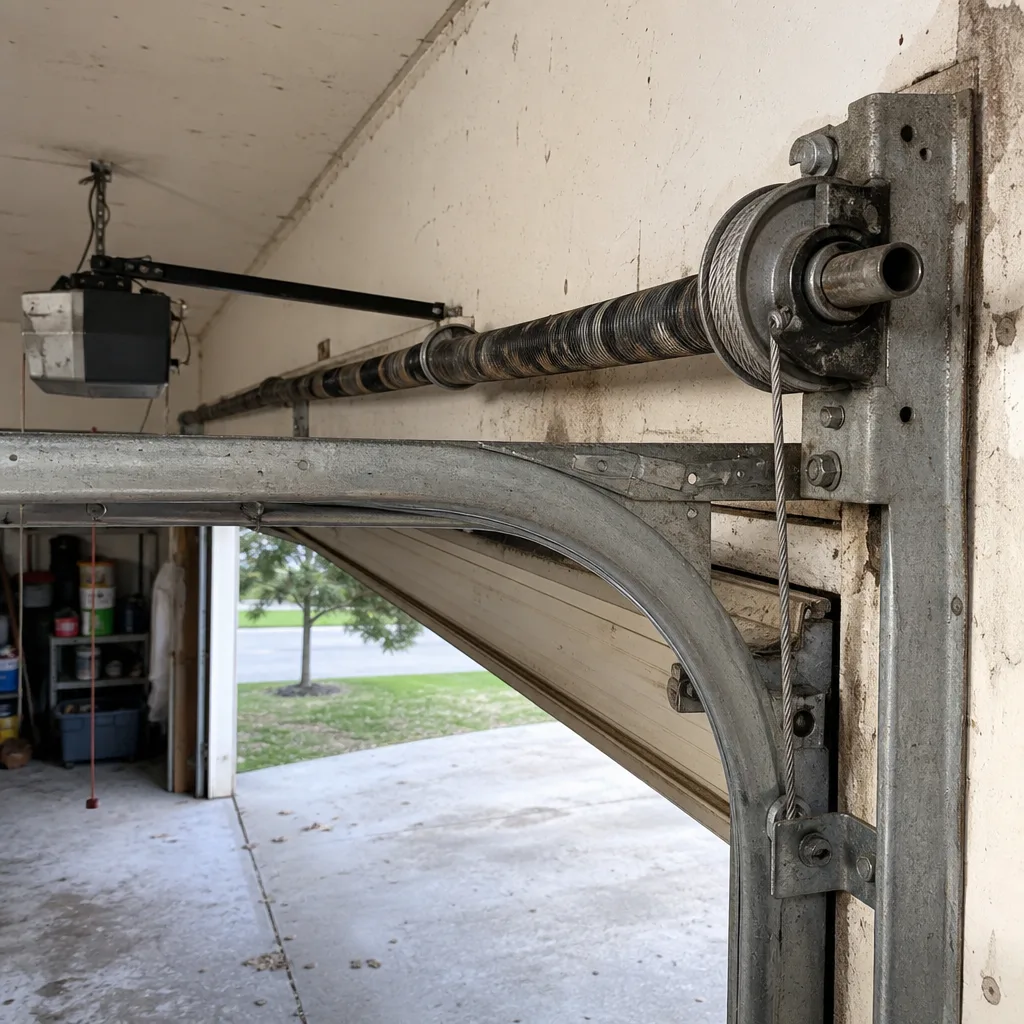 Before
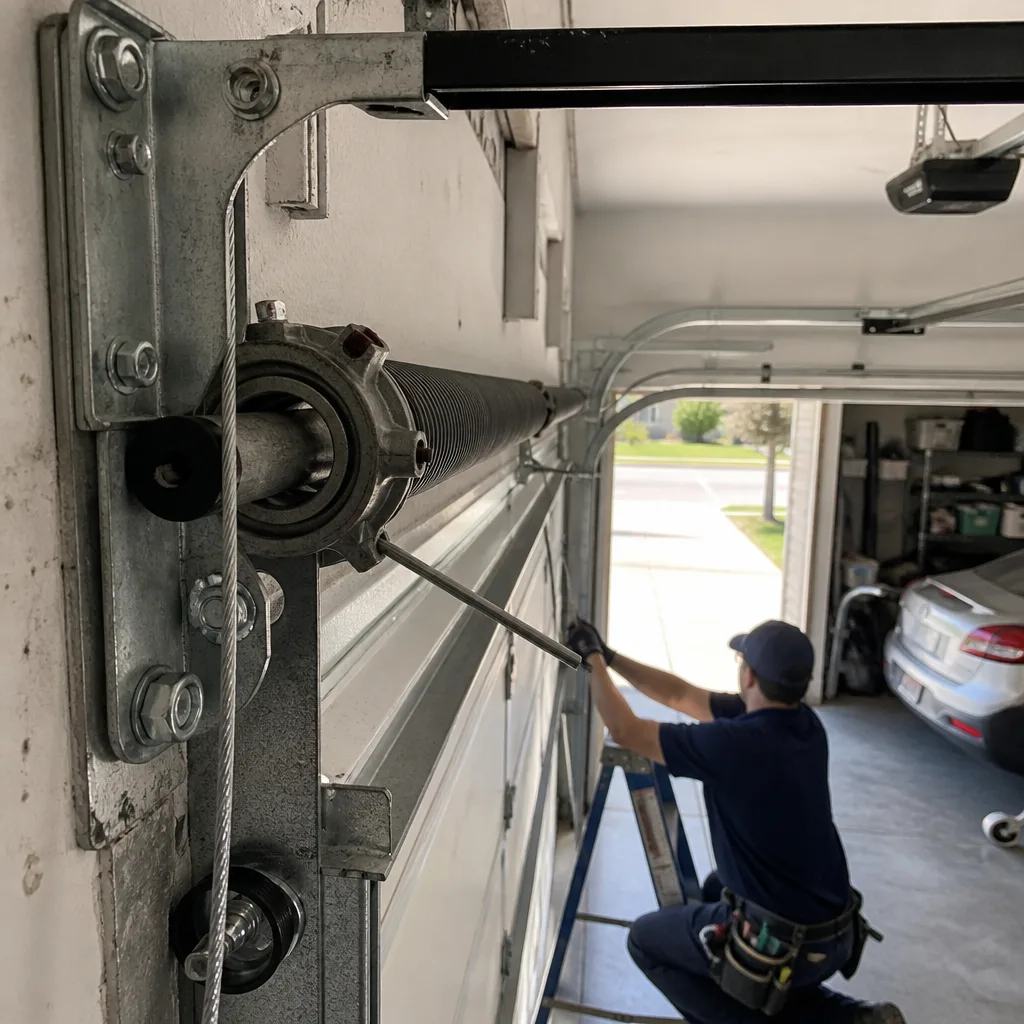 After
AfterGarage Door Warning Signs: A Denton Homeowner’s Reference Guide
Most warning sign guides read like a glossary: “if you hear grinding, it’s the rollers.” They stop there. That leaves a Denton homeowner unable to tell a $40 roller swap from a $600 spring-and-cable replacement, and unable to know whether they can wait a month or should fix it this week. This guide pairs each observable symptom with its primary cause, its secondary cause, the dollar range for each repair, and the diagnostic step that tells them apart. It also separates the five signs that mean failure within 30 days from the five that indicate slower degradation, because not every noise is an emergency.
Quick Answer
The most common garage door warning signs in Denton are a door that reverses before closing, grinding or popping sounds during travel, visible cable fraying, a door that sags on one side, and slow or uneven movement. A reversing door is a sensor problem only about 60 percent of the time; the rest of the time it’s a limit switch or a binding roller triggering the motor’s safety threshold. Cables and springs under tension should never be inspected by hand; a frayed cable or a gap in a torsion spring is a same-week call, not a same-month one, and most of these repairs in Denton run between $40 and $600 depending on the component.
Table of Contents
- Symptom-to-Component Mapping: The Table Most Guides Skip
- Five Warning Signs That Mean Failure Within 30 Days
- Five Warning Signs That Indicate Degradation Over 6 to 12 Months
- Sounds as Diagnostic Data: What Grinding, Popping, Scraping, and Rattling Actually Mean
- What You Can Monitor for Free vs. What Requires a Technician
- How to Photograph and Document a Warning Sign Before You Call
- Denton-Specific Factors: Heat, Storms, and Neighborhood Age
- Common Mistakes to Avoid
- When to Call a Professional
- Frequently Asked Questions
BeforeAfterSymptom-to-Component Mapping: The Table Most Guides Skip
Every symptom maps to a component. Knowing which one changes the urgency, the cost, and what you say on the phone. Here is the reference table we use on service calls in Denton, paired with the diagnostic observation that separates the primary from the secondary cause.
- Door reverses before fully closing. Primary: misaligned photo eye sensors. Secondary: limit switch setting or a binding roller that trips the motor’s load threshold. Distinguishing step: check whether the sensor lights are solid and aligned; if they are, watch whether the door binds at the same point in the track every time. A consistent bind point points to a roller or track, not the sensors. Repair range: $85 to $185 for a limit adjustment or roller replacement; $150 to $250 for a sensor or logic board issue on a LiftMaster or Chamberlain opener.
- Door sags visibly on one side when open. Primary: a broken torsion spring. Secondary: a stretched or failing extension spring, or a cable that has slipped on the drum. Distinguishing step: look at the spring above the closed door. A torsion spring has a visible separation gap if broken. A sagging door with no visible gap usually means a cable has lost tension. Repair range: $180 to $340 for torsion spring replacement including both springs and labor; $150 to $275 for cable re-spooling or replacement.
- Grinding noise during travel. Primary: worn or dry rollers. Secondary: a failing opener gear or sprocket, especially on older Craftsman or Genie chain-drive openers. Distinguishing step: run the door manually by pulling the release handle. If the noise disappears, the rollers or tracks are the problem. If it persists only when the opener runs, the opener gear is worn. Repair range: $90 to $180 for a full roller replacement; $140 to $260 for opener gear replacement.
- Door shudders or jerks halfway up. Primary: a warped panel or a bent track. Secondary: a broken spring on one side only, which overloads the remaining spring. Distinguishing step: check whether the door moves smoothly when disconnected from the opener. Jerking under manual operation points to the door itself; jerking only under opener power points to a spring or opener limit issue. Repair range: $200 to $450 for panel or track repair; $180 to $340 if a spring replacement is needed.
- Popping or banging sound when the door moves. Primary: a torsion spring that has shifted on its shaft or is binding against the center bracket. Secondary: loose hardware on the hinges or track brackets. Distinguishing step: listen for whether the sound happens at the same point in the cycle every time. A consistent pop at the same spot says spring. A random rattle says hardware. Repair range: $100 to $200 for spring re-centering; $75 to $125 for track and hinge tightening with a full hardware inspection.
- Door opens a few inches and stops. Primary: a broken spring that no longer counterbalances the door weight, triggering the opener’s force limit. Secondary: a failing logic board or a stripped gear in the opener itself. Distinguishing step: pull the emergency release and try to lift the door manually. If it’s heavy and will not hold open, the spring is broken. If it moves easily manually but not under opener power, the opener is the issue. Repair range: $180 to $340 for springs; $150 to $300 for opener repair or replacement.
Each of these symptoms appears in Denton homes across every neighborhood, from the 1990s tracts near Southridge to the newer builds off Teasley and in the Rayzor Ranch corridor. The door’s age matters less than the component. A 15-year-old Amarr door with a replaced spring can outlast a four-year-old builder-grade door that has never been serviced.
Five Warning Signs That Mean Failure Within 30 Days
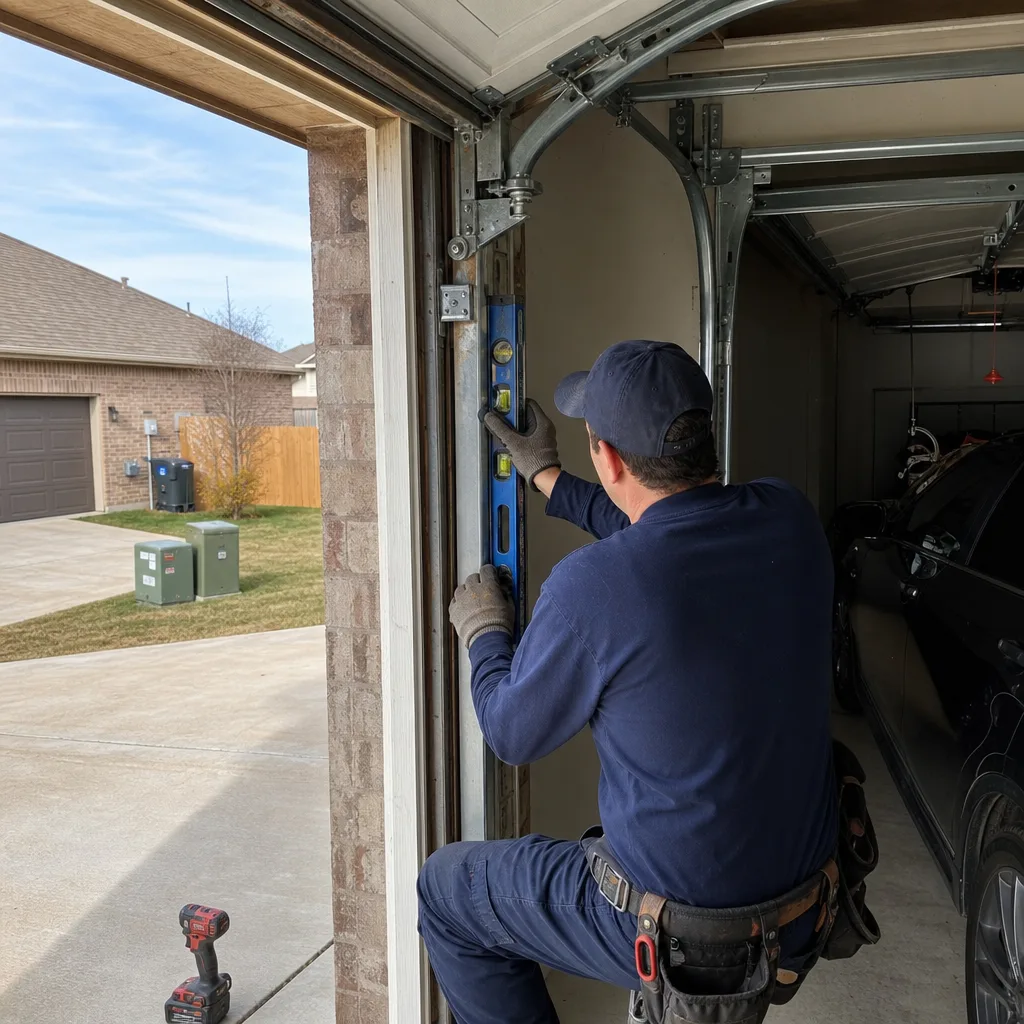
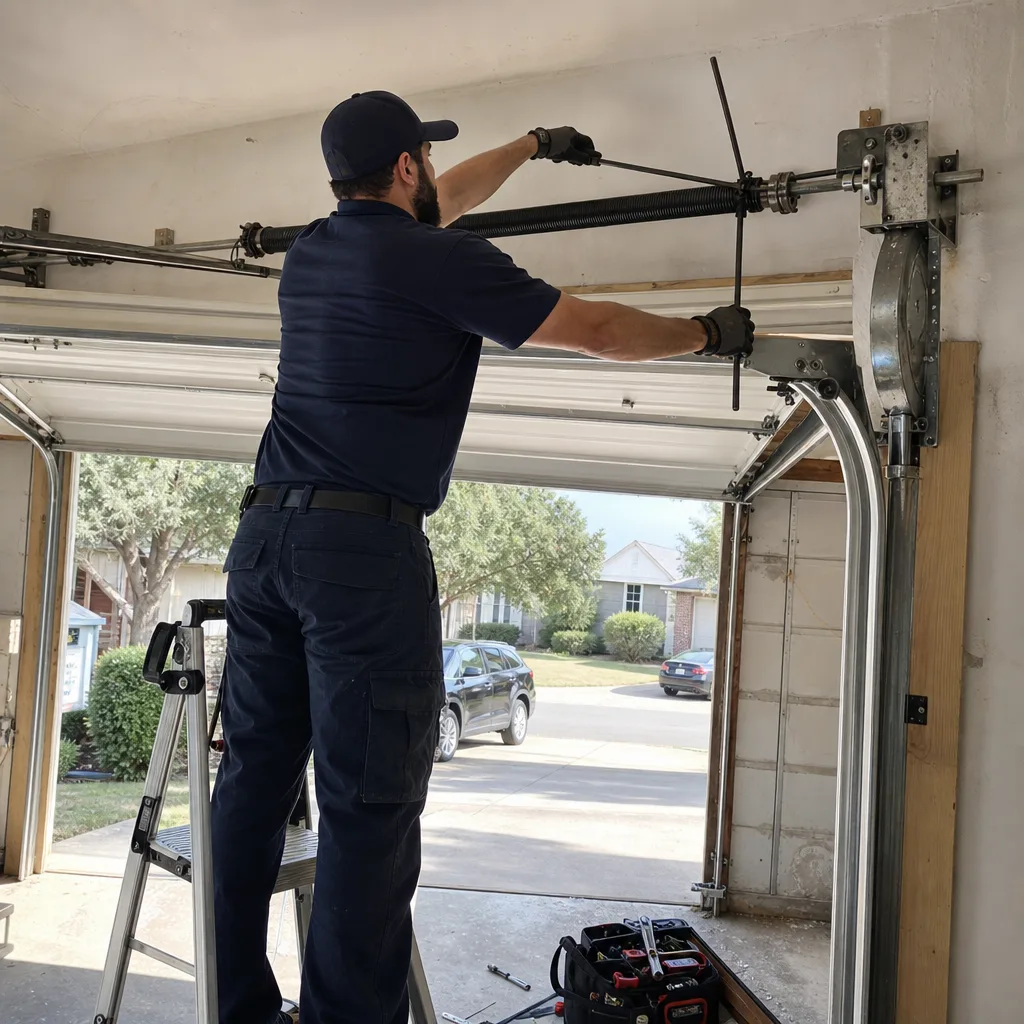
Not all warning signs are equal. Five of them mean a component is past the point of recovery and will fail soon, sometimes catastrophically. If you see any of these on a Denton garage door, schedule the repair the same week.
1. A visible gap in a torsion spring. A torsion spring, the coiled shaft-mounted spring, breaks by snapping in two. The separation gap is unmistakable, and once the spring is broken, the door weighs its full 150 to 250 pounds. The opener was not designed to lift that weight, and doing so will strip its gear within a month. Any noise or repeated strain at that point is the opener tearing itself apart. Replacement cost: $180 to $340 for both springs, which addresses the spring issue and the premature wear on the opener with one repair.
2. Frayed cables with any visible strand separation. The cables on either side of the door carry the spring tension. A cable with three or more broken strands is days to weeks from snapping, and when it snaps, the door drops unevenly and jams. A full cable replacement and re-tensioning is a $150 to $275 job. Never touch or attempt to re-wrap a cable; the stored spring energy can remove fingers. This is a technician-only repair in every case.
3. A door that reverses more than once in every ten cycles. A garage door that randomly reverses while closing has a safety circuit fault. It might be the sensors, but it could also be the logic board on a LiftMaster or a Raynor opener misreading the safety input. Replacing the logic board is a $180 to $280 repair. Ignoring a recurring reversal burns out the opener motor, because the motor runs the full cycle twice every time it reverses. Garage door opener repair & installation in Denton is the page that covers opener-level faults in detail.
4. A door that has jumped a roller out of the track on either side. Once a roller leaves the track, the panel weight pulls the door sideways. A second occurrence within a week means the track alignment is off or the hinge is bent. It is $125 to $225 to re-align and replace the affected roller and hinge. Ignoring it lets the door tip further and damage the panels, and a 16-foot steel door falling out of its track is a structural event, not a nuisance.
5. Any burning smell when the opener runs. A burning smell from the opener means either a failing capacitor on the motor or a stripped drive gear generating friction heat. It will not get better. Motor replacement or whole-opener replacement runs $180 to $420 depending on the brand. We see this most often on chain-drive openers that have been pulling against a broken spring for weeks.
Five Warning Signs That Indicate Degradation Over 6 to 12 Months
These five are slower, quieter, and easier to postpone. But postponing them for two years turns each into one of the imminent-failure signs above. Monitor them monthly and act before they cross the line.
1. Worn roller wheels with flat spots or chipped nylon. Rollers wear gradually. A roller with a flat spot produces a consistent thump on every cycle, and it chews the track at that point, which spreads the cost from a roller to a track section. Roller replacement is $90 to $180 for all rollers. This is the most common repair we perform in Denton, and it is the cheapest repair per year of life it returns.
2. Dry or visible-rust hinges and rollers. Denton’s humidity swings, especially from April through October, work against ungreased metal. Surface rust on hinges and rollers is not a failure, but it creates friction that wears out both the hinges and the opener faster. A lubrication and hardware inspection service is usually $85 to $125, and it adds years to the door system. This is the one piece of maintenance you can do yourself with lithium grease, a rag, and fifteen minutes every six months.
3. A door that has begun to drift down after opening fully. A door that drops an inch or two after reaching the open position is telling you the springs are losing tension. They have not broken, or they would drop six feet, not six inches. But a weakening spring means the opener is carrying more door weight every cycle. Repair range: $180 to $340 for a new spring pair, which restores the balance and the correct open-hold position.
4. Weather seals with visible gap or cracking. The bottom seal and the side weather stripping on a Denton garage door lose flexibility after five or six years of Texas sun. A cracked seal lets in rain during the spring storms and lets in dust during dry spells. Replacement runs $60 to $140 for the bottom seal and side strips. It is not urgent, but it is an afternoon fix that prevents the door itself from sitting in standing water, which rusts the bottom panel.
5. Opener noise that has increased over time. A chain-drive opener that has gotten louder every month is telling you two things: the chain has stretched and the gear is wearing. It may run for another year. But if you let it run to failure, the gear breaks and releases the chain off the sprocket. A tune-up with chain adjustment is $75 to $125. It is cheaper to fix the noise than the failure.
Sounds as Diagnostic Data: What Grinding, Popping, Scraping, and Rattling Actually Mean
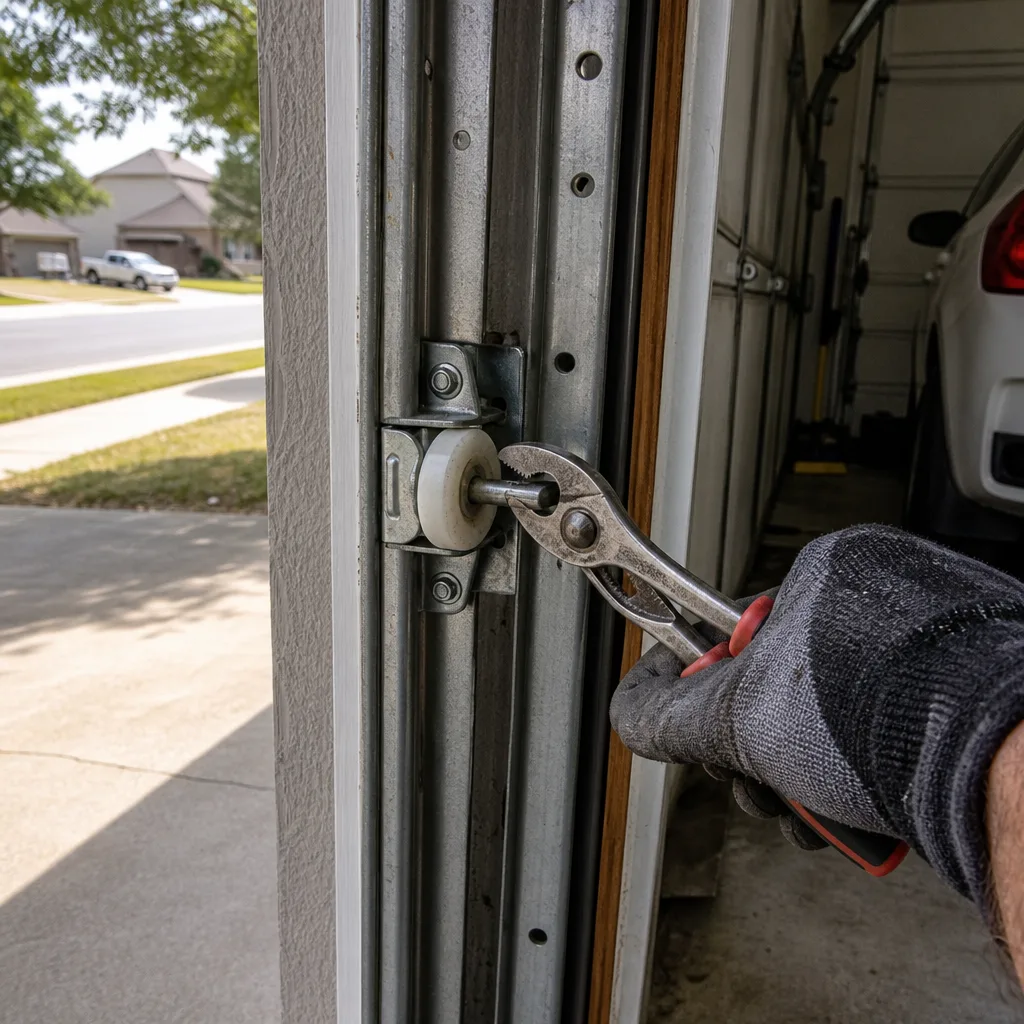
Sound is the most underused diagnostic tool on a garage door, because most guides describe the sound without connecting it to the point in the travel cycle where it occurs. The same sound at a different point in the cycle means a different component. A grinding at the bottom of the travel versus a grinding at the top are two different repairs.
Grinding during the first 12 inches of opening. This is almost always the opener’s drive gear, not the door. The opener works hardest at the very start of the cycle, when the door is fully seated against the floor and the springs are at their lowest tension. A grinding here points to stripped teeth inside the opener. On the door side, a grinding at the very start can also be the bottom roller binding in a rusted bottom bracket. The distinguishing step is to run the door manually. If it moves freely by hand, the opener is the source.
Popping at the same point in the cycle every time. A repeatable pop is a torsion spring binding against its center bracket or a loose spring anchor. It is not dangerous in the way a cable under tension is, but it is a component rubbing against itself, and that rubbing wears a groove in the spring coil. A spring with a groove becomes a broken spring within months. Re-centering the spring or replacing the center bracket is $100 to $200.
Scraping along the length of the track. Scraping that persists through the full travel is metal on metal. The usual cause is a roller that has seized and is dragging instead of rolling, which works the track like sandpaper. The repair is a roller replacement and a track inspection, typically $90 to $180. If the scraping comes from only the bottom section as the door nears the floor, the door may be out of level, and the bottom panel is dragging on the track frame.
Rattling that changes with speed. A rattle that varies with how fast the door moves is loose hardware. Track brackets, hinge bolts, and the opener’s mounting strap are the usual suspects. A hardware tightening pass is $75 to $125 and takes under an hour. We recommend it annually, because every loose bolt is a stress point, and a track bracket that works loose changes the door’s geometry slightly on each pass.
What You Can Monitor for Free vs. What Requires a Technician
Warning signs divide cleanly into two categories: things you can watch from the ground, and things that require a professional because the component is under spring tension. The dividing line matters. A wrong move with a cable or a tensioned spring is a hospital visit, not a repair. Anything that requires touching, measuring, or observing a component under tension is not a DIY inspection.
Free to monitor, no tools needed:
- Watch the door cycle once a week. Does it move smoothly, or does it hesitate at the same point every time?
- Listen at the start, middle, and end of the travel. Grinding, popping, scraping, and rattling each point to a different component, as covered above.
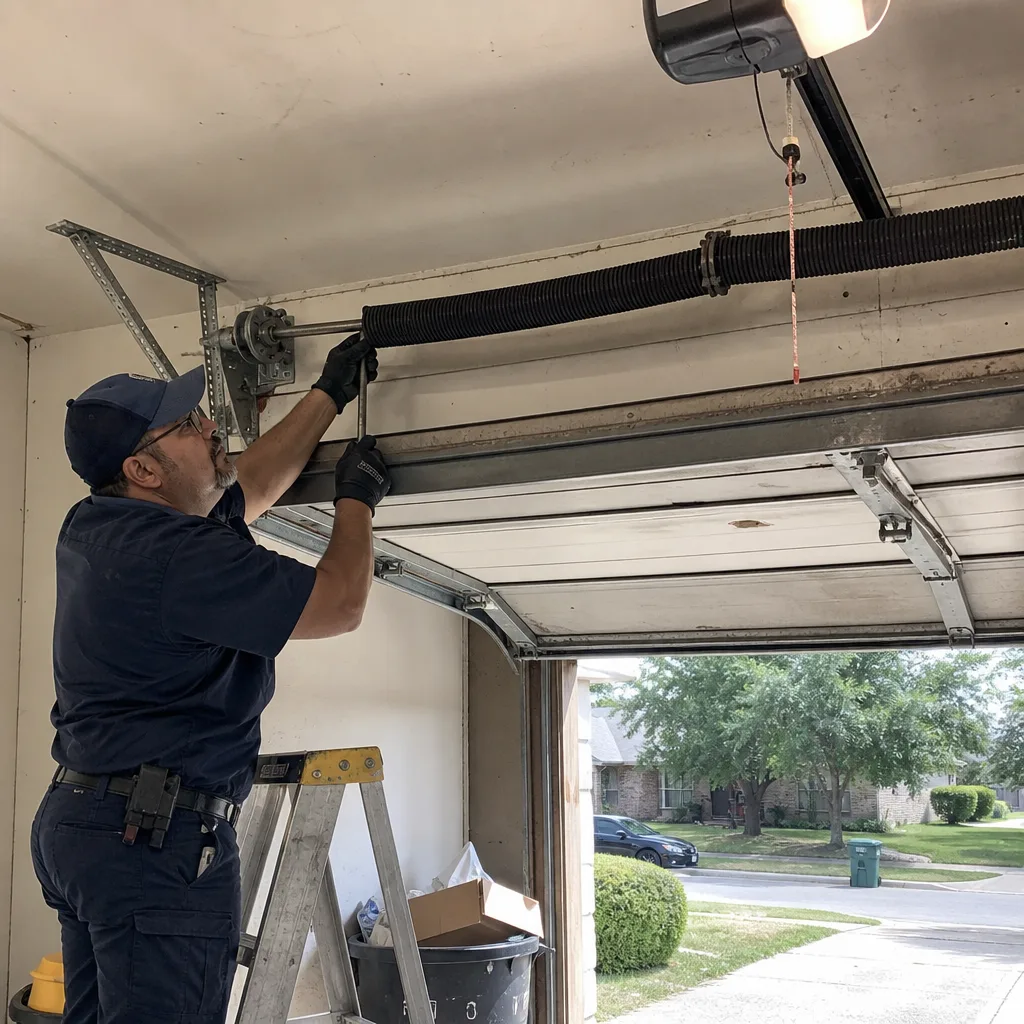
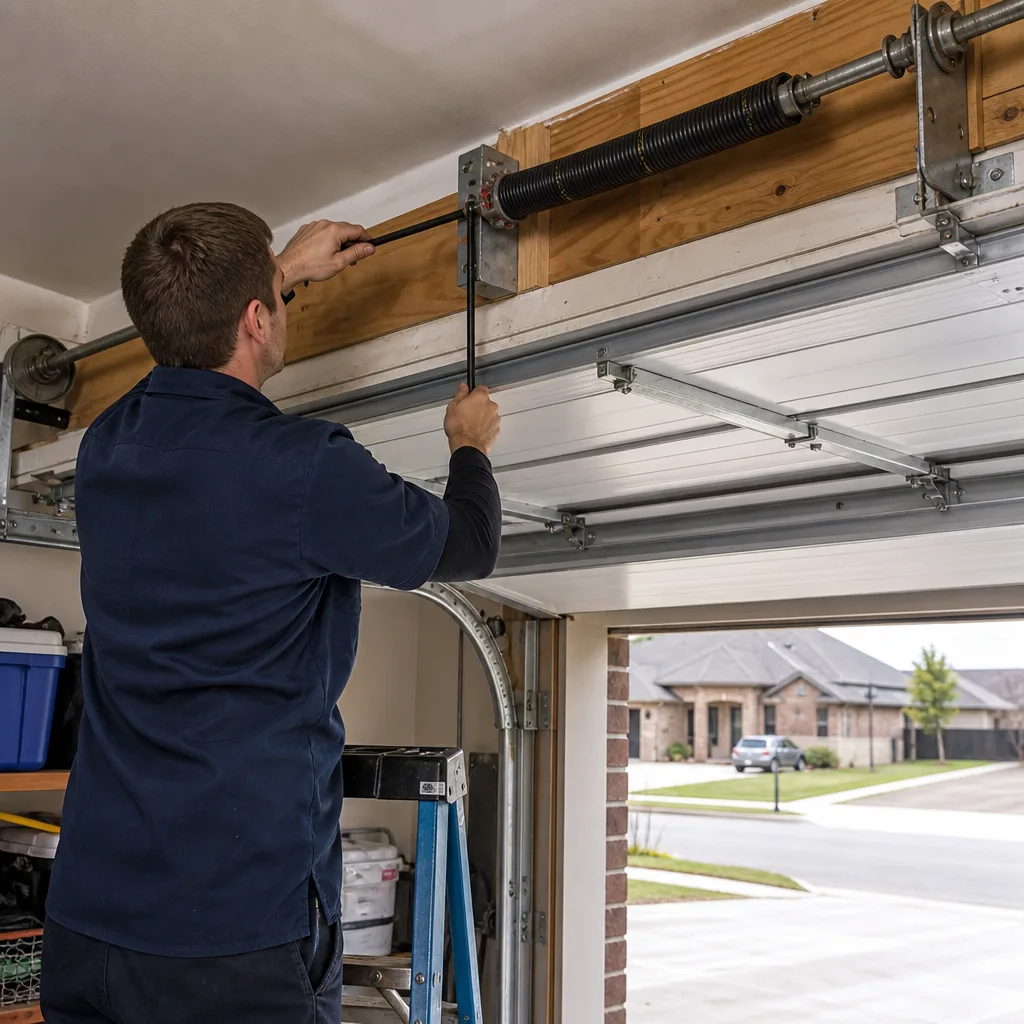
- Look at the springs above the closed door. A visible separation gap means a broken spring, and that is a same-week call.
- Look at the cables on both sides. Fraying with visible strands is the warning sign. Do not touch them.
- Check the rollers, both top and bottom. You can see flat spots and chipped nylon wheels from the ground. Do not remove a roller from the track; the bottom roller bracket is under tension.
- Test the balance once a month. Pull the emergency release with the door closed, then lift the door halfway. It should hold its position. If it falls or rises on its own, the springs are weakening.
Require a technician:
- Anything involving the cables, the cable drums, or the bottom roller brackets. These components carry the full spring tension. The bottom bracket in particular is dangerous because it holds the cable, and the cable is the thing under load.
- Anything involving a torsion spring. Do not attempt to measure, adjust, replace, or even touch a torsion spring. The stored energy is enough to cause serious injury or death.
- Diagnosing a reversing door when the photo eye sensors are clean and aligned. The remaining causes involve the logic board, the limit switch, or a binding component inside the opener.
- Any inspection that requires a ladder and a view of the top of the door or the track’s upper radius. A door under tension behaves unpredictably when disturbed.
The safe rule: if you are looking at a cable, a spring, or a bottom bracket, you are looking at a component that should only be handled by someone who does this every day. Garage door repair in Denton covers what a full inspection and repair includes.
How to Photograph and Document a Warning Sign Before You Call
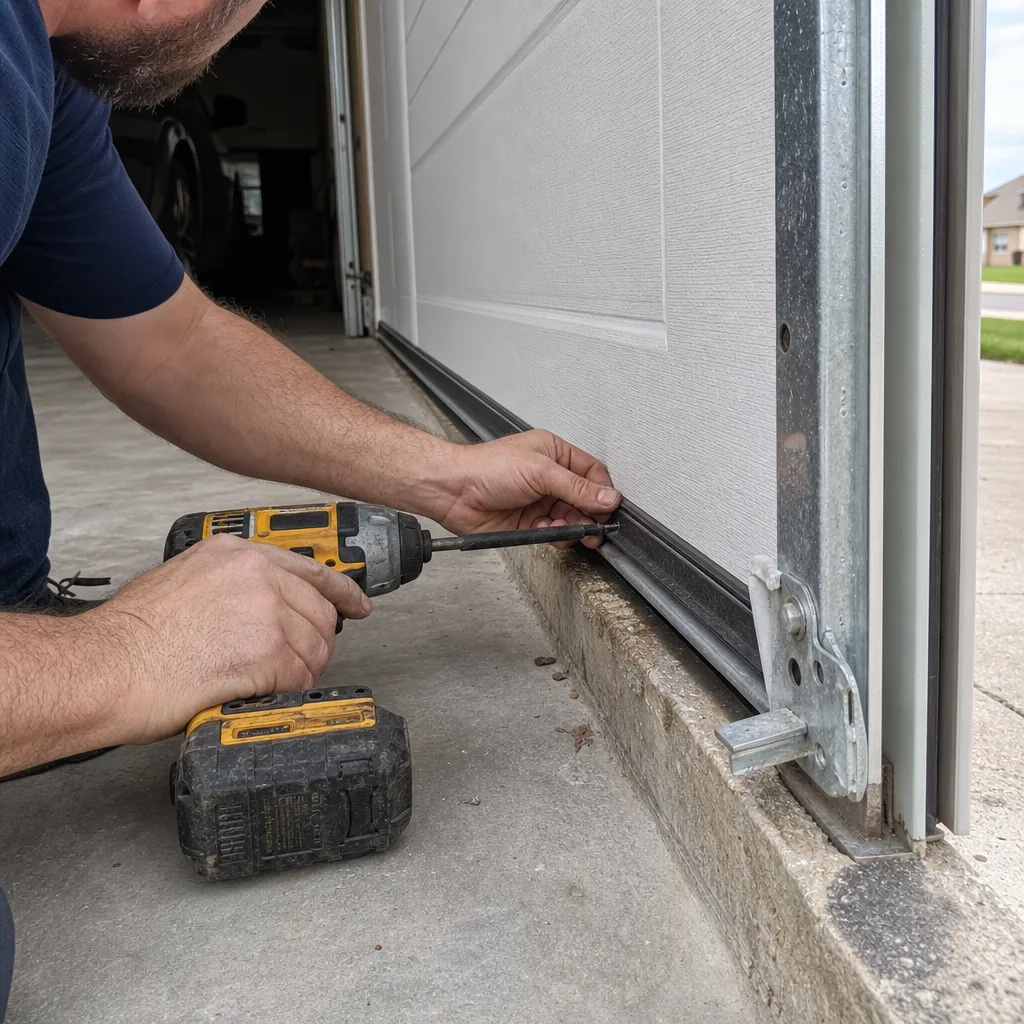
A photo does more than help the technician. It changes how the call goes. When you can show the problem, the technician can arrive with the likely part already on the truck, and the price conversation can happen with evidence in front of both of you. Here is how to document a garage door warning sign in Denton so the description is precise and the call is short.
Step 1: Photograph the full door from outside, closed. This gives the technician the door size, panel condition, and brand if visible. It also shows the environment, which matters for weather seal and track issues.
Step 2: Photograph the springs above the closed door from inside. Stand back far enough to capture both springs in one frame. If one is broken, the separation gap will be visible. Include the spring anchor bracket in the photo if you can do so from the ground.
Step 3: Photograph both cables from the inside. One photo of the left cable, one of the right. Zoom in on any frayed section. The technician needs to see how many strands are separated.
Step 4: Take a short video of a full open-and-close cycle. Hold the phone horizontally and walk alongside the door if you can do so safely. The video should capture the sound, because the sound at each point in the cycle is diagnostic, as covered above.
Step 5: Note the opener brand and model. The model number is on the side of the motor unit. LiftMaster, Chamberlain, Genie, Craftsman, and Raynor each use different parts, and the model number settles what is on the truck.
Step 6: Note how long the symptom has been present. One week of grinding versus one year of grinding are different repair jobs. Write down when it started and whether it has gotten worse.
The documented photo record is also what you should expect from the service call itself. Every visit we make in Denton closes with a photo record of what we found and what we did. It is Clause 4 of The Haven Standard, the documentation system we work to: the customer sees the failed part before anyone quotes a replacement. It is the reason the founding rule of Servo Garage Doors Denton has not changed since 2015.
Denton-Specific Factors: Heat, Storms, and Neighborhood Age
Denton’s climate and housing stock shape which garage door warning signs appear most often here. It is worth understanding the pattern before you diagnose, because a symptom that appears in every Denton neighborhood in August has a different cause than the same symptom in February.
Heat and spring fatigue. Denton’s summer heat, regularly topping 100 degrees from June through September, accelerates spring metal fatigue. Torsion springs are rated for a cycle life, typically 10,000 cycles, and heat shortens that. A spring installed in 2017 and cycled four times a day is at roughly 13,000 cycles by 2025. The heat does the rest. We replace more springs in August and September in Denton than in any other two-month window of the year.
Storm season and seal failure. The spring storm season from March through May brings heavy, wind-driven rain that finds every gap in a worn bottom seal. A door with a cracked seal will show water pooling on the garage floor during these months, and the bottom panel, if it is steel, begins to rust inside the lower rail. Both are repairable, but the seal is a $60 to $140 fix that prevents the $200 to $450 panel repair.
Neighborhood age and builder-grade doors. Homes in Denton built between 2015 and 2025, especially in the new developments along the Loop 288 corridor and near the northern stretches of the city, were mostly constructed with builder-grade doors and chain-drive openers. Builder-grade Amarr and Wayne Dalton doors are fine doors, but the rollers, hinges, and springs are specced for cost, not longevity. Many of those doors start showing roller and spring wear in years five through seven. Older homes, such as the 1970s and 1980s builds near the University of North Texas, often have heavier, better-built doors that have been retrofitted with newer openers on multiple occasions. The door is fine; the opener is often the weak point.
What this means for you. If you live in a Denton home built in the last ten years, watch the rollers and springs closely starting around year five. If you live in an older home, watch the opener and the track alignment. The warning signs are the same everywhere; the component they point to shifts with the housing stock.
Common Mistakes to Avoid
- Assuming a reversing door is always the sensors. In about 40 percent of the reversing-door calls we handle in Denton, the photo eye sensors are clean, aligned, and functioning. The actual cause is a limit switch, a binding roller, or a logic board fault. If you align the sensors and the problem persists, do not keep staring at the sensors; the issue is elsewhere.
- Running the opener with a broken spring. A broken spring means the opener is pulling the full door weight. That is the quickest way to turn a $250 spring repair into a $450 spring-plus-opener-gear repair. If the spring is broken, stop using the opener entirely.
- Lubricating a garage door with WD-40. WD-40 is a solvent and a water displacer. It is not a lubricant for garage door rollers and hinges. It strips the grease and makes the noise worse. Use white lithium grease on hinges and rollers, and use it sparingly.
- Tightening the hardware on a door that is out of alignment. If the door is binding because the track is out of line, tightening every bolt will hold the door in the wrong position. It makes the repair harder and sometimes more expensive, because drilled-out hardware must be replaced and re-aligned.
- Replacing one spring instead of both. Torsion springs are installed in pairs because they share the load. If one breaks and you replace only that one, the old spring and the new spring have different cycle counts and different tension characteristics. The old one fails soon, and you pay for the labor twice. Replace both springs every time.
- Ignoring a slow or uneven door because it still opens. A door that moves unevenly is changing the load on every component each cycle. It is not a cosmetic problem; it is a weight distribution problem. The door is slowly bending itself and its track. A $125 re-alignment is cheaper than the garage door installation that becomes necessary if the door is left to rack itself apart.
- Trying to save money by skipping the photo documentation. This one is specific to how we work. Every visit we make in Denton includes a documented photo record of what we found and what we did. It is not optional for us, and it should not be optional for you. A contractor who will not show you the failed part before quoting a replacement is asking you to trust a description instead of evidence. That is a structural disadvantage for you.
When to Call a Professional
Call a professional when you see a broken spring, frayed cables, a door off its track, or a reversing problem that persists after the sensors are cleaned and aligned. Call when the door is sagging on one side, when it will not hold a halfway position during a balance test, or when the opener makes a grinding or burning smell. These are not monitor-and-wait situations; they either worsen quickly or indicate a component under tension that should not be touched. In Denton, the call is garage door repair in Denton, and the estimate is free. Call (940) 398-6880. The written price arrives before any work begins, per Clause 1 of The Haven Standard, and the price you are quoted is the price you pay; there is no surprise at the end because the scope was written down before the first tool came out.
Frequently Asked Questions
How much does garage door spring repair cost in Denton?
Torsion spring replacement in Denton typically costs $180 to $340 for both springs, including labor. The range covers standard 7-foot and 8-foot doors, and the price is quoted and agreed before any work starts. Replacing both springs at once is standard practice, because the two springs age together, and replacing one leaves an old spring that fails soon after. Call (940) 398-6880 for an exact written quote for your door.
Can you fix a garage door the same day in Denton?
Yes. We carry the common parts on the truck, including springs, rollers, cables, hinges, and the common opener gears across LiftMaster, Chamberlain, Genie, Craftsman, and Raynor. The phone is answered by a live person 24 hours a day, including weekends and holidays, and you get a named technician and an on-the-way text, not a callback window. If the repair is a broken spring or a jumped roller, it is usually completed on the same visit.
Will the price change once the technician sees the door?
No. The flat, written price and written scope are delivered before any work begins, per Clause 1 of The Haven Standard. The price is based on the documented condition of the door, and the technician photographs the failed component before quoting a replacement, per Clause 4, so you see the same evidence he sees. If the diagnosis was wrong, the price is re-quoted before any additional work begins.
Do you carry the parts on the truck?
Yes. We stock the common spring sizes, roller types, cables, hinges, and opener gears for all the major brands, including Amarr and Wayne Dalton doors, on the service vehicle. The photo documentation you send ahead of the call helps the technician confirm the right part is on the truck before he leaves, which is why we ask for the photos described in the documenting section above.
What should I do if my garage door starts reversing for no reason?
First, clean and align the photo eye sensors. If the problem persists, the cause is likely a limit switch, a binding roller, or a logic board issue. About 40 percent of reversing-door problems in Denton are not sensor-related. Call (940) 398-6880 and describe the symptom, including the point in the cycle where the reversal happens; that detail narrows the diagnosis significantly.
How often should a garage door be serviced in Denton?
Once a year is the right interval for most Denton homes, with an extra lubrication pass in fall before the temperature swing. The annual service is a hardware tightening, balance check, roller inspection, and safety sensor verification, typically $75 to $125. A door that is serviced annually typically avoids the sudden spring and cable failures that make up most emergency calls in Denton.
The Bottom Line
A garage door warning sign is a diagnostic clue, not a vague condition. Each symptom points to a specific component, and that component has a specific repair cost and a specific urgency. The five imminent-failure signs, including a broken spring, frayed cables, and a recurring reversing door, need same-week attention. The five degradation signs can wait a few months if monitored, but not a few years. Document what you see, know which parts are safe to inspect and which are not, and get a written price before any work begins. In Denton, that written price is the standard, not the exception. Call (940) 398-6880, and the estimate arrives before the technician does.
Written by Marcus Deller, Owner at Servo Garage Doors Denton, serving Denton since 2015.