
Last updated September 20, 2026
Full 25-point door and opener safety check with every visit - springs, cables, rollers, tracks, and your LiftMaster or Chamberlain opener included
You get a price before we start. It does not change when the truck arrives.
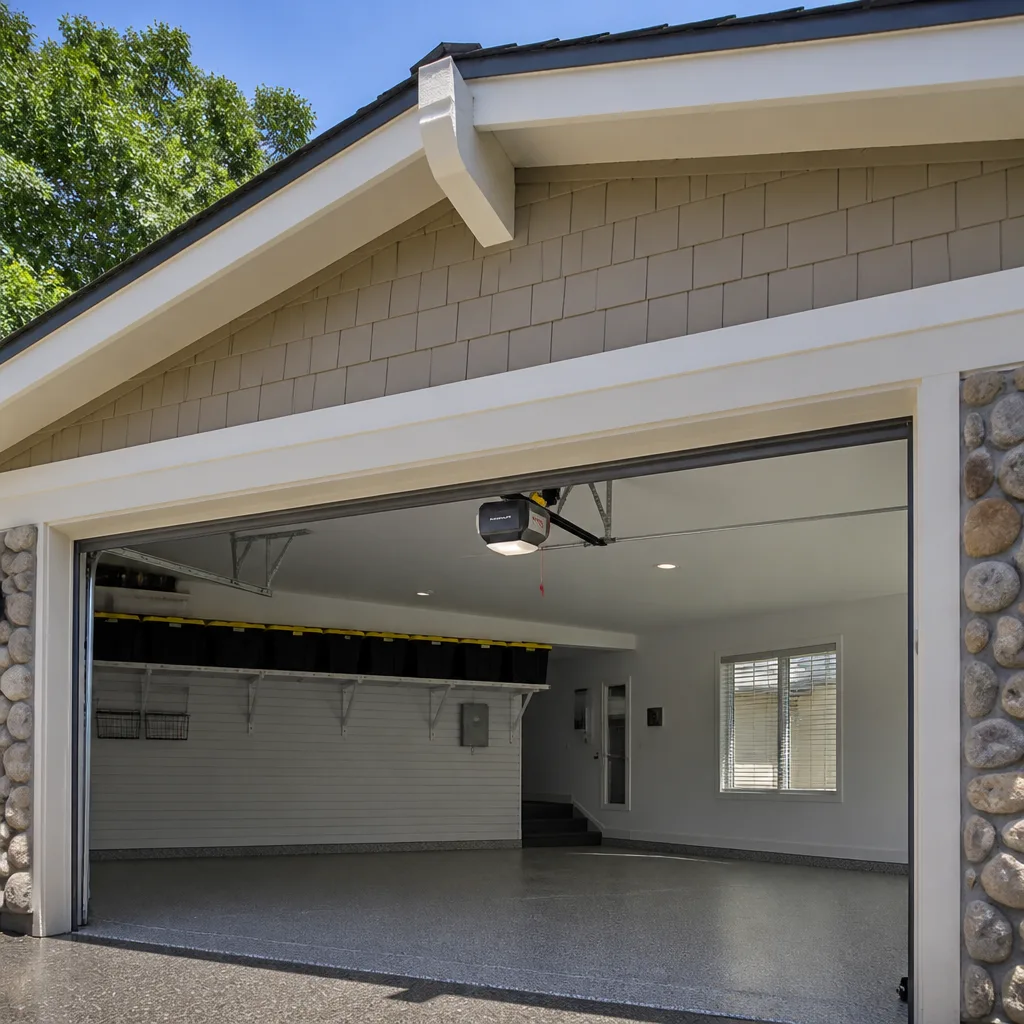
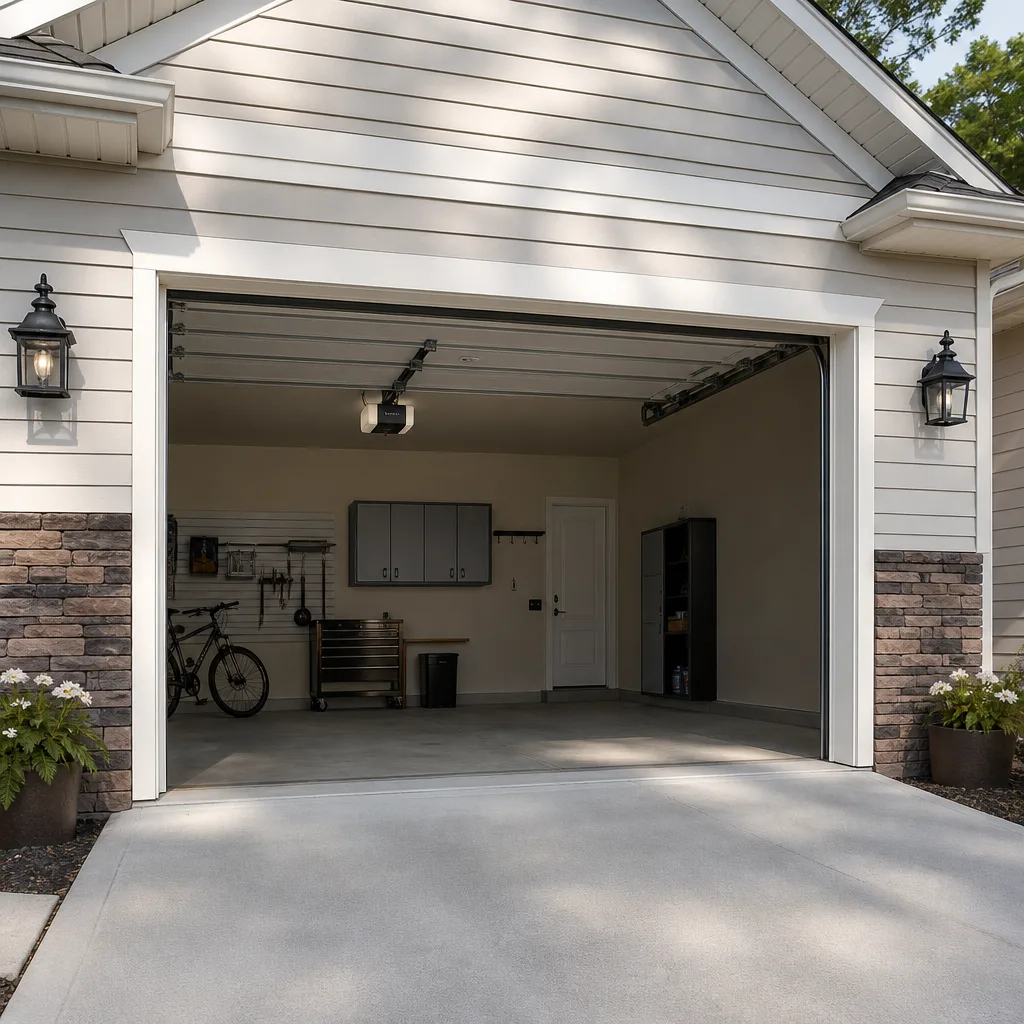
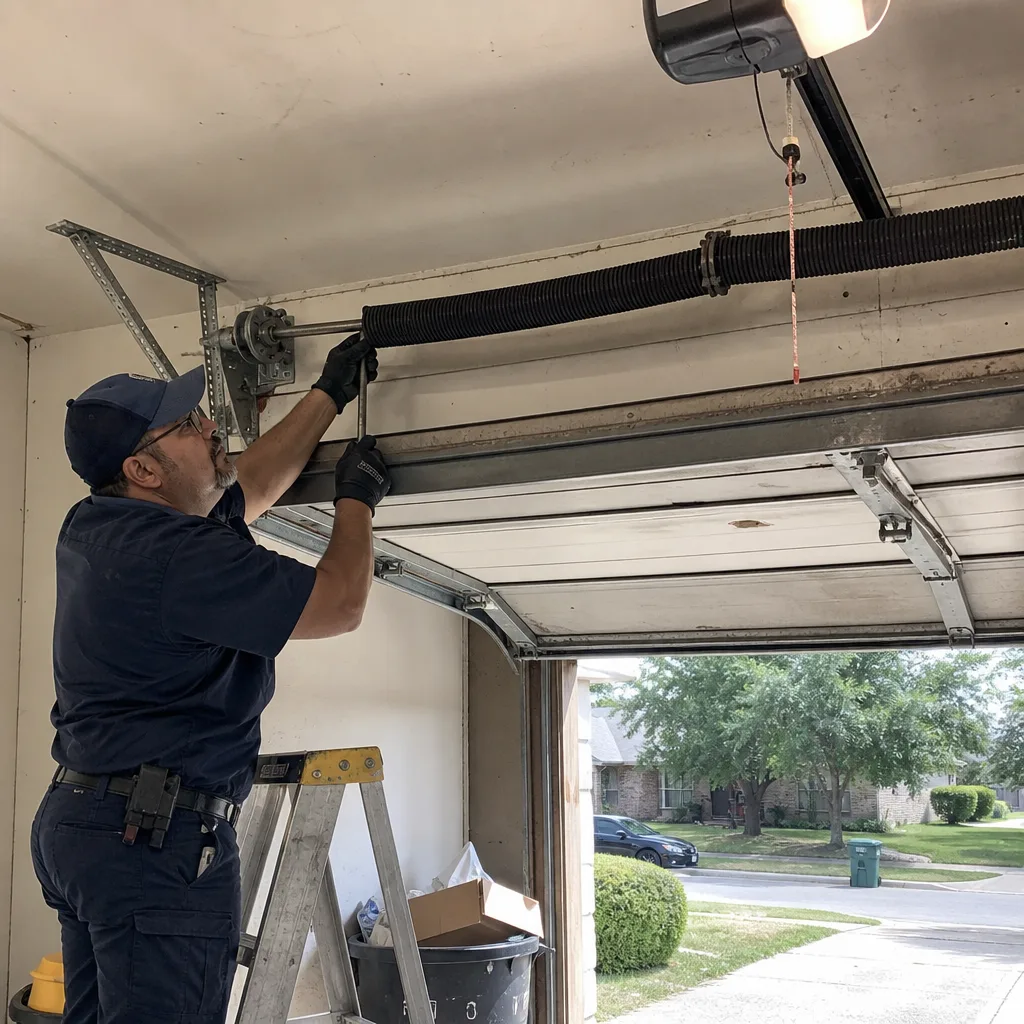 Before
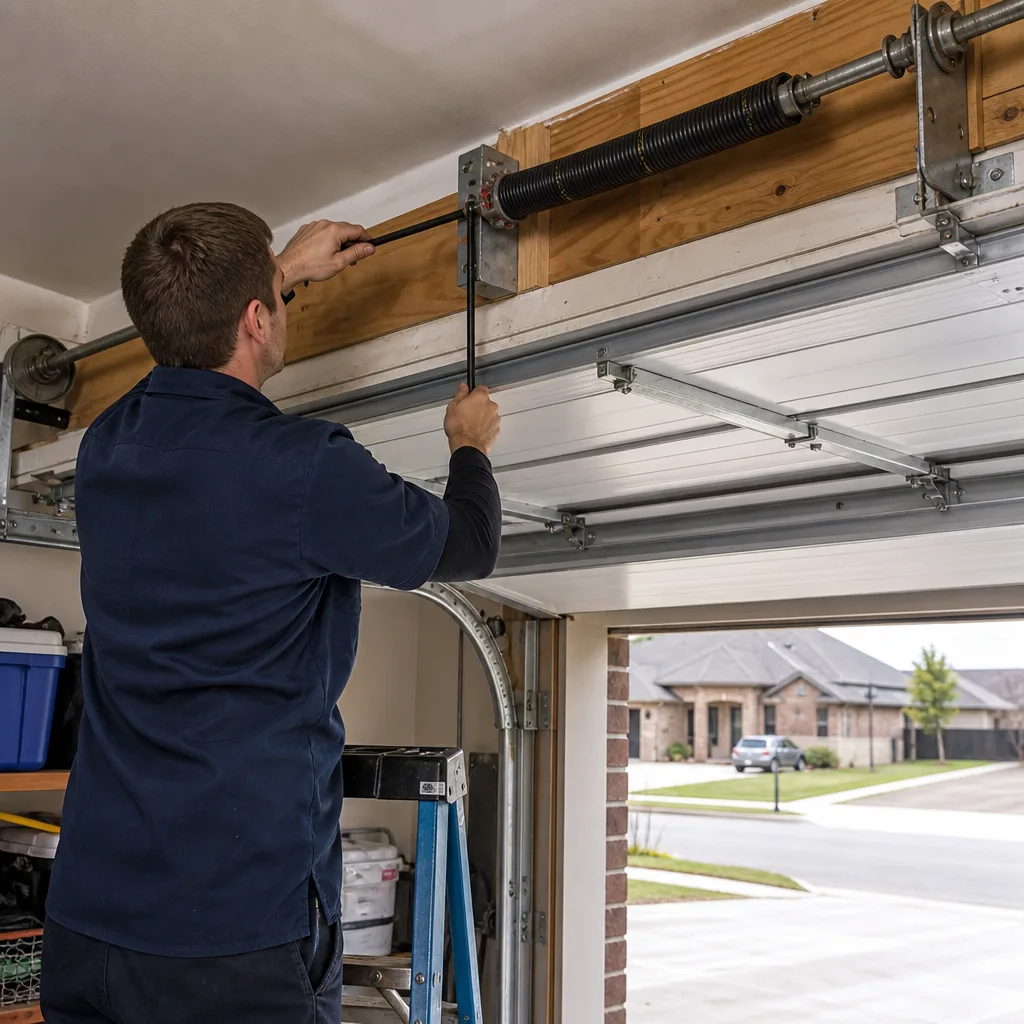 After
After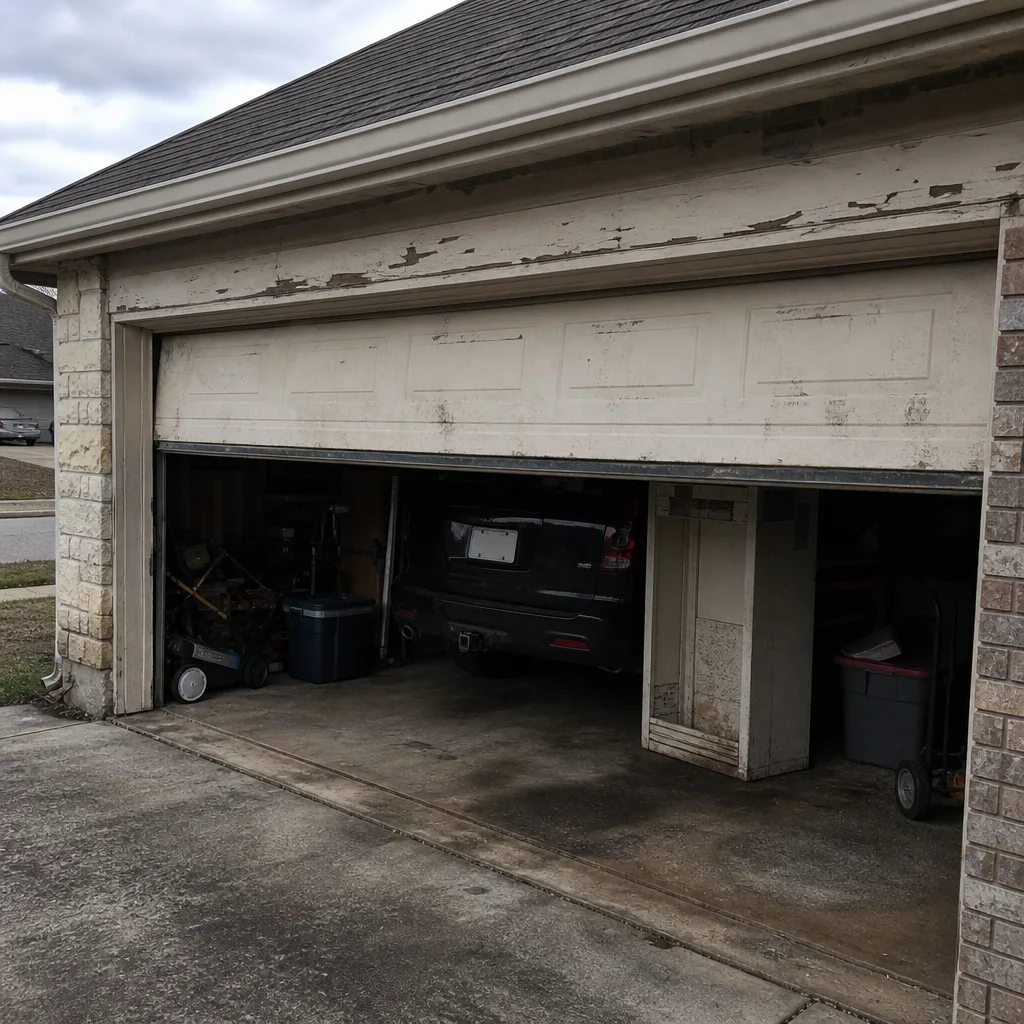 Before
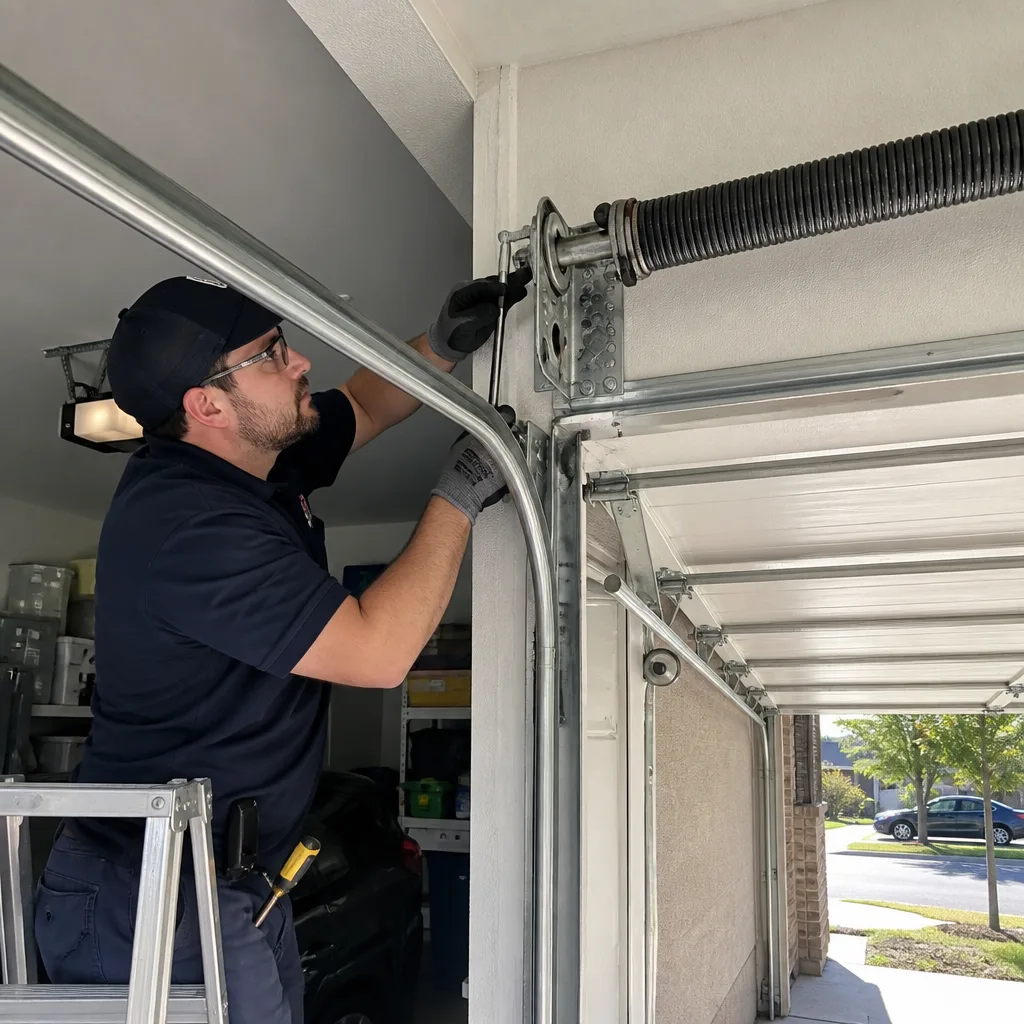 After
After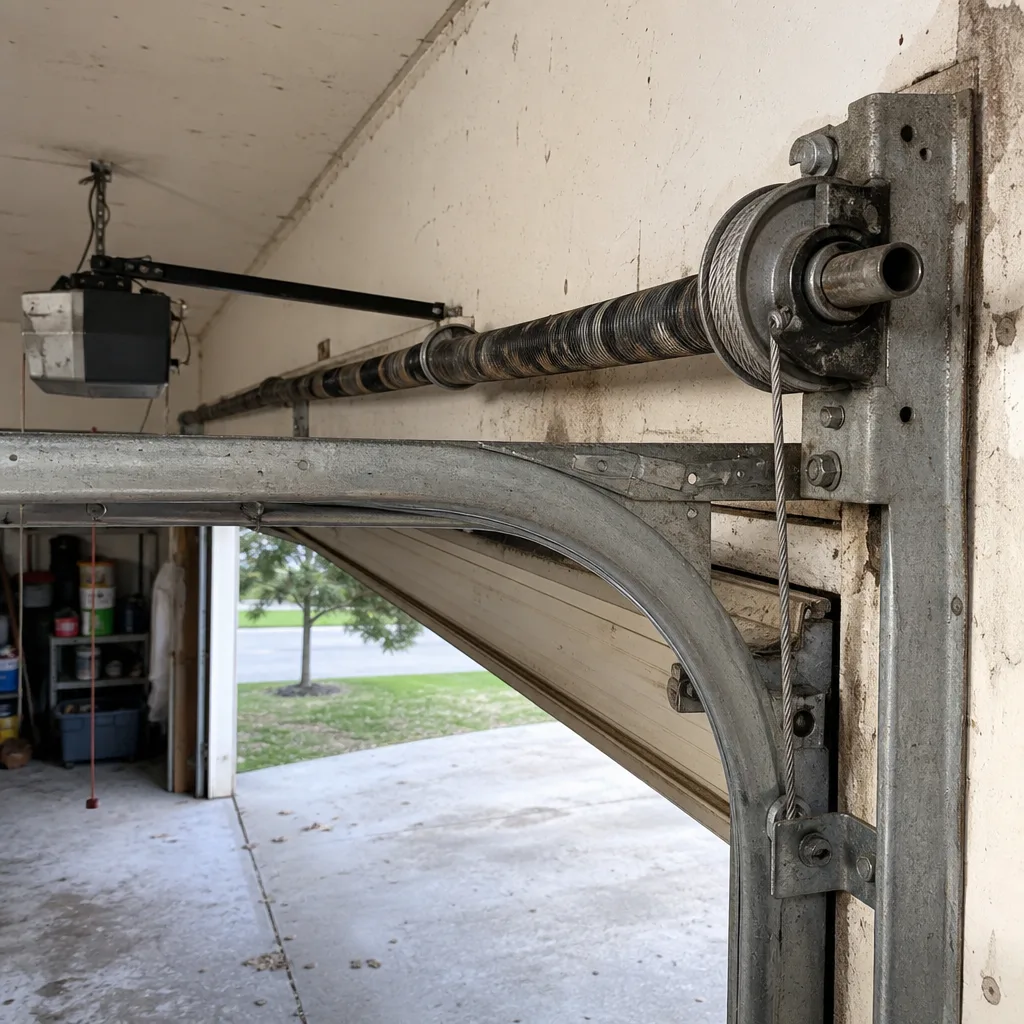 Before
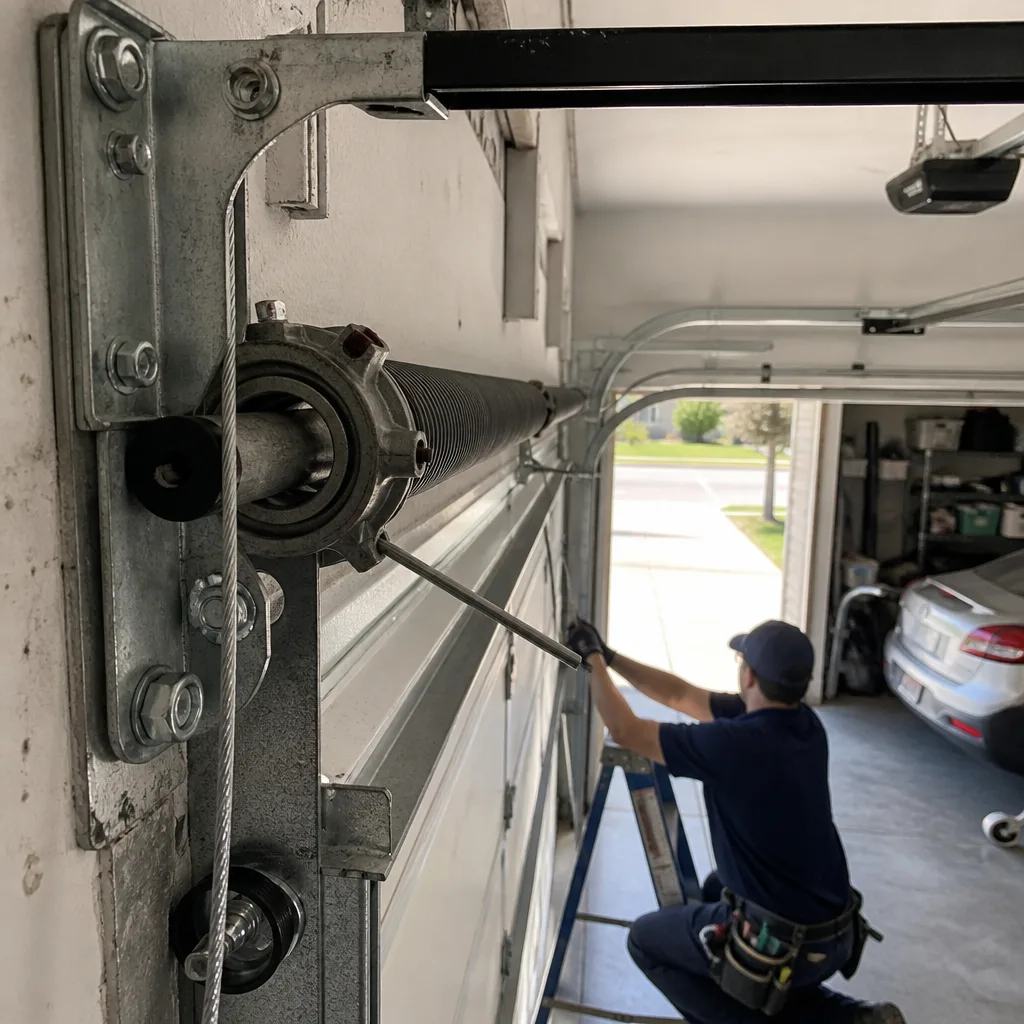 After
AfterGarage Door Permits, Codes & Inspections in TX: What You Need to Know
A garage door replacement that required no permit in 2021 may require one in Denton today. The city adopted updated International Residential Code (IRC) amendments in 2023 that changed the threshold for what counts as a structural alteration, and that shift has caught more than a few homeowners off guard at the worst possible moment: during a sale, when the inspector flags the door and the closing stalls. This guide walks you through exactly what Denton requires for garage door work, what you’ll pay, how inspections work, and where most people get burned. For Garage Door Warning Signs: A Denton Homeowner’s Reference Guide, see our companion post. By the time you finish, you’ll know whether your project needs a permit, what “replacement-in-kind” actually means under Denton’s adopted code, and how to avoid a re-inspection fee that nobody budgeted for.
Quick Answer
Garage door permitting in Denton, TX is not a yes-or-no question. In most cases, replacing an existing garage door with a door of the same size, same opening, and same structural attachment requires no permit. But if you’re enlarging the opening, changing from a single panel to a sectional design that alters the header or track mounting, or installing a door where one did not exist before, you will almost certainly need a building permit from the City of Denton, plus an inspection. The permit threshold changed under Denton’s 2023 IRC amendments, and the distinction between “repair,” “replacement-in-kind,” and “structural alteration” is where most permit problems begin.
Table of Contents
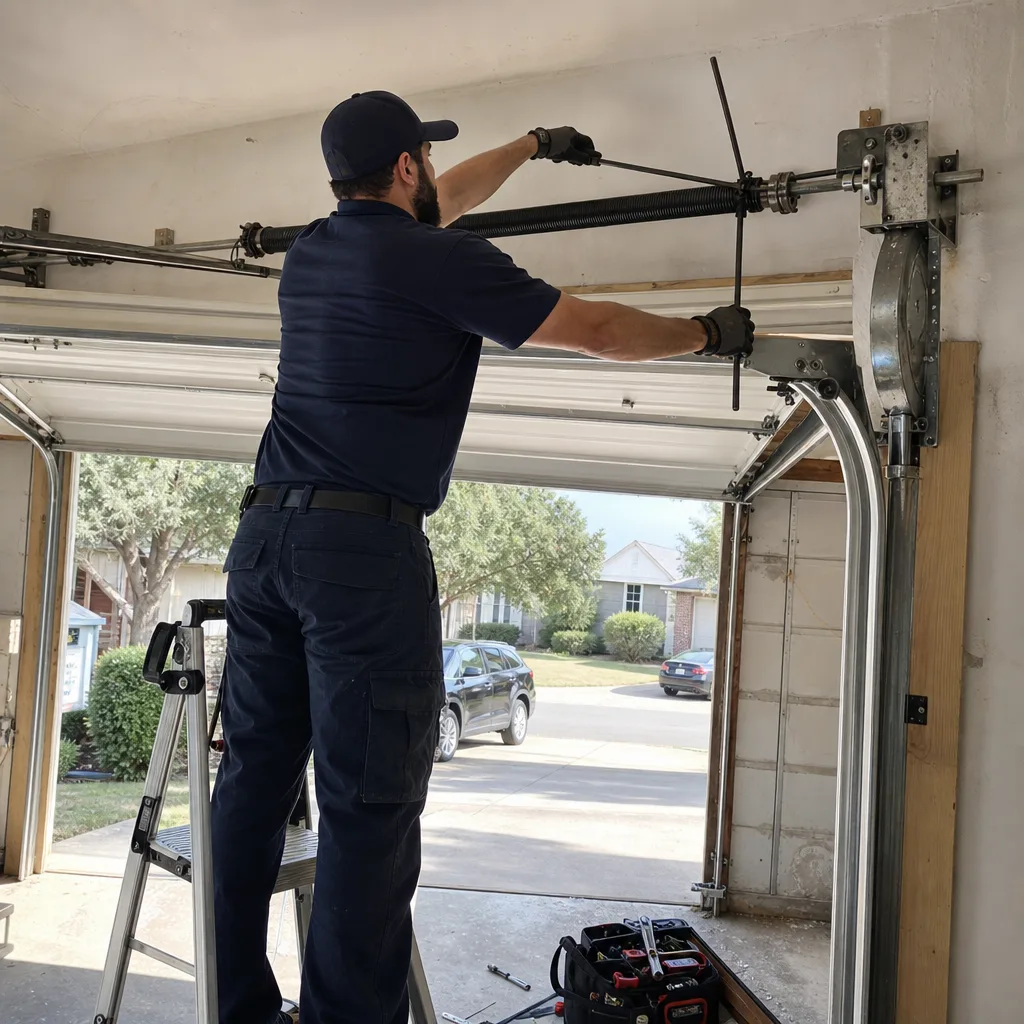
- When Does a Garage Door Need a Permit in Denton?
- What “Replacement-in-Kind” Actually Means Under Denton Code
- Current Denton Permit Fees and Inspection Costs
- The Inspection Sequence for Permitted Garage Door Work
- What Happens When Unpermitted Work Shows Up at Closing
- HOA Deed Restrictions: The Second Compliance Layer
- Denton’s 2023 IRC Amendments That Affect Garage Doors
- Common Mistakes to Avoid
- When to Call a Professional
- Frequently Asked Questions
- The Bottom Line
BeforeAfterWhen Does a Garage Door Need a Permit in Denton?
The short version: Denton issues permits based on what the work does to the structure, not on what part you’re buying. A garage door that bolts into an existing opening, using the existing framing and existing track mounts, is treated as a fixture replacement. A garage door that changes the opening itself, the header, the lintel, or the way load transfers around the door is treated as structural work, and structural work needs a permit.
Here’s the practical breakdown we use when a Denton homeowner asks us whether their project needs a permit:
- Repair of an existing door (spring replacement, panel replacement, track adjustment, opener replacement): No permit required. This is maintenance on an existing assembly.
- Replacement-in-kind (same size door, same opening, same structural attachment points, no framing changes): No permit required under Denton’s current code, provided the opening and framing are not altered.
- Replacement with modification (same rough opening, but door type changes from tilt-up to sectional, requiring new track mounting, new header brackets, or new spring anchoring): Permit likely required. This is where the 2023 IRC amendments tightened the rule.
- New opening or enlarged opening (converting a carport to a garage, widening a single bay to a double, adding a door where none existed): Permit always required. This is new structural work, full stop.
- Header or lintel modification (replacing a damaged header, raising the opening height, installing a new beam above the door): Permit always required, and you’ll need an engineer’s letter for the load calculation.
One thing worth stating plainly: Denton’s building department does not consider “the door company said I didn’t need one” a defense. The permit obligation runs with the property. If the work should have been permitted, the current owner is the one who deals with it, whether they did the work or inherited it from the prior owner.
If you’re in Denton and uncertain where your project falls, call Servo Garage Doors Denton at (940) 398-6880. We’ll tell you, based on the door configuration and the opening as it sits, whether the work is repair, replacement-in-kind, or a structural alteration that needs the city involved. The answer takes five minutes and costs nothing.
For broader context on what the repair side of this looks like, our Garage Door Repair in Denton page covers the maintenance work that never triggers a permit conversation.
What “Replacement-in-Kind” Actually Means Under Denton Code
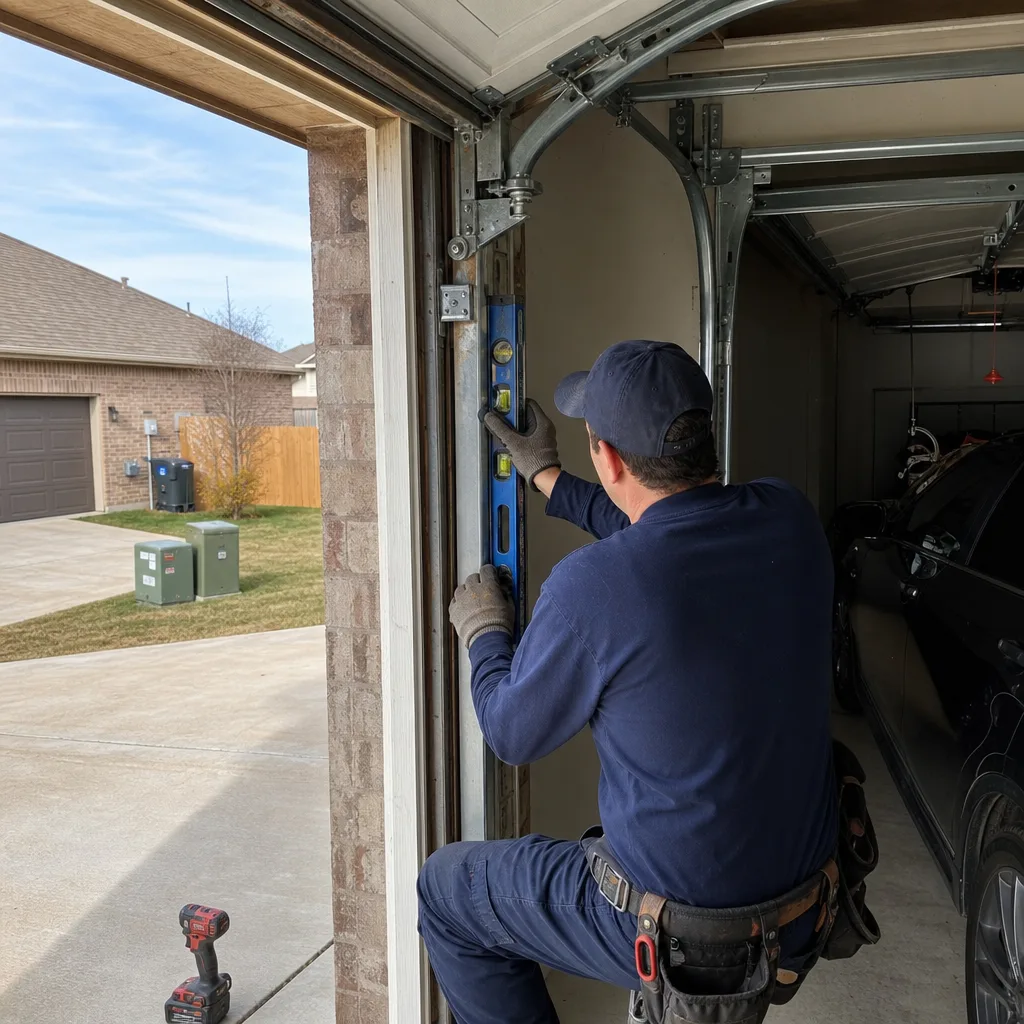
The phrase “replacement-in-kind” sounds straightforward, but in Denton it carries a specific legal meaning under the city’s adopted IRC, and misunderstanding it is the single most common way a garage door project drifts into unpermitted territory. Replacement-in-kind means the new door is functionally identical to the old one: same rough opening dimensions, same attachment method, same load path, same structural impact.
Here’s the nuance most generic Texas permit guides miss: the door panel dimensions are not the test. The framing is. A homeowner can install a door that’s cosmetically identical to the old one and still be outside replacement-in-kind if the new door changes how weight and wind load transfer into the structure.
Useful examples from Denton jobs we’ve seen:
- A tilt-up single panel door (one slab that swings out and up) replaced with a sectional door (four or five panels on a curved track) changes the spring anchoring, the track mounting, and the header connection. That’s a structural alteration. Permit required.
- A sectional door replaced with another sectional door of the same width and height, using the same track mounting positions and the same spring pad: replacement-in-kind. No permit.
- A wood door replaced with a steel door of the same size, same track system, same mounting hardware: replacement-in-kind. No permit.
- A door opening raised two inches to clear a lifted truck, requiring the header to be re-framed: structural. Permit required, plus an engineering letter.
Denton’s Community Improvement Services division enforces this through the plan review process. When a permit application is submitted for garage door work, the reviewer checks the door schedule against the existing opening. If the rough opening has changed, the header has changed, or the load path has moved, the project is no longer a fixture replacement.
We also field questions about the door hardware itself. Springs, tracks, cables, and openers are all components of the assembly; replacing any of them on a door that remains in place is maintenance. The moment the opening or the framing changes, the project moves from maintenance to construction, and the city wants to know about it.
Clopay and Amarr both publish door schedules that specify rough opening dimensions, and those schedules are what Denton plan reviewers check against the permit drawings. If the new door’s rough opening doesn’t match the old one, the reviewer will flag it. That’s not a noise complaint; that’s the code working as intended.
Current Denton Permit Fees and Inspection Costs
Here’s what you’ll pay the City of Denton for a garage door permit in 2026. These figures come from the city’s published fee schedule, but confirm with Community Improvement Services at the time of application, because fee schedules change with each budget cycle and a $25 difference shows up when you’re already at the counter.
Building permit fees for garage door work in Denton, current as of this writing:
- Residential garage door replacement with structural alteration: $50-$120 base building permit fee, depending on project valuation. Most single-door replacements land near the low end.
- New garage door opening or enlargement: $150-$400, because the project now includes framing, a header, and possibly electrical work for a new opener circuit.
- Plan review fee: 65% of the building permit fee, charged when drawings are submitted.
- Re-inspection fee: $75 per re-inspection. This is the fee most Denton homeowners don’t budget for, and it’s charged every time the inspector has to come back.
- Electrical permit (if a new opener circuit is added): $50-$90, separate from the building permit.
The total cost of a permitted garage door replacement with a structural component in Denton typically runs $200-$500 in city fees. That’s on top of the door itself and the labor. For reference, a full garage door installation in Denton, installed per code with the framing done to the city’s satisfaction, usually lands between $1,800 and $4,800 depending on the door and the opener. You can see the service side of that on our Garage Door Installation in Denton page.
One important point: the permit fee is not where people get hurt. The re-inspection fee is. If the door is installed and the inspection fails because the header strapping is wrong or the spring pad isn’t anchored to the city’s spec, you’re paying $75 every time the inspector returns. A good installer knows what the Denton inspector checks and does it right the first time.
Also note: if the project includes a new garage door opener, Denton treats the electrical rough-in as part of the permitted scope if it’s shown on the building permit drawings. If it’s not shown, you’ll need a separate electrical permit, and the electrical inspector makes a separate trip. Coordinate that before the work starts, not after.
The Inspection Sequence for Permitted Garage Door Work
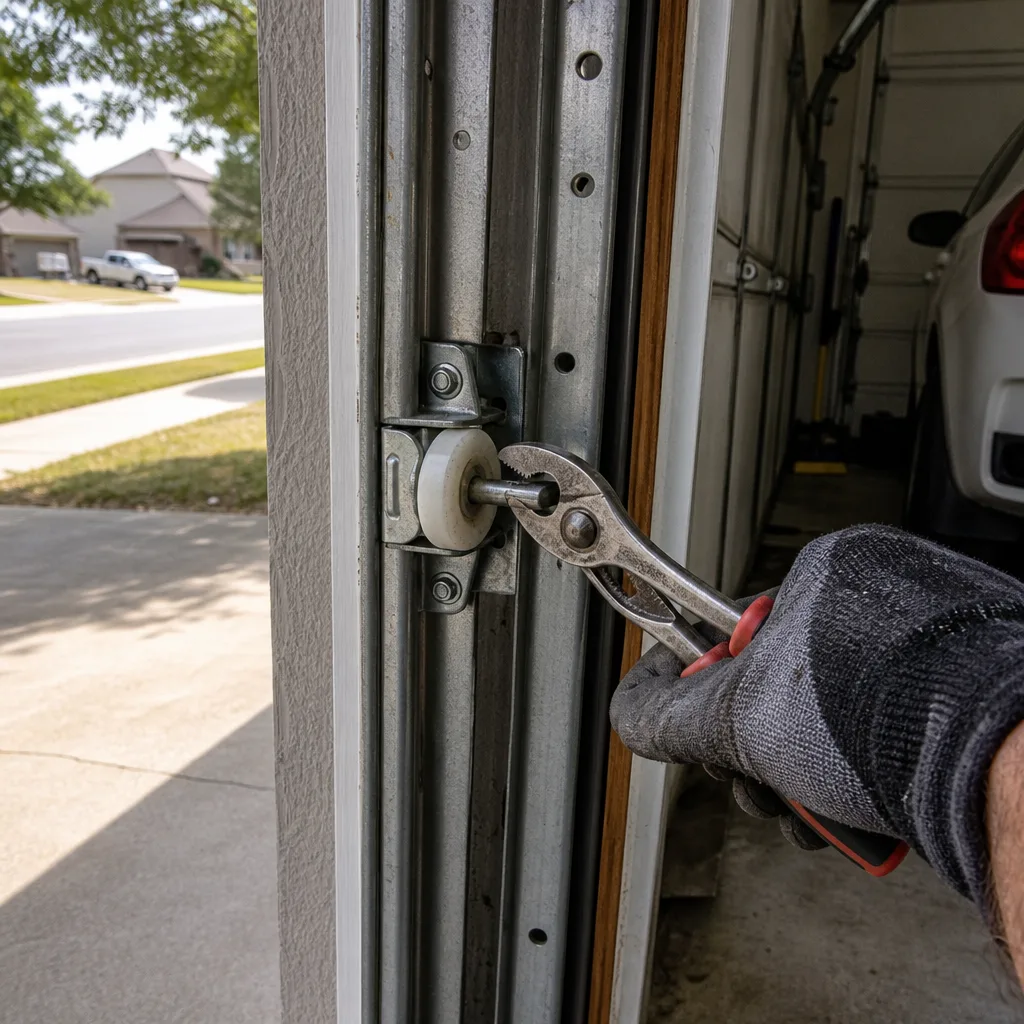
When a Denton garage door project requires a permit, the inspection process follows a set order. Here’s how it works, step by step, for a typical permitted replacement involving framing changes:
- Permit application and plan review. Submit the permit application with a door schedule, rough opening dimensions, and framing details. Denton’s Community Improvement Services completes plan review, typically in 3-7 business days for residential garage door work.
- Framing inspection. After the old door is removed and any framing changes are made, but before the new door is installed, the inspector checks the header, the jack studs, and the king studs. This is a rough-in inspection. The inspector is looking at load path, connection hardware, and whether the framing matches the approved drawings.
- Door installation. The door, tracks, springs, and opener are installed. The installer’s job here is to meet the manufacturer’s installation spec and the city’s amendments.
- Final inspection. The inspector returns and checks: the door’s operation and balance, the spring containment cables (required on all torsion springs under current code), the track and mounting hardware, the opener’s auto-reverse function (required by federal law and enforced at inspection), the photo-eye sensors, and the manual release. If any of these fail, you get a correction notice and a re-inspection fee.
- Certificate of occupancy or final sign-off. For residential work, the final inspection sign-off closes the permit. Keep this document. It’s your proof of compliance when you sell the house.
What fails most often at final inspection in Denton? In our experience, the list is short and consistent:
- Missing or incorrect spring containment cables. Current code requires safety cables through torsion springs. Older installations often lack them, and if the new work doesn’t add them, the inspector red-tags it.
- Opener auto-reverse not working or not tested at the right height. The inspector will test this with a 2×4 on the floor. If the door doesn’t reverse on contact, it fails.
- Photo-eye sensors misaligned or mounted too high. Denton enforces the 6-inch maximum mounting height from the floor.
- Header strapping or anchor bolts not per the approved drawings. This comes from installers who cut corners on the framing connection.
Re-inspection timelines in Denton typically run 2-5 business days after you call in the correction. The re-inspection fee applies each time. Installing to the city’s spec the first time is cheaper than a learning curve.
What Happens When Unpermitted Work Shows Up at Closing
Denton County has a very active resale market, and title companies and buyer’s inspectors in this area are more thorough than in many parts of Texas. When a home goes under contract, the buyer’s inspector walks the garage, and if the garage door looks newer than the rest of the house, one of the first things they check is whether the city has a permit on file for it. Denton’s permit records are searchable online, and “no record found” is a line no seller wants to see.
Here’s what happens next, based on how we’ve seen these situations resolve in Denton neighborhoods from Southridge to Robson Ranch:
- At best: The buyer asks for the permit. The seller doesn’t have one. The buyer asks the seller to obtain a retroactive permit before closing. The city allows retroactive permits in some cases, but the process requires exposing the work (removing trim or drywall to show the framing), paying double permit fees, and passing an inspection. This takes 2-4 weeks, minimum, and the seller pays.
- At worst: The buyer’s lender flags the unpermitted work as a condition of the loan. The closing is delayed until the permit is closed out, or the buyer walks. In a competitive Denton market, a delayed closing often means the buyer demands a price concession to compensate for the lost time.
- In the middle: The seller credits the buyer at closing for the estimated cost of retroactive permitting, typically $1,500-$3,000 for garage door work, and the buyer assumes the problem after closing. This is the compromise most sellers take, and it’s a real cost that gets paid at the closing table.
The math is simple: a $200 permit at the time of work, or $1,500-$3,000 and a delayed closing later. The permit always wins in hindsight.
One thing we tell every Denton homeowner: keep the permit and the final inspection sign-off in the same folder as your survey and your deed. When the buyer’s inspector asks, you’ll have the answer in 30 seconds instead of 30 days.
HOA Deed Restrictions: The Second Compliance Layer
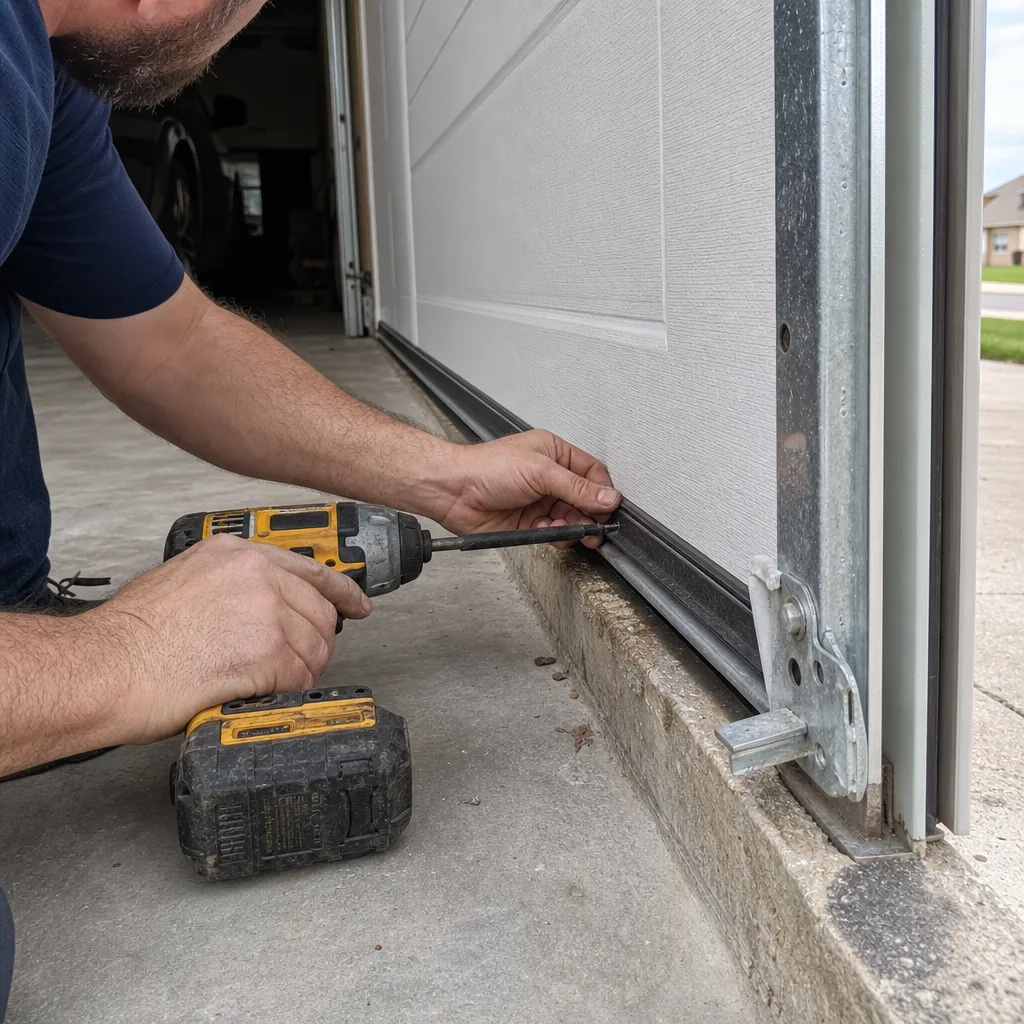
City permits are the legal minimum. HOA deed restrictions are the contract you signed when you bought the house, and in most of Denton’s master-planned neighborhoods, they apply independently of anything the city does or doesn’t require. A project can be fully permitted by the city and still violate the HOA’s design guidelines. A project can also require no city permit but still require HOA architectural review.
In Denton, neighborhoods with active HOAs and architectural control committees include most of the newer developments north and east of the city core. If your neighborhood has a design review process, a garage door replacement that changes the door’s material, color, window pattern, or style may require architectural committee approval before the work begins. The HOA review is separate from the city permit, and it has its own timeline, usually 2-4 weeks.
What HOAs in Denton typically regulate on garage doors:
- Door material: Steel vs. wood vs. fiberglass. Many HOAs require a specific material or finish to match the neighborhood’s original spec.
- Color: Some HOAs maintain approved color palettes, and the garage door must match or complement the palette.
- Window inserts and panel pattern: If the original doors in the neighborhood have a specific panel layout or window shape, a different design can be rejected.
- Replacement-in-kind exceptions: Many Denton HOAs allow true replacement-in-kind without review, but require full architectural review for any change in appearance, even if the city permits it.
- New doors on new construction: Some HOAs incorporate garage door specifications into the original plat restrictions, meaning the requirement runs with the property.
The practical sequence in Denton for a door that changes appearance: check the HOA’s published design guidelines first, then file the city permit if needed, then schedule the work. Doing it in that order avoids a door being installed that the HOA later forces you to replace. HOA enforcement is litigation, and it’s the kind of fight that costs more than the door.
For the installation work itself, once the approvals are in hand, our Garage Door Installation in Denton team handles the full scope: door, tracks, springs, opener, and the paperwork to prove it was done to code.
Denton’s 2023 IRC Amendments That Affect Garage Doors
Denton adopted the 2021 International Residential Code with local amendments effective in 2023, and a handful of changes directly affect garage door work. These are the amendments that catch people who read a generic Texas permit guide and assume the rules in Houston or San Antonio apply here. They don’t.
The key amendments, in plain language:
- Structural alteration threshold. Denton’s amendment clarified that any change to the rough opening, header, or load path around a garage door is a structural alteration requiring a permit. The previous code language was interpreted more loosely, and the 2023 amendment closed that gap.
- Wind load requirements. Denton is in a 110 mph wind zone under the adopted code, and garage doors must meet wind-rated design pressure. This applies to new installations and replacements with structural alterations, and it rules out some economy doors that aren’t wind-rated for the region.
- Spring containment. The 2023 amendments explicitly require safety containment cables on all torsion springs in residential garages. If your older door has bare springs and you’re doing any permitted work, the springs must be brought up to current code during that work.
- Opener safety. Denton enforces the 6-inch photo-eye mounting height and the auto-reverse requirement, both of which are in the adopted IRC and are tested at every final inspection.
- Permit history disclosure. Denton’s building department now flags properties with open permits or unresolved inspection items in its public record system, which is what buyer’s inspectors search during due diligence. An open permit on a garage door shows up.
The wind load point matters more in Denton than a homeowner might expect. A door rated for 90 mph is generally cheaper, and plenty of online retailers will ship it to a Denton address without asking where it’s going to be installed. The city code requires 110 mph wind-rated doors for new installations and structural replacements. A non-compliant door fails inspection, and the homeowner pays for the door twice.
Chamberlain and LiftMaster openers dominate the Denton market, and both brands build their current models to the auto-reverse and photo-eye standards the city enforces. If you’re pairing a new opener with a permitted door installation, the opener side of the inspection is usually the easiest part of the whole process. The door and framing are where the failures happen.
For opener-specific questions, our Garage Door Opener Repair & Installation in Denton page covers the service side, including what a Denton inspector checks on the opener at final inspection.
Common Mistakes to Avoid
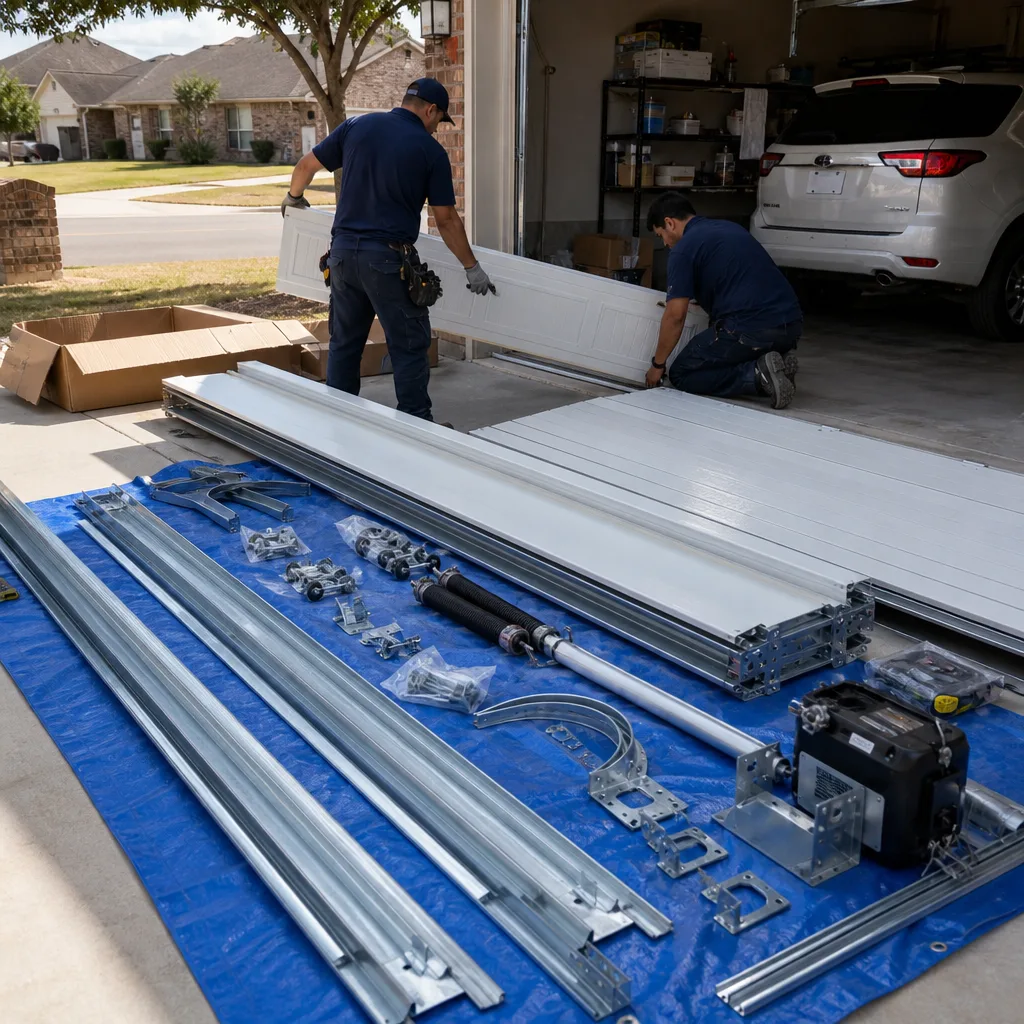
- Assuming all “replacement” work is permit-free. In Denton, the test is whether the rough opening, header, or load path changed. A door that goes from swing-out to sectional almost always crosses the line, and the city will catch it at inspection or at sale.
- Buying a door online and hiring the cheapest installer available. If the door isn’t wind-rated for Denton’s 110 mph zone, or the installer doesn’t know Denton’s spring containment amendment, the inspection fails and you’re paying re-inspection fees on top of the install cost.
- Skipping the HOA check because the city said no permit is needed. City permits and HOA architectural review are separate compliance layers. A door that requires no permit can still violate the HOA’s design guidelines and trigger a demand letter.
- Losing the final inspection sign-off. That one sheet of paper is your proof of compliance when you sell. Replacing it requires a trip to the city, a records search, and time you won’t have during a closing.
- Treating an open permit as a paperwork detail. Denton’s public records flag unresolved permits, and buyer’s inspectors search those records routinely. An open permit from a garage door project is a closing liability.
- Waiting until the door fails to start the permit conversation. If an emergency repair turns into a replacement that needs a permit, you’re now doing permit research under time pressure. A quick call to a company that knows Denton’s code before the door fails saves that scramble.
When to Call a Professional
Some garage door permit situations in Denton genuinely need a professional’s read. If your project involves changing the rough opening size, the header height, or the door type (swing-out to sectional, single to double), you’re doing structural work, and the city wants drawings and a permit. If your HOA requires architectural review and you haven’t filed it, the clock is already running. And if you’re under contract to sell and the buyer’s inspector just flagged the garage door for unpermitted work, you need the retroactive permit process started immediately, because that timeline drives the closing date.
We also see homeowners in Denton who simply want to know whether their specific project needs a permit before they spend a dollar on a door. That’s a five-minute conversation. Servo Garage Doors Denton offers free estimates in Denton, and part of that estimate is a straight answer on permit requirements. We can also point you to our Garage Door Repair Maintenance Checklist for Denton Homeowners. Call (940) 398-6880 and we’ll tell you whether your project is repair, replacement-in-kind, or something the city needs to see.
Frequently Asked Questions
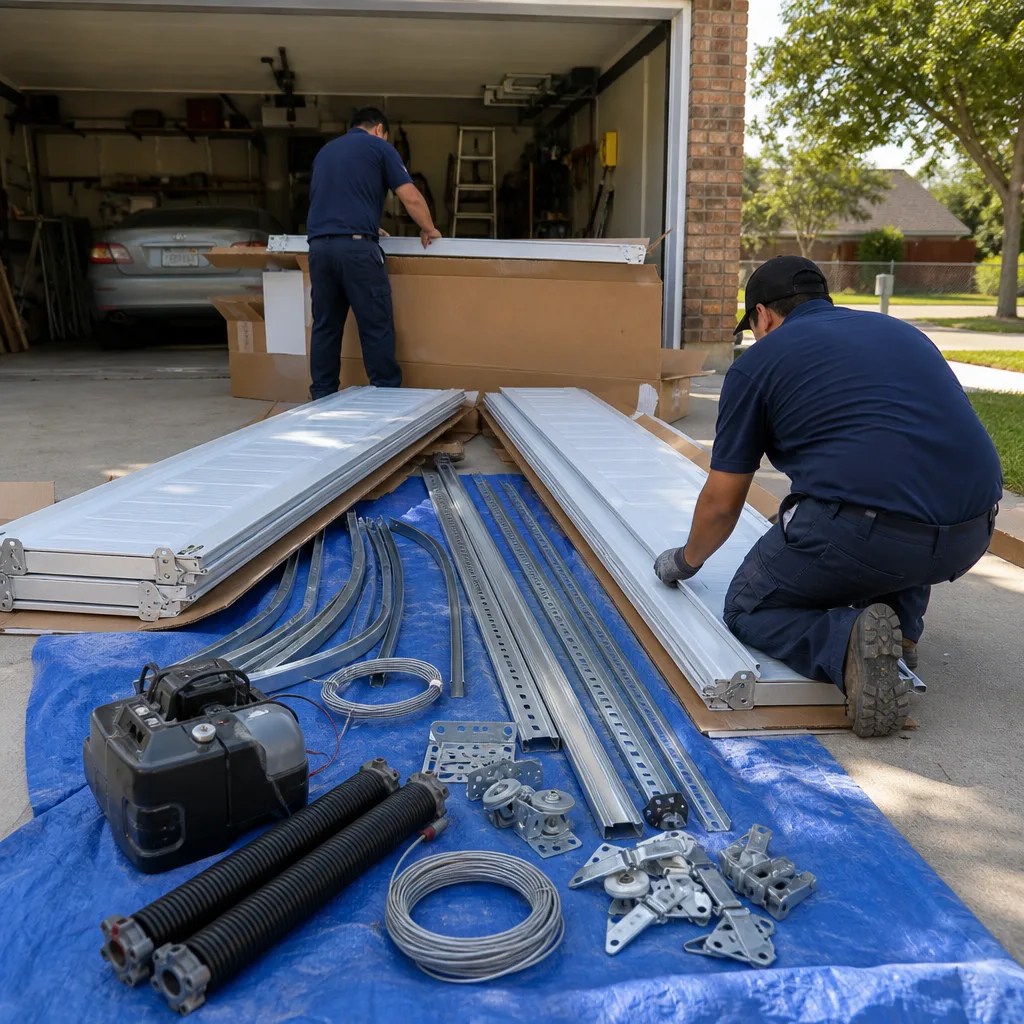
You need a permit if the replacement changes the rough opening, the header, or the load path, or if the door type changes in a way that alters how the door mounts to the structure. A true replacement-in-kind (same size, same opening, same attachment method, same structural impact) requires no permit in Denton under the current code.
A building permit for a garage door replacement with a structural alteration typically costs $50-$120, plus a plan review fee of 65% of the permit fee, plus $75 per re-inspection if the first inspection fails. Most total permit costs for a single-door Denton project run $200-$500 in city fees.
Replacement-in-kind means the new door is functionally identical to the old one: same rough opening, same attachment method, same load path. Swapping from a tilt-up single panel to a sectional design changes the spring anchoring and track mounting, which Denton’s code treats as a structural alteration requiring a permit.
Yes. Denton’s building department publishes permit records online, and buyer’s inspectors in Denton County routinely search for permits on newer-looking garage doors. If the work should have been permitted and wasn’t, the seller typically pays $1,500-$3,000 at closing for retroactive permitting, or the closing is delayed while the permit is obtained.
In most of Denton’s master-planned neighborhoods, yes. HOA architectural review is a separate compliance layer from city permits. A door that changes the exterior appearance (material, color, window pattern, panel style) may require HOA approval even when no city permit is needed. Check your deed restrictions before ordering the door.
The inspector checks the door’s operation and balance, spring containment cables (required on all torsion springs under Denton’s 2023 amendments), track and mounting hardware, opener auto-reverse function, photo-eye sensor alignment and height, and the manual release. Failed inspections carry a $75 re-inspection fee each time in Denton.
The Bottom Line
Garage door permits in Denton, TX come down to one test: does the work change the structure, or does it just change the part? Repair and true replacement-in-kind need no permit. Structural alterations, new openings, and door-type changes do, and the city’s 2023 IRC amendments drew that line more clearly than before. Add the HOA layer on top, and a project that looks simple from the driveway is actually a two-track compliance exercise. Get the permit answer before you buy the door, keep the final inspection sign-off in your records, and if you’re selling, pull the permit history before the buyer’s inspector does. And if you want a straight answer on where your project falls, call us: (940) 398-6880. For more guides & resources, visit our blog.
Written by Marcus Deller, Owner at Servo Garage Doors Denton, serving Denton since 2015.
For more on the services that keep Denton garage doors running, start at our Servo Garage Doors Denton home page.