
Last updated September 20, 2026
Full 25-point door and opener safety check with every visit - springs, cables, rollers, tracks, and your LiftMaster or Chamberlain opener included
You get a price before we start. It does not change when the truck arrives.
 Before
 After
After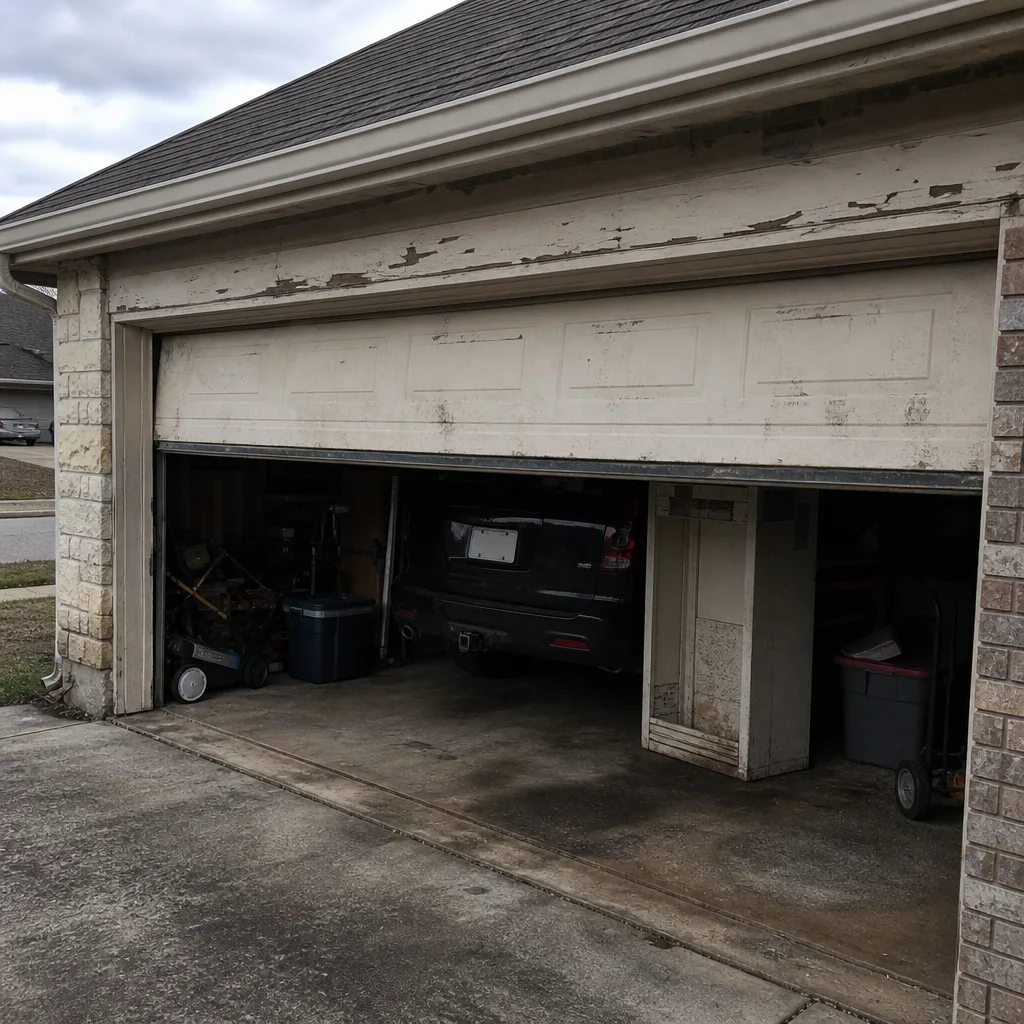 Before
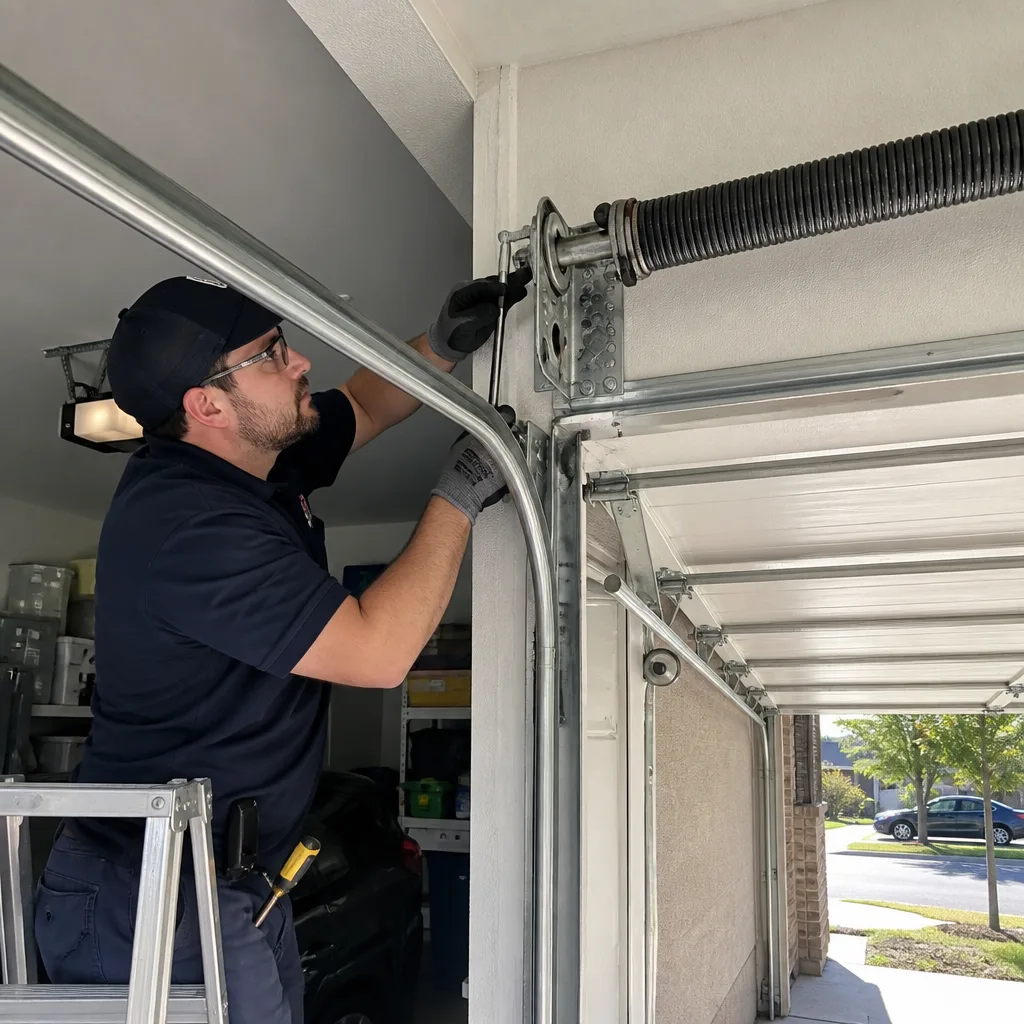 After
After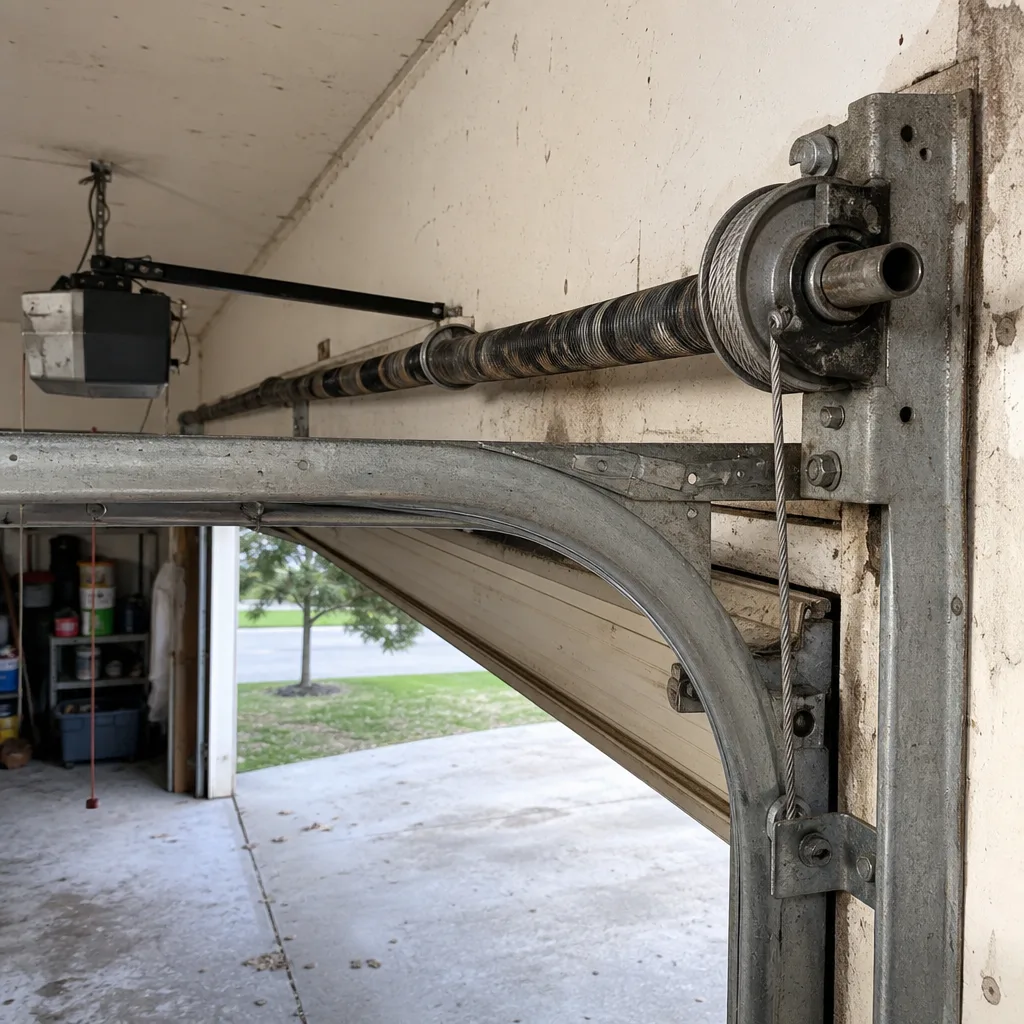 Before
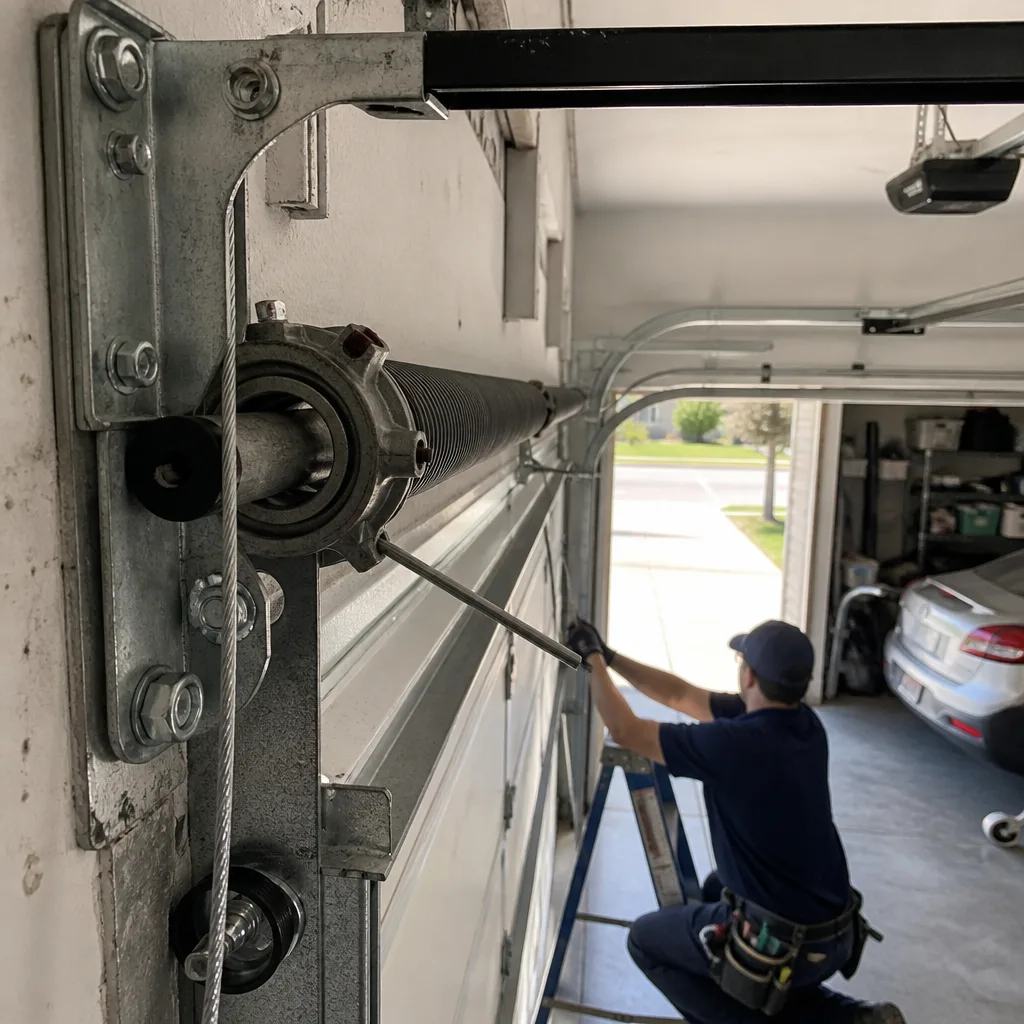 After
AfterGarage Door Repair Maintenance Checklist for Denton Homeowners
Most homeowners in Denton complete a garage door maintenance checklist and walk away with no idea whether anything was actually wrong. They’ll spray lubricant on a roller that needed replacing, tighten a bolt that was fine, and close the door feeling productive while a torsion spring quietly loses tension. The checklists themselves aren’t useless. They’re incomplete. A checklist without pass/fail criteria is just a list of motions to go through. This guide gives you the measurements, sounds, and resistance levels that tell you whether each component actually passes inspection or whether you’re looking at a repair bill in the next 90 days. And we’ll tell you upfront which tasks you should never attempt yourself, because one of them can break your wrist.
Quick Answer
A garage door maintenance checklist for Denton homeowners should cover seven DIY tasks and four technician-only inspections, timed around North Texas temperature swings in April and October. The most important pass/fail criteria are: rollers spinning freely with no lateral wobble over 1/8 inch, a torsion spring with no visible gaps or rust pitting, and a balanced door that stays put at the halfway point when disconnected from the opener. If your door fails any of these three checks, you need a repair, not more lubricant.
Table of Contents
- Seasonal Timing for Denton Garage Door Maintenance
- The 7 Maintenance Tasks You Can Do Yourself
- The 4 Tasks That Require a Technician
- Pass/Fail Criteria for Every Checklist Item
- How to Document Your Maintenance Check
- 3 Things That Void Garage Door Warranties
- Common Mistakes to Avoid
- Frequently Asked Questions
BeforeAfterSeasonal Timing for Denton Garage Door Maintenance
Denton sits in a climate band where the temperature can swing 40 degrees in a single day during spring and fall. That’s not an exaggeration. A March morning at 38 degrees can hit 78 by afternoon. Those swings matter for your garage door because the torsion spring and extension springs are calibrated to a specific temperature range. Cold steel contracts and gets stiffer. Hot steel expands and loses tension. A door balanced perfectly at 70 degrees will behave differently at 35 degrees, and a spring that was already near the end of its service life will fail more readily in those conditions.
We recommend two maintenance checks per year in Denton: one in April after the final cold snap, and one in October before the first freeze. The April check catches damage from winter temperature stress. The October check prepares the door for the contraction that cold weather brings, which is when we see the most torsion spring failures across Denton neighborhoods like Southridge and Idiot’s Hill.
A third check makes sense if your garage faces west. Denton afternoon sun heats west-facing doors unevenly, which can warp lightweight aluminum panels and dry out nylon rollers faster than the manufacturer’s interval. If your garage gets direct afternoon sun for more than four hours a day, check the rollers and panel alignment every three months instead of six.
The 7 Maintenance Tasks You Can Do Yourself
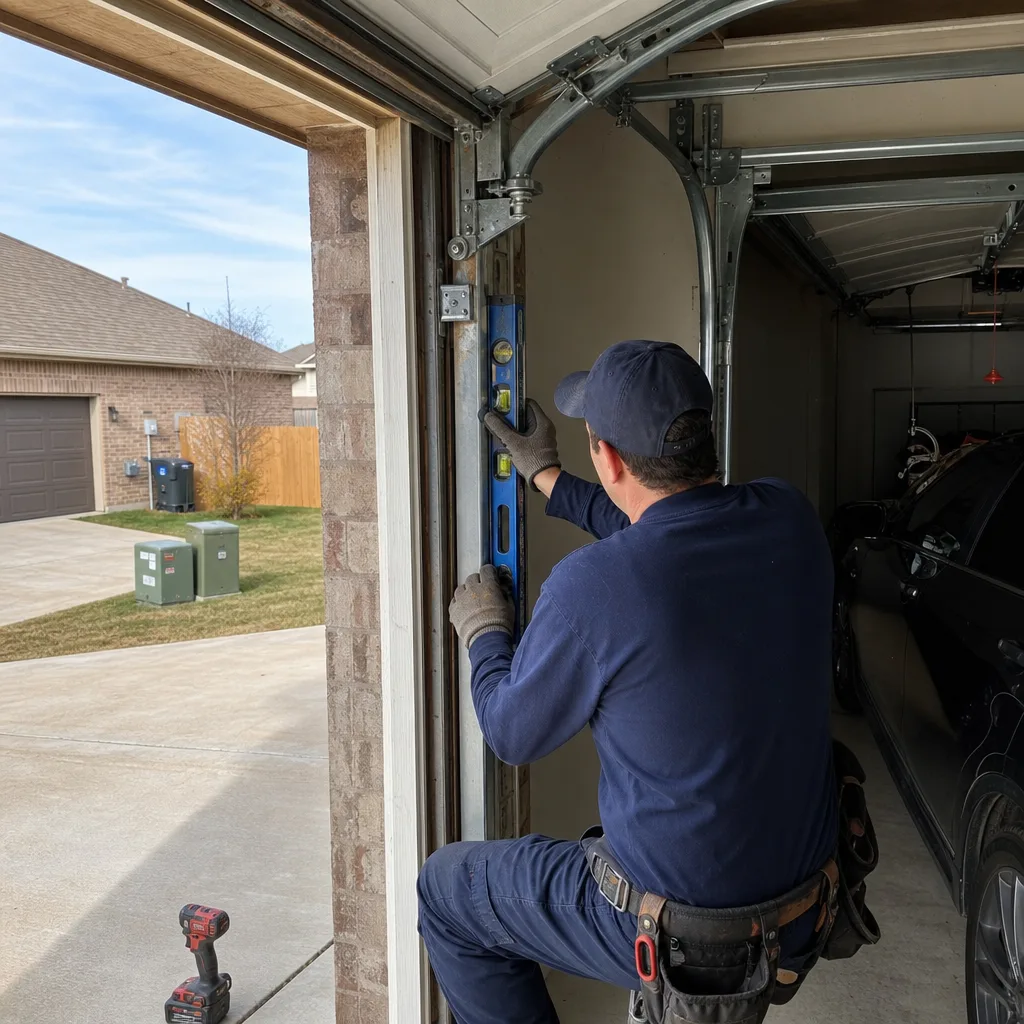
These seven tasks are genuinely DIY territory. None of them require you to touch a spring under tension, and none of them can cause serious injury if you follow basic precautions. Unplug the opener before starting any of them.
- Visual inspection of rollers. Look at each roller, both sides of the door, top to bottom. You’re checking for cracks, flat spots, or visible rust on the wheel surface. Rollers live in the track, so you’ll need a flashlight to see the ones near the header.
- Lubricate hinges and rollers. Use a white lithium grease or a garage door specific silicone spray on the hinge pivot points. For the roller bearings, a few drops of light machine oil. Skip the big box store WD-40. It’s a solvent, not a lubricant, and it strips whatever grease is already there.
- Tighten visible bolts and nuts. Garage doors cycle thousands of times a year. Vibration loosens hardware. Take a socket set to every bolt you can see on the hinges, track brackets, and opener rail. Don’t over-torque. Snug is enough.
- Check and clean the photo eye sensors. These are the two small units mounted on either side of the door, about six inches off the floor. Wipe the lens with a dry cloth. If the sensor has shifted, loosen the wing nut, realign so the indicator light is solid, and retighten.
- Test the auto-reverse safety feature. Place a roll of paper towels flat under the door’s path. Close the door. It should reverse within two seconds of contacting the roll. If it doesn’t, you have a safety issue that requires attention before anyone in your home gets hurt.
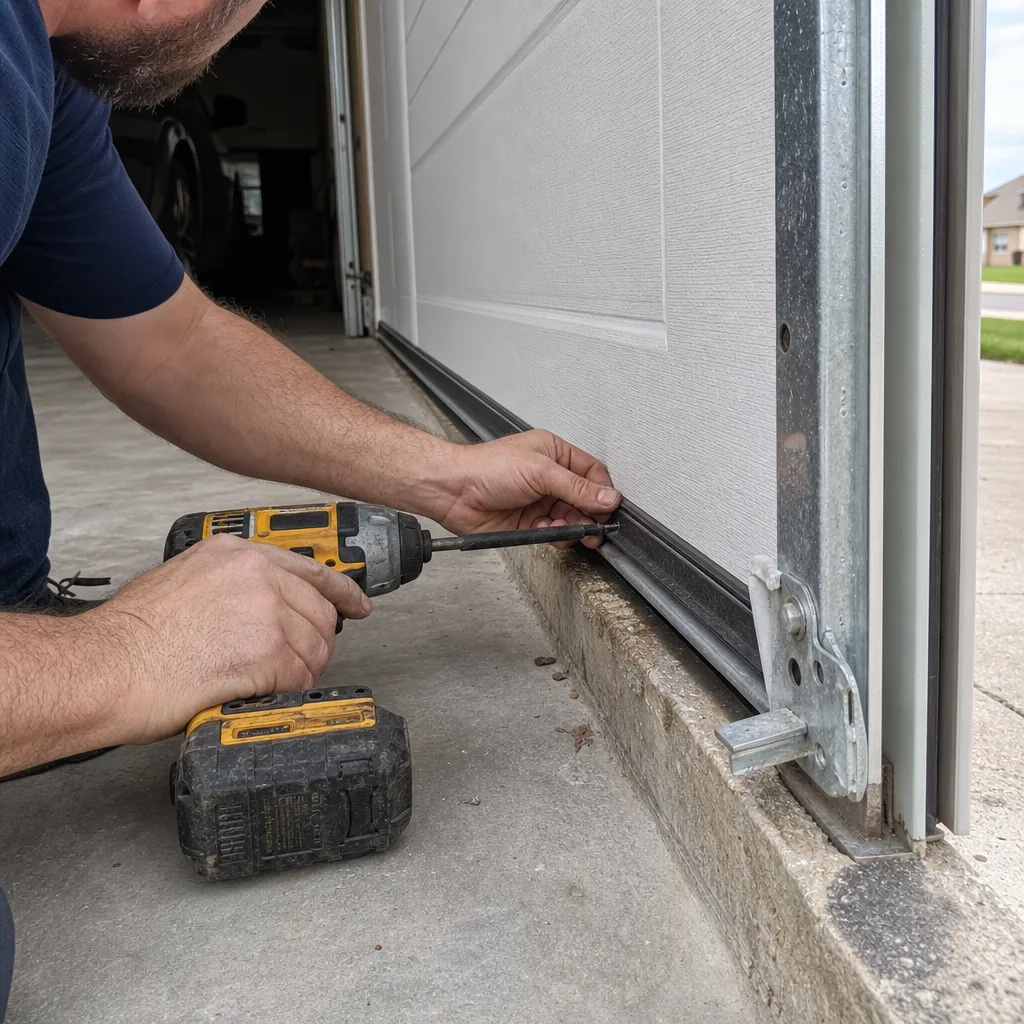
- Inspect the weatherstripping. The rubber strip along the bottom of the door and the vinyl trim along the sides keep out Denton’s dust, rain, and the occasional snake. Look for tears, shrinks, or gaps at the corners. Replacement strip costs under $30 at any hardware store in Denton.
- Listen to the door during a full cycle. Open and close the door once while standing inside the garage. A healthy door sounds like a low hum with quiet clicks at the hinge points. Grinding, squealing, or banging is a signal that something mechanical is failing.
Each of these tasks has a specific pass/fail threshold, which we cover in the next section. Doing the task without knowing the threshold is how homeowners get false confidence.
The 4 Tasks That Require a Technician
List source: Servo Garage Doors Denton home
These four inspections and adjustments are not DIY jobs. The reason is specific each time, not a blanket “leave it to the pros” brush-off. Here’s exactly why the line is drawn where it is.
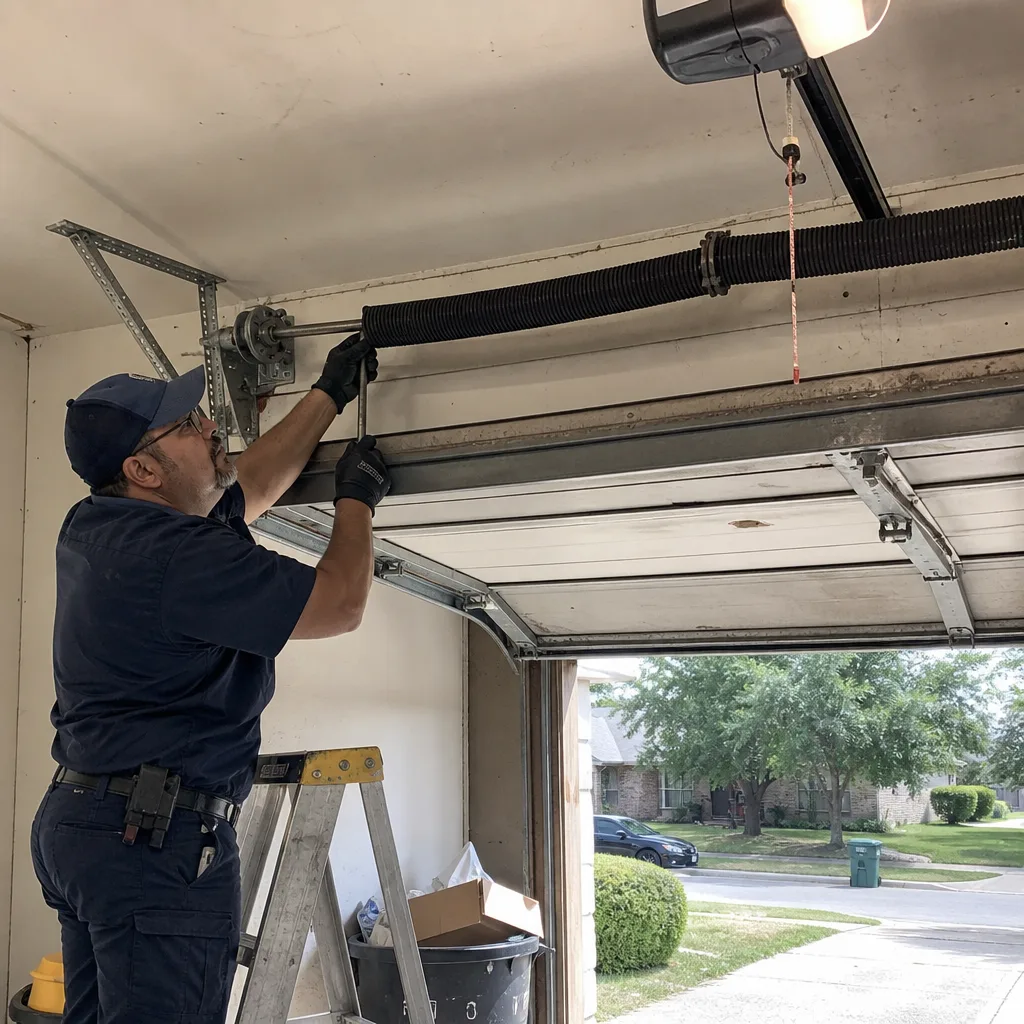
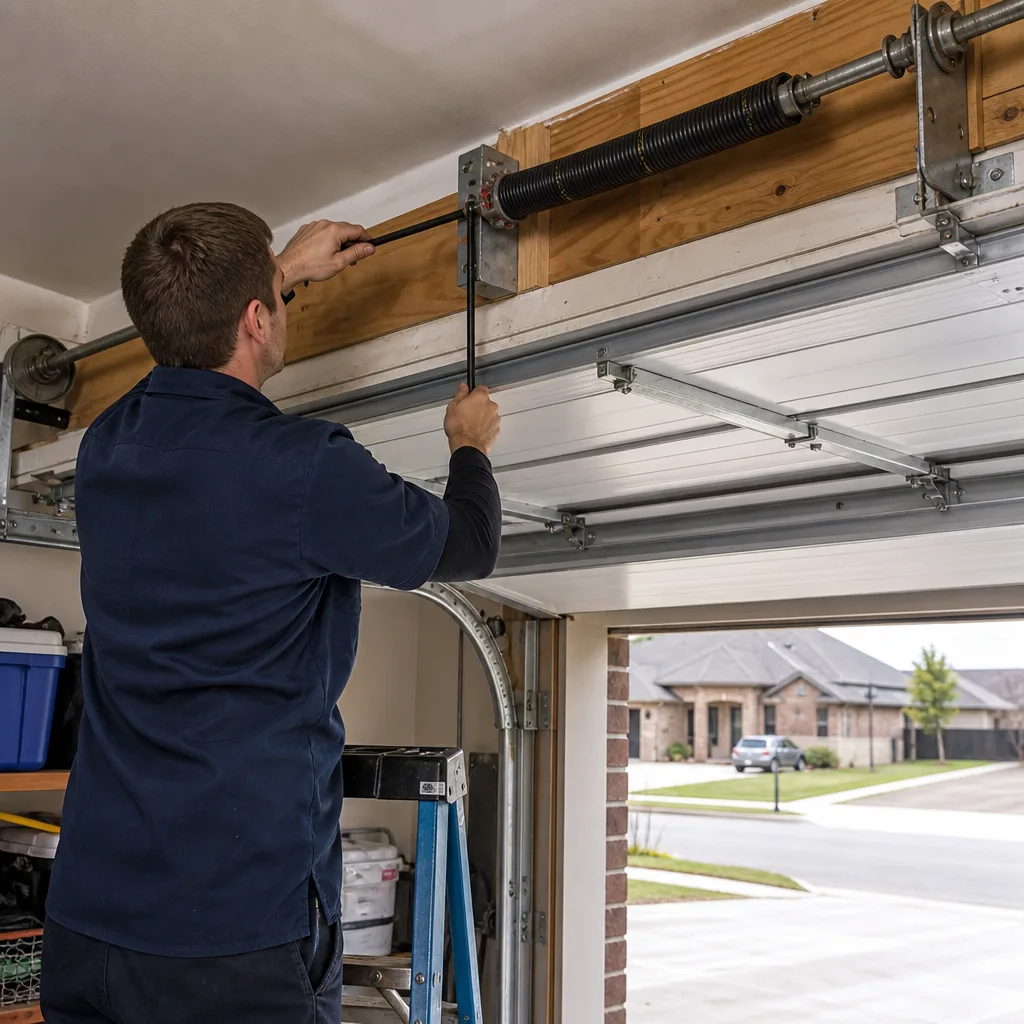
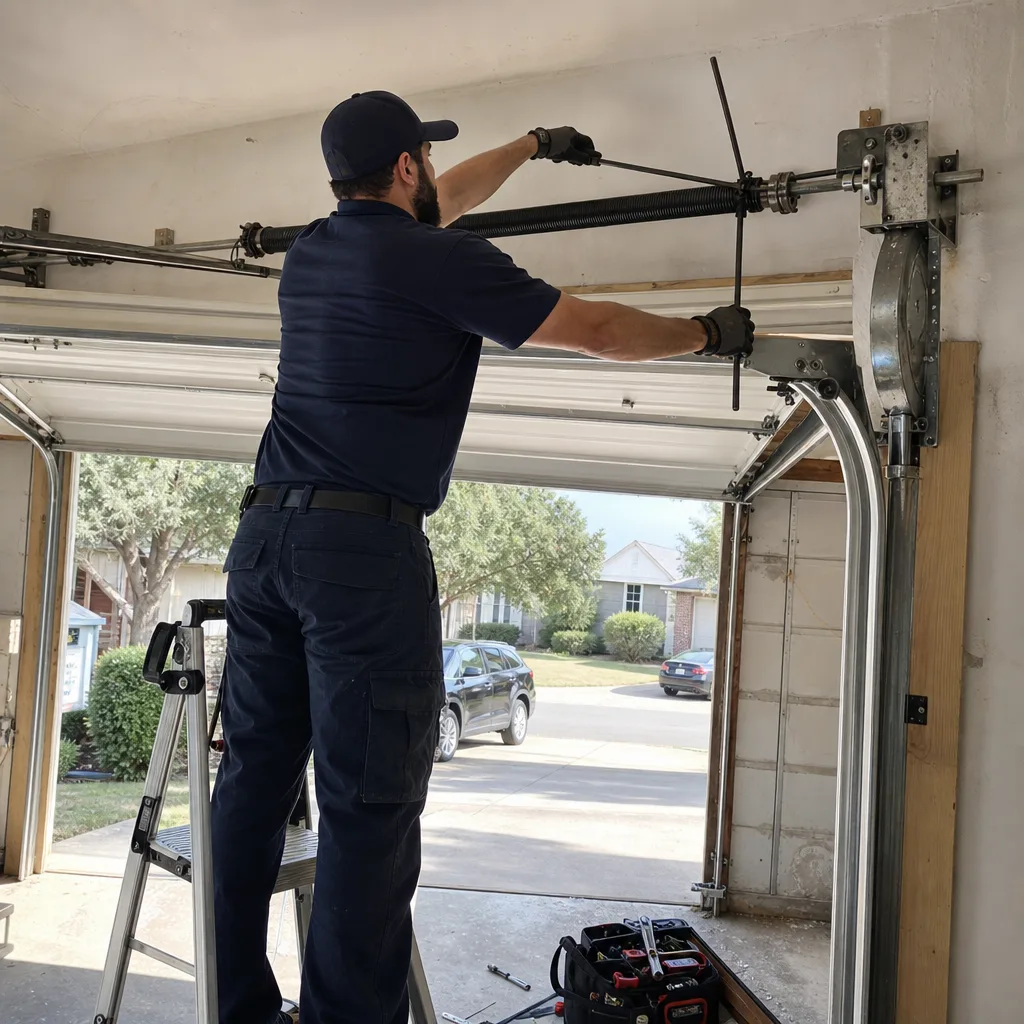
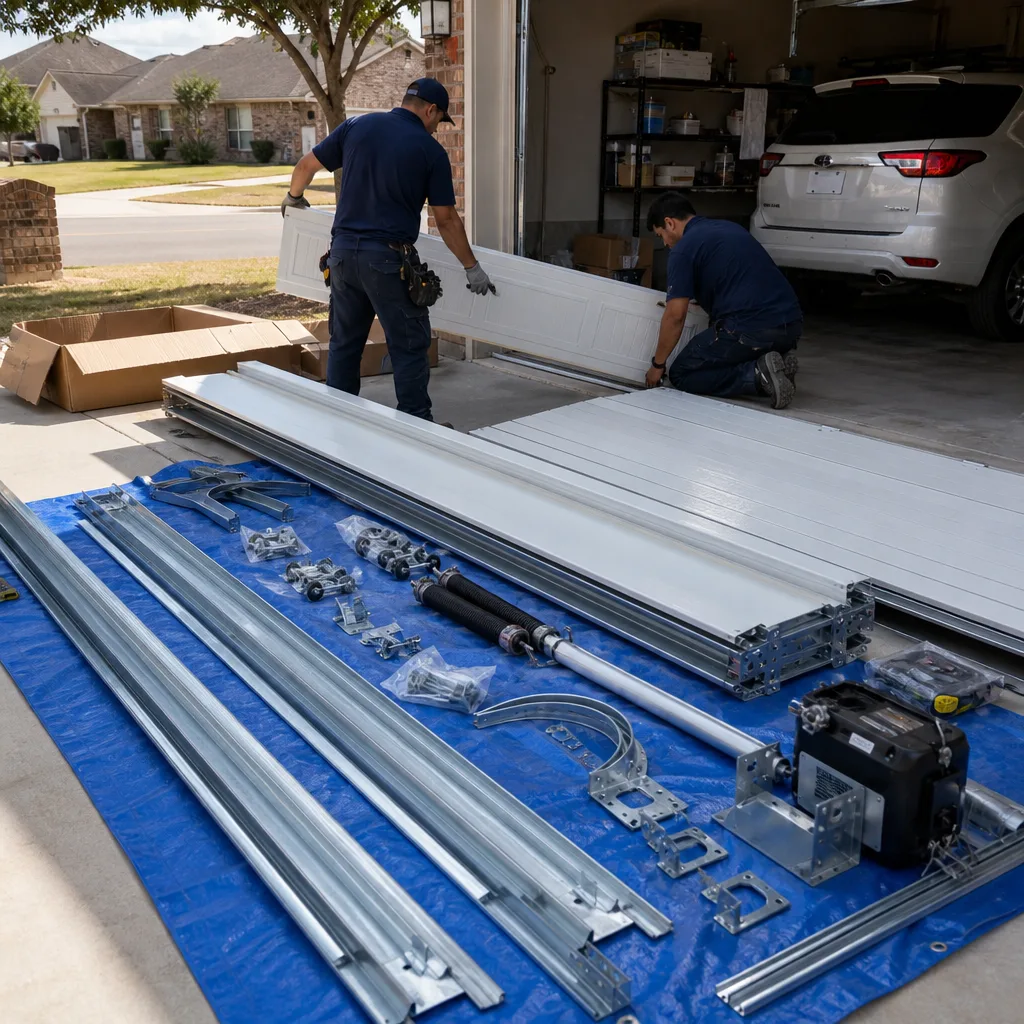
- Torsion spring adjustment or replacement. A torsion spring under load stores enough energy to break bones. The spring is mounted on a metal shaft above the door, and when wound, it’s holding the entire weight of the door, typically 150 to 250 pounds for a double garage door in Denton. If the winding bar slips or the spring snaps during adjustment, you’re in the path of a metal projectile. This is the one task where the danger is immediate and catastrophic. We’ve replaced springs that measured 0.25-inch wire diameter and showed clean breaks at the coil. That’s what a spring failure looks like, and it happens in a fraction of a second.
- Cable replacement. The lift cables run along both sides of the door and carry tension at all times. If a cable frays and you try to remove it without releasing spring tension first, the cable whips free with enough force to cut skin. Cable replacement requires the same spring de-tensioning procedure as spring replacement, which is why it belongs to a licensed technician.
- Track alignment and adjustment. Tracks may look simple, but they’re load-bearing. A track that’s out of alignment by more than a quarter inch can cause the door to bind, and a bound door under spring tension can pull the track off the wall. Track adjustment often requires removing and reinstalling lag bolts, and doing it wrong introduces lateral forces the door wasn’t designed to handle.
- Opener logic board diagnostics. If the opener clicks but doesn’t move, or moves a few inches and reverses, the problem could be the logic board, the limit switch, or the force adjustment. Diagnosing this requires opening the opener housing, which contains a capacitor that holds a charge even after the unit is unplugged. It’s not a task you want to learn on the kitchen table. A garage door opener repair in Denton technician can test the board and tell you whether you’re looking at a $40 limit switch or an $180 logic board replacement.
For any of these four, call a professional for Garage Door Repair services who will quote a flat, written price before the work starts. In our experience, the homeowners who call us after attempting a DIY spring adjustment never save money. They always save the broken part, call us to fix the larger damage, and the repair costs more than the original job would have.
Pass/Fail Criteria for Every Checklist Item
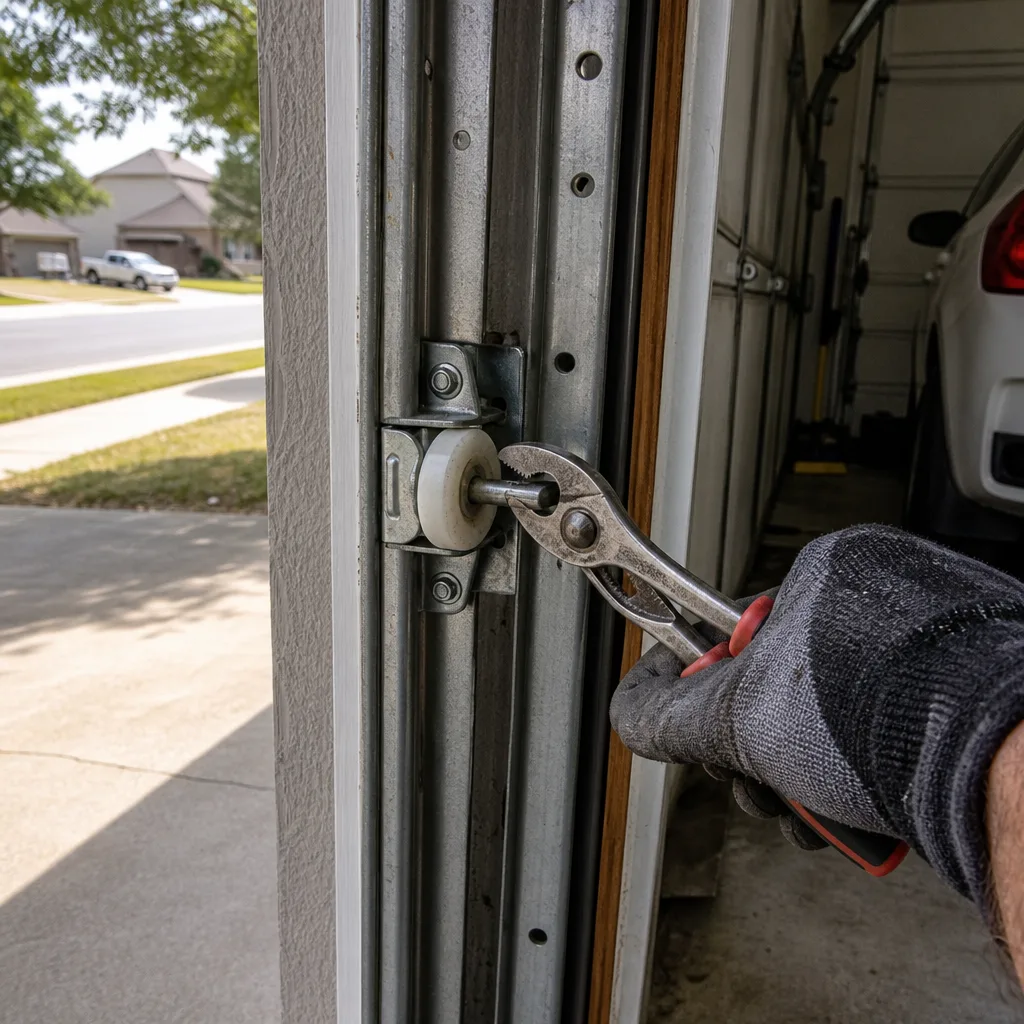
This is the section most maintenance guides skip. A checklist without thresholds is a guessing game. Here are the specific measurements, sounds, and resistance levels that distinguish a passing door from a failing one.
Rollers
Pass: The wheel spins freely when you flick it with a finger, with no lateral wobble. The roller body sits centered in the track.
Fail: Wobble beyond 1/8 inch side to side, visible flat spots on the wheel, or a grinding feel when you spin it. Any of these indicate worn bearings. Replacement should happen within 90 days. We see worn rollers in Denton garages more than any other single component failure, and the fix is inexpensive compared to the track damage a seized roller causes.
Cost reference: Roller replacement in Denton typically runs $95 to $160 for a full set on a double door, depending on whether you’re swapping nylon for nylon or upgrading from steel.
Torsion Spring
Pass: No visible gaps in the coil, no rust pitting deeper than surface oxidation, and the door stays put at the halfway point when disconnected from the opener and positioned manually.
Fail: A visible gap in the coil (the spring looks like it’s pulling apart), active rust, or a door that drops or rises when you release it at the halfway point. Spring failure is predictable with enough warning. The average torsion spring is rated for 10,000 cycles, which translates to about 7 to 10 years for a typical Denton homeowner who opens the door three or four times a day. If your spring is over seven years old, it’s past the halfway point of its rated life. A garage door repair in Denton call now is cheaper than an emergency call at 7 a.m. on a workday.
Cables
Pass: Smooth, uniform thickness along the entire visible length. No frayed strands at the bottom bracket or at the drum at the top.
Fail: Any fraying, rust, or flattening. A frayed cable is a snapping cable. We replace cables at the first sign of visible strand separation, not after the failure.
Hinges
Pass: Clean, greased pivot points that move smoothly through the full range of motion. No cracks in the hinge plate.
Fail: A crack in the metal, a hinge that binds at any point, or excessive side-to-side play. Hinge failure is uncommon but serious: if a hinge breaks while the door is moving, the panel can shift and bind the door in the track, which puts sudden load on the spring and cables.
Auto-Reverse
Pass: Door reverses within two seconds of contacting a 1.5-inch thick object (a roll of paper towels or a 2×4 laid flat).
Fail: Door continues closing through the object, or reverses only after more than two seconds of pressure. This is a federal safety standard, not a suggestion. Every opener manufactured since 1993 is required to have this feature, and a door that fails this test is a safety hazard to children and pets in Denton homes.
Balance Test
Pass: With the opener disconnected (pull the red release handle), manually lift the door to the halfway point and release. The door should stay put or move less than an inch either direction.
Fail: Door drops heavily or rises on its own. A door that drops means the spring has lost tension. A door that rises means the spring is over-tensioned. Both responses mean the spring needs professional adjustment, which is not a DIY fix for reasons we covered above.
How to Document Your Maintenance Check
Documentation is the part of maintenance that homeowners never think about until they need it. If you complete a maintenance check and find a problem, you file a warranty claim or call a repair company. If you can’t show what you found and when, your claim is weak. Here’s how to create a paper trail that holds up.
What to Record
- Date and time of the inspection. This establishes a timeline.
- Photos of each component, even the ones that pass. A photo of a healthy spring taken in April proves the spring was intact at that date, which becomes valuable if the spring snaps in June and the manufacturer asks when you last inspected it.
- Measurements and observations. Write down what you measured: roller wobble, spring condition, cable wear, balance test result. One line per item is enough.
- Any action taken. If you lubricated the hinges or replaced weatherstripping, note it. If you tightened bolts, note which ones.
Why This Matters for Warranty Claims
Garage door manufacturers require evidence of regular maintenance when processing warranty claims. A homeowner who calls with a failed spring and no maintenance record gets the “wear and tear” denial letter. A homeowner who can produce dated photos and a simple log gets the replacement. The difference is 15 minutes of documentation per session.
At Servo, the documentation standard is built into our process. Every visit ends with a photo record of what we found and what we did. The customer sees the failed part before anyone quotes a replacement. That’s Clause 4 of The Haven Standard, and it’s the reason we’ve been able to stand behind work since 2015. You can adopt the same principle on a smaller scale for your DIY maintenance.
3 Things That Void Garage Door Warranties
Every garage door manufacturer includes warranty exclusions in the fine print. Most homeowners never read them until a claim is denied. The three most common voiders in Denton are preventable.
1. Using the Wrong Lubricant
Spring manufacturer warranties from brands like Raynor and LiftMaster specifically exclude damage caused by WD-40 or other penetrating sprays. These products strip the protective coating off springs and rollers, accelerating rust. The correct lubricant is a garage door specific silicone or lithium grease. If a warranty claim involves a rusted spring and the manufacturer asks what you used to maintain it, “WD-40” ends the conversation.
2. Painting Over the Spring
It sounds harmless. You’re painting the garage interior and accidentally hit the spring with a coat of latex. Paint chemicals accelerate corrosion on spring steel, and a painted spring is an instant warranty void for most manufacturers. If paint has ever touched your spring, note it in your maintenance log and plan for an earlier replacement.
3. Running the Door with a Known Problem
This one is subjective, but manufacturers enforce it. If a roller seized and you continued running the door for six weeks, the resulting track damage and spring over-tensioning becomes your responsibility. The warranty covers manufacturing defects, not owner negligence. The maintenance log we described in the last section becomes your defense here. If you can show you inspected, documented, and acted, you have a claim. If you can’t, you don’t.
Common Mistakes to Avoid
- Lubricating a failing roller instead of replacing it. Lubricant masks the symptom for a week, then the roller seizes anyway and takes the track with it. If a roller wobbles over 1/8 inch, no amount of oil fixes a worn bearing.
- Attempting a spring adjustment with improvised tools. We’ve seen homeowners in Denton use screwdrivers as winding bars. A screwdriver in a spring cone under load is a spear waiting to happen. The correct tool is a pair of solid steel winding bars sized to the cone.
- Skipping the balance test because the door “sounds fine.” Sound reveals some problems, not all. A spring losing tension is nearly silent until the day it snaps. The balance test is the only reliable way to catch spring wear before failure.
- Replacing one spring on a two-spring door. Torsion springs are sold in matched pairs for a reason. A new spring next to a seven-year-old spring creates an unbalanced load that wears both springs faster. Pair replacement costs more upfront and saves money within two years.
- Tightening track bolts without checking alignment first. If the track has drifted and you tighten the bolts, you’ve locked the misalignment into place. Check the gap between the roller and the track edge first, then tighten.
- Ignoring the opener force setting. The force adjustment dial on the opener controls how much push the opener applies before reversing. Too much force and the door crushes an obstacle instead of reversing. Too little and the door won’t close on a cold Denton morning. This setting should be checked at each seasonal maintenance session and adjusted within the manufacturer’s range.
Frequently Asked Questions
Twice a year, in April and October, to align with North Texas temperature patterns. The spring check catches winter damage; the fall check prepares the door for cold-weather spring contraction. If your garage faces west and gets direct afternoon sun, check rollers and panel alignment every three months.
Cold weather causes the spring steel to contract and become more brittle, and the temperature differential between a heated garage interior and a cold exterior adds stress. We see the highest concentration of spring failures in Denton between December and February. The average torsion spring in this climate lasts 7 to 10 years regardless of brand, including Raynor, LiftMaster, Chamberlain, and Genie. If your spring is past that window, replacement is a matter of time, not a matter of if.
Yes. Lubricating hinges, rollers, and the opener rail is a DIY task when the door is disconnected from the opener and you’re working on un-tensioned parts. What you should not lubricate is the torsion spring, which doesn’t need oil and becomes slippery under tension if you apply it anyway. The spring’s surface is the only thing the winding cone grips against, and oil there creates a dangerous slipping hazard.
A failing door announces itself. Grinding at the roller track means a seized bearing. A loud bang followed by the door not opening is a snapped torsion spring. Squealing from the opener unit usually means a worn belt or chain pulley. A healthy door sounds like a low hum with quiet clicks. If your door sounds like two pieces of metal fighting each other, stop running it and get it looked at.
Garage door repair in Denton typically runs $120 to $350 for common fixes like roller replacement, cable replacement, and sensor realignment. Torsion spring pair replacement runs $280 to $450 including parts and labor. These are the prices you should see in a written estimate before any work starts. If a contractor won’t put the price on paper before picking up a tool, walk away. Our prices are flat, written, and agreed before work begins, per Clause 1 of The Haven Standard. Call (940) 398-6880 for an exact quote on your specific door.
The Haven Standard is a written operating standard that governs how Servo Garage Doors Denton does business. It codifies the practices that make “trust us” unnecessary: written pricing before work starts (Clause 1), documented photo records of all findings and completed work (Clause 4), and a 365-Day Done Right Promise that makes us return if the repair wasn’t right. It’s not a certification you can buy. It’s a set of obligations we agreed to operate under, and we’ve done so since 2015 under the ownership of Marcus Deller. We cover everything we do under this standard on our Denton home page.
When to Call a Professional
Call a technician when your door fails any of the pass/fail criteria in this guide, when you hear a loud bang from the spring area, when the door won’t stay at the halfway point, or when the auto-reverse test fails. If you’re unsure who to trust, see our How to Hire a Garage Door Contractor in Denton: A Step-by-Step Guide. These are not learning opportunities. They’re failures with mechanical causes that worsen with every additional cycle you run. We see the difference in repair costs between “caught it early” and “kept running it for two more weeks,” and the difference is real.
Servo Garage Doors Denton offers garage door installation in Denton as well as repair and maintenance, all quoted with a flat, written price before any work starts. Every visit includes a documented photo record of what we found and what we did. Every job is backed by the 365-Day Done Right Promise. If you’ve read this far and you’re not sure whether your door passed or failed, call us at (940) 398-6880. We’ll inspect it, show you the evidence, and give you a written price on the spot. No pressure, no urgency theatre, no “limited time” anything. Just the facts, photographed and priced, before you decide anything.
The Bottom Line
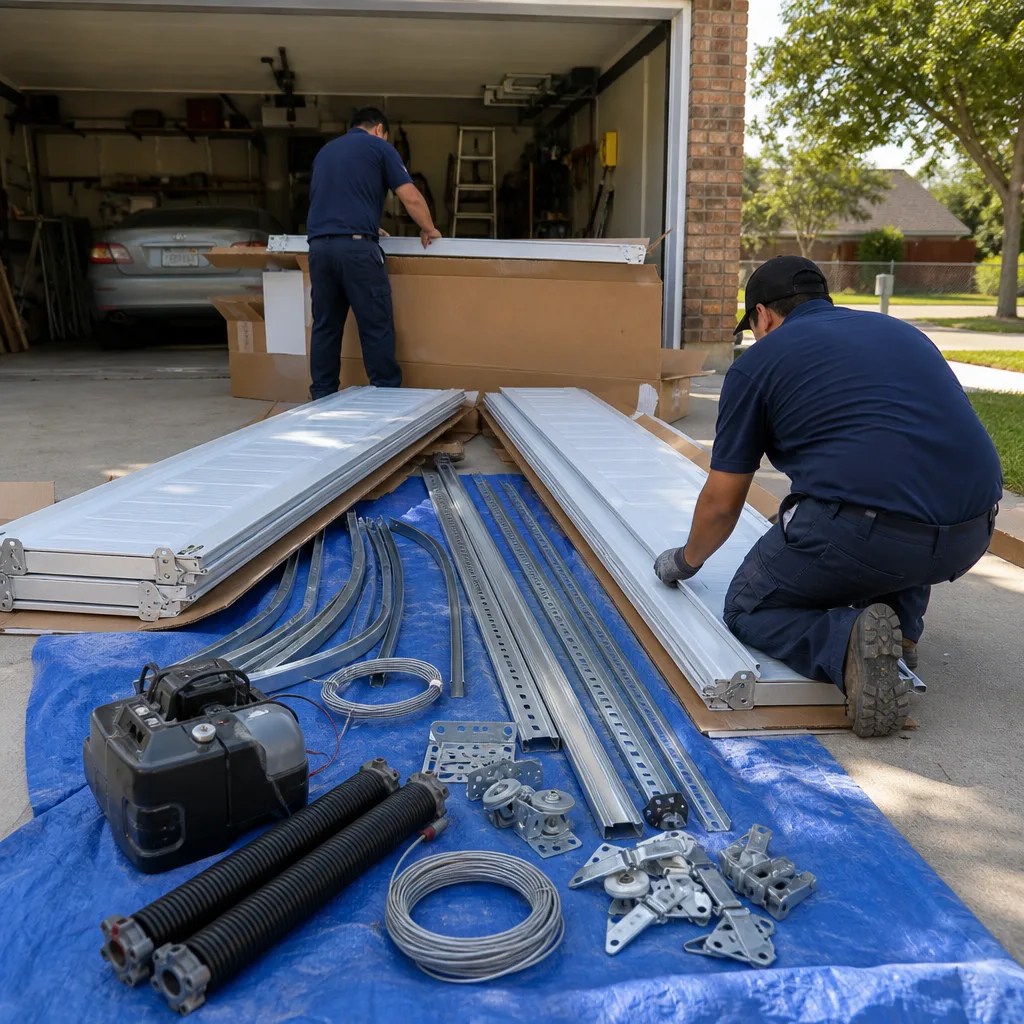
A garage door maintenance checklist works when it tells you what a failed check means. Rollers with 1/8 inch of wobble are wearing out, not dirty. A spring with a visible coil gap is failing, not settling. A door that drops at the halfway point has a spring tension problem, not a “minor imbalance.” And the four tasks that require a technician – spring work, cable work, track alignment, and opener diagnostics – are non-negotiable boundaries for your safety. Document everything, use the right lubricant, run the balance test twice a year, and you’ll catch most failures before they become emergencies. For more guides & resources, explore our blog. When you need a professional, demand a written price before work starts and a photo record when it’s done. That’s not asking for much. It’s the minimum a garage door company should deliver, and it’s the standard we’ve operated under in Denton since 2015.
Written by Marcus Deller, Owner at Servo Garage Doors Denton, serving Denton since 2015.